Archive
China aims to surpass US in physical gold reserves
 The solid demand for gold is not supported just by private individuals and panicky investors, but countries like China, India and Russia are ramping up investment in the yellow metal.
“… that the world’s biggest and fastest growing national economies are in the midst of an historic push to build up their stores of the precious metal,” according to Wealth Daily’s Luke Burgess.
“Today, the biggest buyers of gold aren’t private citizens or hedge-funds. Instead, nations like China, India, and Russia have moved forward to grab up every loose ounce of the metal…,” Burgess says.
There have been reports that the Chinese are buying gold assets to cover against rising inflation risk and global macroeconomic uncertainties. Beijing has long complained that the U.S. Federal Read more…
China Prepares To Launch Gold ETFs As Utah Becomes First State To Make Gold And Silver Legal Tender
 Following Friday’s news that China has now surpassed India as the world’s largest buyer of gold, it is becoming increasingly obvious that the country is trying to capitalize on the popular interest in the precious metal by transferring the trading infrastructure away from US to domestic capital markets. First, it recently launched a 1 kilo gold futures contract on the HK Merc in an obvious attempt to undermine the Comex monopoly in the space, and next it seems that China has the GLD plain in its sights, as it plans to start exchange-traded funds, tapping rising demand in China, the world’s biggest investment market for the precious metal. Often blamed for the recent volatility in the price of gold, precious metal ETFs have been primarily an instrument available to those with access to the US market. That appears to be ending, and with an entire nation suffering from gold fever (as inflation continues to be goalseeked by the China politburo above expectations in what appears to be a programmed attempt by the Chinese central planners to push its population into gold hoarding) and about to be offered a simple way of investing in (paper) gold, it is likely that the price of gold (and soon thereafter all other commodities) will see unprecedented spikes in price in either direction as millions more are given direct exposure to trading the non-dilutable currency equivalent.
From Bloomberg:
“There are some complexities, as the central bank is in charge of gold management, while we still need to go through the procedures for launching new exchange products,” Wang Zhe, chairman of the bourse, said at a Shanghai forum. There is no timetable and the exchange is working with regulators on the plan, Wang said. China is the world’s largest gold producer and second-largest in overall consumption.
China doesn’t have gold ETFs and investors usually choose to buy physical gold, or invest through contracts traded on the Shanghai Gold Exchange, the Read more…
Beijing Agrees to Operate a Key Port, Pakistan Says
 BEIJING—Pakistan’s defense minister said China has agreed to take over operation of the strategically positioned but underused port of Gwadar, and that Islamabad would like the Chinese to build a base there for the Pakistani navy.
Ahmad Mukhtar gave no clear timetable on the possible change at Gwadar, on Pakistan’s western coast, which is currently managed by a Singaporean government company. But his statement Saturday is the latest illustration of how Pakistan is portraying China as a powerful alternative ally and aid source if the U.S. scales down military assistance for Islamabad in the aftermath of Osama bin Laden’s killing.
China is eager to expand its influence in Pakistan over the long term, but is wary of the country’s chronic instability, which was highlighted late Sunday when a Pakistani naval base was attacked in the western port of Karachi, about 300 miles southeast of Gwadar.
Mr. Mukhtar made the announcement after accompanying Prime Minister Yusuf Raza Gilani on a visit to China last week. During that visit, Pakistani officials say, Beijing agreed to expedite delivery of a second batch of 50 jointly developed JF-17 fighter jets to Pakistan, possibly within six months.
The fighter agreement prompted India’s defense minister, A.K. Antony, to express serious concern in a meeting with reporters late Friday about the growing defense ties between China and Pakistan, and to assert that India’s only possible response was to build up its own military arsenal.
Attempts on Sunday to contact Mr. Antony and other Indian officials for comment about Gwadar were unsuccessful. In the past, Indian officials have expressed concern Read more…
China to expedite delivery of 50 fighter jets to Pakistan: WSJ
Pakistan’s Prime Minister Yusuf Raza Gilani (L) speaks to China’s Premier Wen Jiabao after a singing ceremony at the Great Hall of the People in Beijing, May 18, 2011.
Credit: Reuters/Jason Lee
Pakistan’s already strained ties with its ally and major donor were battered after U.S. forces on May 2 killed al Qaeda leader Osama bin Laden in a garrison town near Islamabad.
The fact that bin Laden was found in Abbottabad, and had been living there for years, has prompted many in Washington to call for a review of the billions of U.S. civilian and military aid that Read more…
China Central Bank: New IMF Leadership Should Reflect New World Order
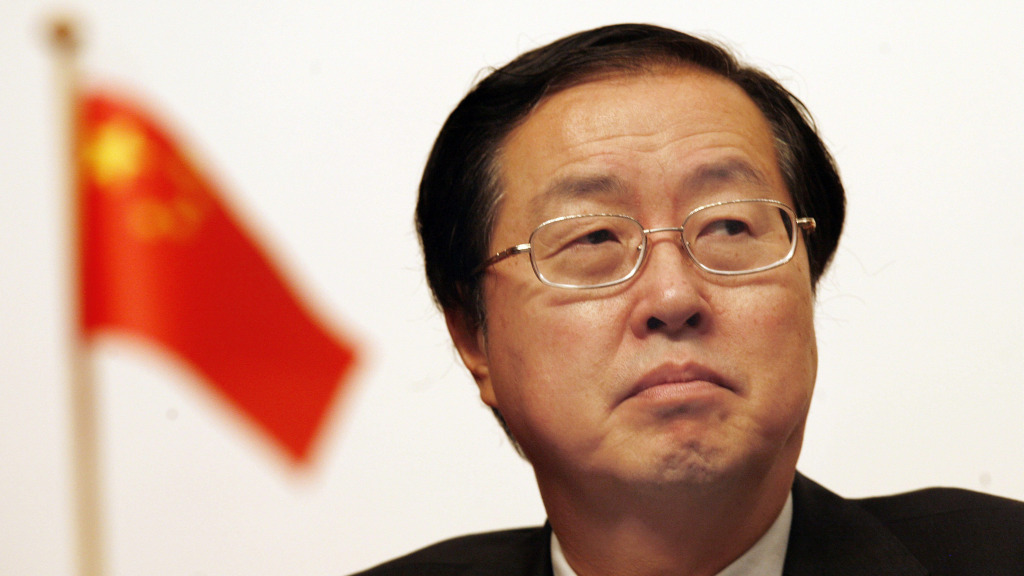 There’s a funny thing about the New World Order: it eventually gets too big and bites the hand the feeds it. Enter the PBoC: “The new IMF leadership needs to reflect changes in the world economic order and be more representative of emerging market economies, Chinese central bank governor Zhou Xiaochuan said Thursday in his first public comments since the arrest of Dominique Strauss-Kahn. “The senior management team of the IMF should better reflect changes in world economic patterns and should be more representative of emerging market economies.” Translation – no more European of American cronies. It is also probably safe to say that Lagarde’s odds of pulling the white smoke out of the conclave bag have just plunged. It is also safe to say that with China now unofficially Europe’s backstopper (and there were those wondering why China is buying all those Spanish and Portuguese bonds), what China wants, China gets.
From Market News:
Zhou also said he regretted Strauss-Kahn’s decision to resign as the Managing Director of IMF.
“The current world economy is recovering slowly from the financial crisis and the European sovereign debt crisis is at a key stage. A powerful IMF support is needed to overcome current difficulties facing Europe and ensure world economic developments are on a robust, sustainable and balanced track,” Zhou added.
German Chancellor Angela Merkel reiterated earlier today that the next head of the International Monetary Fund should be a European again.
And so the stage is set for the next big geopolitical theater: Germany vs China over the largely symbolic issue of who gets to scare the Sofitel maids next.
China acknowledges Three Gorges dam ‘problems’
 The Three Gorges is the world’s largest dam
China has admitted that the Three Gorges Dam has created a range of major problems that need solving quickly.
Top leaders say the project has led to environmental problems and issues involving relocating 1.3m people.
The Three Gorges is the world’s largest dam and could have cost up to $40bn. This appears to be the first time that central government leaders have admitted to problems with the project.
The admission came in a statement from top government body, the State Council.
The statement initially praised the scheme’s achievements, saying it had helped alleviate flooding, improve navigation and generate electricity.
But it went on: “There are urgent problems that need to be addressed, such as stabilising and improving living conditions for relocated people, protecting the environment, and preventing geological disasters.”
‘Catastrophe’
China’s revolutionary leader Mao Zedong dreamed of building the Three Gorges Dam. Construction started in 1994.
Alarming Number of Disasters Striking World “Food Baskets”
Millennium-Ark
May 16, 2011
Holly Deyo
Dear Friends and Readers of Millennium-Ark,
For the last 5 years, we have posted countless articles covering both natural disasters and their impact on our food supplies as well as on many other timely topics. After several decades of monitoring these events, it’s hard to convey how shocked we are by the sheer number of disasters that have occurred just in the first 4 months of 2011.
Yesterday, all day, I spent analyzing natural disasters and plotted them against our food belts. Never, ever, have I seen so many federally declared disasters this early in the year.
The DHS/FEMA maps were defined by 2 colors: blue signified no disasters (to distinguish the disaster-free areas from water, they are shown in white below) and yellow indicated declared disasters. Map after map, state after state were mostly yellow. Surely this must be an error? Thinking through the numerous news items on Earth Changes, with sinking feeling, I knew they were correct. It was only when the state information was transferred to a single national map, the implications become uncomfortably clear.
Notice how many disasters have occurred in food-producing areas. They are striking the heart of our food growing regions. Many food crops have been wiped out by drought, flood, hail and freezes. These food destroyers are occurring in greater frequency and having larger impact. America’s food belts are taking mighty hits. Some growing areas will not recover this entire year.

Pakistan’s Gilani visits ally Beijing amid US rift
 BEIJING (AP) — Pakistani Prime Minister Yousuf Raza Gilani begins a visit to Beijing on Tuesday with old ally China looking more attractive after the U.S. killing of Osama bin Laden further strained Islamabad’s ties with Washington.
The sentiment is mutual, with China now in the process of shoring up its relations with Islamabad, Afghanistan and several other Central Asia states in step with an expected diminished U.S. presence as it winds down military operations in Afghanistan.
For Pakistan, Beijing represents an uncritical friend ready to provide aid, investment and military assistance. To the leaders in Beijing, ties with Pakistan and other countries in its neighborhood offer a bigger diplomatic footprint, better access to resources and a larger stable of allies to challenge U.S. supremacy.
Although Gilani’s four-day visit starting Tuesday was planned well in advance, it comes at a critical time for his country’s relations with the U.S., which have been thrown into crisis over the American raid that killed bin Laden in the northern Pakistani city of Abbottabad on May 2. Pakistan has called it a violation of its sovereignty and threatened to retaliate if there are any similar operations in future.
While American politicians served up withering criticisms over Pakistan’s failure to find bin Laden’s hide-out – or the possibility that officials were protecting him – China offered welcome Read more…
Chinese space plans cause military jitters
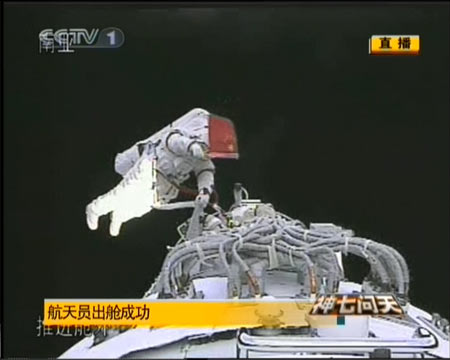 China has announced plans to put its own space station in orbit by 2020. The 60-tonne construction will be one-seventh the weight of the ISS and will focus on scientific experiments. However, military involvement with the project is causing concern.
Beijing’s Space City research center is opening its doors to the media, as China has announced its intention to build a rival to the International Space Station.
While some see Chinese advances in space travel as a potential threat, the country’s officials are keen to stress the spirit of co-operation, which they say is behind China’s space program.
“We are looking forward to co-operating with other countries in the field of space exploration,” said Yang Liwei, Vice Director of Manned Space Engineering Bureau. “We are also looking forward to having more countries join this club, so we can promote the common goals of mankind.”
For the moment though, the Chinese space program is doing very well on its own.
Since becoming only the third country in the world to send a person in to space, in 2003, the Chinese also carried out a space walk in 2008 and the Read more…
Iran, North Korea Partnering on Ballistic Missiles, U.N. Says

(May. 16) - An Iranian Shahab 3 ballistic missile lifts off in a 2009 test. The Shahab 3's warhead appears comparable in design to a North Korean warhead unveiled last year, according to a U.N. report that says the countries seem to have exchanged ballistic missile technology (Shaiegan/Getty Images). Iran and North Korea seem to routinely be swapping ballistic missile equipment in breach of U.N. Security Council directives, a classified expert report to the international body stated on Friday (see GSN, Dec. 1, 2010).
Illegal trades of missile technology had “transshipment through a neighboring third country,” the report states. Multiple envoys told Reuters the nation in question is China.
The report by the Panel of Experts assigned to oversee adherence to U.N. sanctions levied against North Korea was sent to the Security Council on Friday and viewed by Reuters on Saturday.
The document is expected to increase apprehension over Pyongyang’s collaboration with Tehran and to bolster worries about Beijing’s willingness to implement sanctions targeting North Korea and Iran’s nuclear activities, diplomats said.
The Security Council sanctions forbid commerce in atomic and missile systems with the North.
“Prohibited ballistic missile-related items are suspected to have been transferred between the Democratic People’s Republic of Korea and the Islamic Republic of Iran on regular scheduled flights of Air Koryo and Iran Air,” the experts stated.
“For the shipment of cargo, like arms and related materiel, whose illicit nature would become apparent on any cursory physical inspection, (North) Korea seems to prefer chartered cargo flights,” the document says.
Chartered cargo flights typically travel “from or to air cargo hubs which lack the kind of monitoring and security to which passenger terminals and flights are now subject,” according to the report.
A number of envoys to the Security Council said Beijing was not pleased with Read more…


![[Most Recent Quotes from www.kitco.com]](https://i0.wp.com/www.kitconet.com/charts/metals/gold/t24_au_en_usoz_2.gif)
![[Most Recent Quotes from www.kitco.com]](https://i0.wp.com/www.kitconet.com/charts/metals/silver/t24_ag_en_usoz_2.gif)

 crisisboom
 CRISISBOOM
You must be logged in to post a comment.