Archive
Australia is so hot they had to add new colors to the weather map
As scorching temperatures persist across Australia, the country’s Bureau of Meteorology added a new color to its weather forecasting map, extending the range to 54ºC, or 129ºF, from the previous cap of 50ºC, or 122ºF.
The new, deeper purple “dome of heat” swirls above South Australia, indicating temperatures above 50ºC in some areas.

Bureau of Meteorology
The previous all-time temperature record was 50.7ºC, reached in South Australia in 1960.
Australia’s Bureau of Meteorology says this is the first time Australia has ever recorded five consecutive days of temperatures above 39ºC (102ºF). Nationwide average temperatures on each of the first six days of 2013 were among the top 20 hottest days on record.
This is also the year with the most record days in Australia since 1910, when national records began
Arctic Sea Ice Melt May Trigger Extreme European Winter

Image: Jenny Downing/Flickr
By Stephen Leahy, the Guardian
The record loss of Arctic sea ice this summer may mean a cold winter for the UK and northern Europe. The region has been prone to bad winters after summers with very low sea ice, such as 2011 and 2007, said Jennifer Francis, a researcher at Rutgers University.
“We can’t make predictions yet … [but] I wouldn’t be surprised to see wild extremes this winter,” Francis told the Guardian.
This year’s ice melt has broken the 2007 record by an an area larger than the state of Texas.
Polar ice experts “thought that it would be many years until we again saw anything like we saw in 2007″, said Mark Serreze, director of the National Snow and Ice Data Centre in Colorado.
The unprecedented expanse of ice-free Arctic Ocean has been absorbing the Read more…
Permafrost thaw will speed up global warming, study says
 A polar bear wanders along the Hudson Bay. New research suggets that permafrost soils in Canada’s Arctic are melting at a rate that will significantly speed up global warming. (iStock)
Permafrost soils in Canada’s Arctic are melting at a rate that will significantly speed up global warming, according to new research from the University of Victoria.
The study, published this week in Nature Geoscience, predicts that the thawing permafrost will release between 68 billion and 508 billion tonnes of carbon into the atmosphere by the year 2100.
As a result of those carbon emissions, researchers say the Earth’s temperature will rise by more than 0.5 C by the end of the century.
Although seemingly insignificant, that amount is in addition to the two degrees the Earth’s temperature is expected to rise because of global warming from industrial sources.
Andrew Weaver, a climate scientist at the University of Victoria and one of the study’s authors, warns that once the planet warms by more than two Read more…
Mysterious Changes in Ocean Salt Spur NASA Expedition
By Live Science
 The Woods Hole Oceanographic Institution’s research vessel Knorr docked before its departure on Sept. 6 to study salinity in the mid-Atlantic ocean. (NASA)
By Wynne ParryOver the past 50 years, the salty parts of the oceans have become saltier and the fresh regions have become fresher, and the degree of change is greater than scientists can explain.
Researchers are heading out into one particularly salty ocean region, in the middle of the North Atlantic Ocean, in the hopes of better understanding what drives variation in salinity in the upper ocean.
Ultimately, they hope, research like this will offer insight on the dynamics behind the dramatic changes in the ocean’s salt content.
Many oceanographers have a hunch about what is going on: Climate change, Ray Schmitt, a senior scientist at the Woods Hole Oceanographic Institution, told journalists during a news conference Wednesday (Sept. 5).
“Climate is changing all the time, and some of that change is due to natural variation,” Schmitt said. “The 50-year trend we are talking about, most of us believe is really due to the general trend of Read more…
In U.S., 2012 so far is hottest year on record
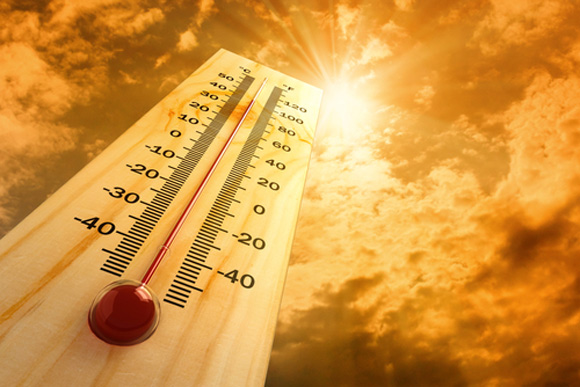 (Reuters) – The first eight months of 2012 have been the warmest of any year on record in the contiguous United States, and this has been the third-hottest summer since record-keeping began in 1895, the U.S. National Climate Data Center said on Monday.
Each of the last 15 months has seen above-average temperatures, something that has never happened before in the 117 years of the U.S. record, said Jake Crouch, a climate scientist at the data center.
Winter, spring and summer 2012 have all been among the top-five hottest for their respective seasons, Crouch said by telephone, and that too is unique in the U.S. record. There has never been a warmer September-through-August period than in 2011-2012, he said.
“We’re now, in terms of statistics, in unprecedented territory for how long this warm spell has continued in the contiguous U.S.,” Crouch said.
He did not specify that human-spurred climate change was the cause of the record heat. However, this kind of warmth is typical of what other climate scientists, including those at the United Nations’ Intergovernmental Panel on Climate Change, have suggested would be more likely in a world that is heating up due in part to human activities.
Alyson Kenward of the non-profit research and journalism organization Climate Central said in a statement, “Extreme heat is closely tied to climate change, Read more…
Climate Change: How The Wet Will Get Wetter And The Dry Will Get Drier (Video)
 How much extra energy are we putting in the atmosphere through emission of greenhouse gases? One Australian researcher put it into context: “The radiative forcing of the CO2 we have already put in the atmosphere in the last century is … the equivalent in energy terms to almost half a billion Hiroshima bombs each year.”
With more energy radiating down on the planet rather than back up into space, the planet continues to heat up. As the atmosphere warms, it is able to hold more water vapor — thus strengthening the global hydrological cycle.
With all that extra energy, more water is pulled out of the subtropic regions and moved toward higher-precipitation areas in the subpolar regions, resulting in stronger droughts and stronger storms. Or, as the video below explains, how the wet gets wetter and the dry gets drier.
Through five decades of observations and future climate modeling, the National Oceanic and Atmospheric Administration has put together this educational piece on how a warming planet will make weather more extreme: Read more…
Arctic sea ice extent continues to melt below former record lows: data center

Every year there’s less of the multi-year, blue-tinged sea ice, like this ice seen in the Northwest Passage, in the Arctic. (PHOTO BY JANE GEORGE)
Following the new record low Arctic sea ice extent recorded Aug. 26, ice coverage has continued to drop and has now shrunk to less than four million square kilometres — smaller than the previous low extent of 2007.
Compared to September conditions in the 1980s and 1990s, the Arctic sea ice extent has dropped by 45 per cent, the Colorado-based National Snow and Ice Data Center said Sept. 5.
And that skimpy sea ice cover is likely to get lower yet, because Read more…
Cutting Down Rainforests Also Cuts Down on Rainfall
As the Amazon rainforest disappears, rainfall falters over a much wider area
By Lauren Morello and ClimateWire
 RAIN MAKER: Cutting down trees in the Amazon rainforest also reduces rainfall over the region. Image: flickr/Threat to Democracy
When Amazon rainforest disappears, so does Amazon rain.
That’s the conclusion of new research that shows deforestation can significantly reduce tropical rainfall far from the area where trees have been cut down.
That’s because air passing over forests picks up moisture given off by trees and plants, fueling rains. When those trees disappear, so does some of that rain.
“What we found was this really strong impact — air that traveled over a lot of forest brought a lot more rain than air that didn’t travel over very much forest,” said lead author Dominick Spracklen of the University of Leeds.
His research, published yesterday in the journal Nature, helps reconcile a situation that has puzzled scientists.
Climate models project that Amazon deforestation would reduce rainfall regionally. But limited observations show that rainfall in deforested areas is higher than in areas where the rainforest is still intact.
(Scientists believe that when trees are cut down, the bare surfaces left behind absorb more Read more…
Climate change causing increase in extreme weather in South Pacific
An international study led by CSIRO oceanographer Dr Wenju Cai has identified that global warming is causing shifts in the rain band of the South Pacific Convergence Zone causing an increase in extreme weather across the island nation states of the South Pacific. The result of the movement causes drought and higher prevalence of forest fire in some areas while other islands experience extreme floods and increased frequency of tropical cyclones.

The South Pacific Convergence Zone is the important rainband that stretches from the equatorial western Pacific southeastward toward French Polynesia. When the rainband moves northward, extreme climate events are induced. “Here we show that greenhouse warming Read more…
Sunspots Can Trigger Frigid Winters in Europe
A major part of the climate change that scientists have documented over the past few decades comes from human emissions of heat-trapping greenhouse gases. Not all of it, however. Natural climate cycles haven’t magically disappeared — the El Niño/Southern Oscillation, or ENSO, for example, is entering a phase that will likely boost global temperatures temporarily — and scientists are still discovering new ones.

Credit: flickr/mrbeany
The latest comes in a new report published in Geophysical Research Letters. It’s well known that the Sun varies slightly in brightness every 11 years, and while those changes pale beside the effect of human-generated greenhouse gases, according to the report, they’re enough to trigger unusually cold winters in Central Europe.
The smoking gun is the freezing of the Rhine river, something that doesn’t happen often because it’s difficult to freeze such a large, free-flowing volume of water. Those unusually cold winters might come along at random, but by looking back at records dating to all the way back to 1780, a Read more…


![[Most Recent Quotes from www.kitco.com]](https://i0.wp.com/www.kitconet.com/charts/metals/gold/t24_au_en_usoz_2.gif)
![[Most Recent Quotes from www.kitco.com]](https://i0.wp.com/www.kitconet.com/charts/metals/silver/t24_ag_en_usoz_2.gif)

 crisisboom
 CRISISBOOM
You must be logged in to post a comment.