Archive
European drought raises fears of food riots

The cracked river-bed near the village of Ancenis, in western France, where severe water restrictions have been impressed. Picture: AFP Source: AFP
BERNARD Maquis’s cattle would normally be grazing in the lush green pastures of the Limousin region, in central France, at this time of year.
Instead, they are eating hay intended for the winter after months of drought have turned the fields yellow.
He is wondering whether it might be better to sell his cows at a reduced price rather than find himself without fodder by the end of the autumn. “I’m starting to sleep badly,” he said.
Mr Maquis is not alone. With northern Europe facing its worst drought since 1976, politicians in the West are expecting protests Read more…
The 2012 Doom Factor (Video)
In order to understand the future, you must study the past. Many people wonder about what happened to these great ancient civilizations and their technology. The above video has been out for a few years but goes into great depth on why we are seeing an unprecedented occurrence of anomalies in weather pattern changes, earthquakes, tornadoes, volcanic eruptions, mysterious animal deaths ect. Turn off your TV, silence your cell phone and unplug yourself from anything that is distracting. This video is very eye-opening and educational to say the least. I am definitely not saying that the world will end in 2012; however there will be a global change in the near future. Take this in perspective: Before a storm begins you will notice that the clouds begin to change, the wind gust becomes stronger, lightning will appear, and small raindrops begin to fall to the ground. Guess what? This is the edge of the storm. It is true when they say history repeats itself…
If the embedded video does on work on this page here is the link The 2012 Doom Factor
World Hunger and Food Shortages Are Pressing Global Issues, Say Experts in Current Events and Politics
 PASADENA, Calif.–(BUSINESS WIRE)–In an article for the quarterly journal Vision titled “What Shall We Eat and Drink?” publisher and international relations scholar David Hulme discusses the global issues of world hunger and water security. Slicing through the Gordian Knot of current events and politics, Hulme explores the complex factors relating to food shortages and the building water crisis.
People share a universal need to eat and drink, yet nearly a billion people go hungry every day. Concerns about food and water shortages were behind the eight goals of the 2000 UN Millennium Declaration, with the primary Millennium Development Goal being to reduce the number of undernourished and poverty-stricken people in developing countries from the current 16 percent to 10 percent by 2015.
“Part of the difficulty,” writes Hulme, “arises from the potential volatility of food prices accentuated by natural disasters, severe weather, surging fuel Read more…
Alarming Number of Disasters Striking World “Food Baskets”
Millennium-Ark
May 16, 2011
Holly Deyo
Dear Friends and Readers of Millennium-Ark,
For the last 5 years, we have posted countless articles covering both natural disasters and their impact on our food supplies as well as on many other timely topics. After several decades of monitoring these events, it’s hard to convey how shocked we are by the sheer number of disasters that have occurred just in the first 4 months of 2011.
Yesterday, all day, I spent analyzing natural disasters and plotted them against our food belts. Never, ever, have I seen so many federally declared disasters this early in the year.
The DHS/FEMA maps were defined by 2 colors: blue signified no disasters (to distinguish the disaster-free areas from water, they are shown in white below) and yellow indicated declared disasters. Map after map, state after state were mostly yellow. Surely this must be an error? Thinking through the numerous news items on Earth Changes, with sinking feeling, I knew they were correct. It was only when the state information was transferred to a single national map, the implications become uncomfortably clear.
Notice how many disasters have occurred in food-producing areas. They are striking the heart of our food growing regions. Many food crops have been wiped out by drought, flood, hail and freezes. These food destroyers are occurring in greater frequency and having larger impact. America’s food belts are taking mighty hits. Some growing areas will not recover this entire year.

Climate Record Suggesting Severe Tropical Droughts as Northern Temperatures Rise
 Laguna Pumacocha in the Peruvian Andes. |
A 2,300-year climate record Universityof Pittsburgh researchers recovered from an Andes Mountains lake reveals that as temperatures in the Northern Hemisphere rise, the planet’s densely populated tropical regions will most likely experience severe water shortages as the crucial summer monsoons become drier. The Pitt team found that equatorial regions of South America already are receiving less rainfall than at any point in the past millennium.
The researchers report in the Proceedings of the National Academy of Sciences (PNAS) that a nearly 6-foot-long sediment core from Laguna Pumacocha in Peru contains the most detailed geochemical record of tropical climate fluctuations yet uncovered. The core shows pronounced dry and wet phases of the South American summer monsoons and corresponds with existing geological data of precipitation changes in the surrounding regions.
Paired with these sources, the sediment record illustrated that rainfall during the South American summer monsoon has dropped sharply since 1900-exhibiting the greatest shift in precipitation since around Read more…
Grains Wilt in Dry Europe as England Posts Its Hottest April in 352 Years
Dry, warm weather in Europe may reduce global wheat stockpiles already expected to fall 7.6 percent in the year that ends on May 31, the biggest decline since 2007. Photographer: Simon Dawson/Bloomberg
Dry weather in France and Germany and England’s hottest April in at least 352 years are threatening crops across the European Union, producer of a fifth of the world’s wheat.
About 20 percent of average rain fell in the U.K. in April after a dry March, further reducing soil moisture, the Home- Grown Cereals Authority, an industry group, said in an e-mailed report. European wheat and rapeseed crops are “in jeopardy” after an “incredibly dry” April, according to agricultural weather forecaster Martell Crop Projections.
Dry, warm weather in Europe may reduce global wheat stockpiles already expected to fall 7.6 percent in the year that ends on May 31, the biggest decline since 2007. Food prices reached a record in February, driving 44 million people into poverty, and wheat consumption may rise to an all-time high this year. The world “cannot afford” for Europe’s crop to be diminished, Abdolreza Abbassian, a senior economist at the United Nations’ Food and Agriculture Organization, said last month.
“The world needs a bumper crop in all grains from the U.S. and from Europe and from Canada or we are in trouble,” Dennis Gartman, an economist and author of The Gartman Letter, said today by e-mail. “The winter wheat crop here is in trouble, and the spring wheat crop in the Dakotas and the Canadian prairies may be very badly delayed and therefore in Read more…
World Bank: Food prices have entered the ‘danger zone’
 Robert Zoellick, World Bank president, said food prices are at “a tipping point”, having risen 36pc in the last year to levels close to their 2008 peak. The rising cost of food has been much more dramatic in low-income countries, pushing 44m people into poverty since June last year.
Another 10pc rise in food prices would push 10m into extreme poverty, defined as an effective income of less than $1.25 a day. Already, the world’s poor number 1.2bn.
Mr Zoellick said he saw no short term reversal in the damaging effect of food inflation, which is felt much more in the developing world as packaging and distribution accounts for a far larger proportion of the cost in the advanced economies.
Asked if he thought prices would remain high for a year, Mr Zoellick said: “The general trend lines are ones where we are in a danger zone… because prices have already gone up and stocks are relatively low.”
Rising prices have been driven by the changing diet of the ballooning middle classes in the emerging markets. “There is a demand change going on, with the higher incomes in developing countries. People will eat more meat products, for example, that will use more grain.
“I am not suggesting that the improved diets in the developing world are the source of the problem but it means it takes longer to Read more…
Recent droughts and floods have contributed to increases in food prices
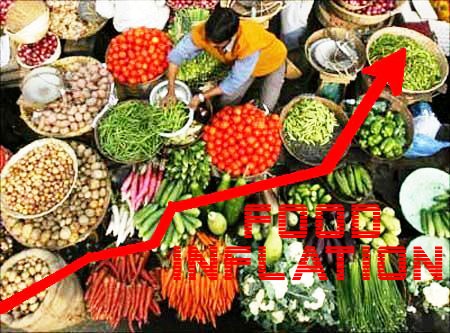 These are pushing millions more people into poverty and hunger, and are contributing to political instability and civil unrest. Climate change is predicted to increase these threats to food security and stability. Responding to this, the world’s largest agriculture research consortium today announced the creation of a new Commission on Sustainable Agriculture and Climate Change.
Chaired by the United Kingdom’s Chief Scientific Adviser, Professor Sir John Beddington, the Commission will in the next ten months seek to build international consensus on a clear set of policy actions to help global agriculture adapt to climate change, achieve food security and reduce poverty and greenhouse gas emissions.
There is a rich body of scientific evidence for sustainable agriculture approaches that can increase production of food, fiber and fuel, help decrease poverty and benefit the environment, but agreement is needed on how best to put these approaches into action at scale. Evidence also shows Read more…
Need Versus Greed

NEW YORK – India’s great moral leader Mohandas Gandhi famously said that there is enough on Earth for everybody’s need, but not enough for everybody’s greed. Today, Gandhi’s insight is being put to the test as never before.
The world is hitting global limits in its use of resources. We are feeling the shocks each day in catastrophic floods, droughts, and storms – and in the resulting surge in prices in the marketplace. Our fate now depends on whether we cooperate or fall victim to self-defeating greed.
The limits to the global economy are new, resulting from the unprecedented size of the world’s population and the unprecedented spread of economic growth to nearly the entire world. There are now seven billion people on the planet, compared to just three billion a half-century ago. Today, average per capita income is $10,000, with the rich world averaging around $40,000 and the developing world around $4,000. That means that the world economy is now producing around $70 trillion in total annual output, compared to around $10 trillion in 1960.
China’s economy is growing at around 10% annually. India’s is growing at Read more…


![[Most Recent Quotes from www.kitco.com]](https://i0.wp.com/www.kitconet.com/charts/metals/gold/t24_au_en_usoz_2.gif)
![[Most Recent Quotes from www.kitco.com]](https://i0.wp.com/www.kitconet.com/charts/metals/silver/t24_ag_en_usoz_2.gif)

 crisisboom
 CRISISBOOM
You must be logged in to post a comment.