Archive
Beneath The Ice of East Antarctica: Dramatic Discoveries Mapped by Radar
nanopatentsandinnovations.blogspot
Scientists from the U.S., U.K. and Australia have used ice-penetrating radar to create the first high- resolution topographic map of one of the last uncharted regions of Earth, the Aurora Subglacial Basin, an immense ice-buried lowland in East Antarctica larger than Texas.
This new topographic map of a portion of the East Antarctic Ice Sheet revealed several giant fjords carved by the advancing and reatreating ice sheet between 34 and 14 million years ago.

Credit: University of Texas
The map reveals some of the largest fjords or ice cut channels on Earth, Read more…
Record-High CO2 Levels a Bad Sign for Global Climate Goals

Record levels of carbon dioxide (CO2) emissions last year threaten our chances of keeping the Earth’s temperature from rising 2 degrees Celsius, considered by scientists to be the threshold for catastrophic climate change.
CO2 emissions from energy production in 2010 were the highest in history following a recessionary dip the year before, the International Energy Agency (IEA) said in a stark announcement Monday. Existing and planned power plants mean the bulk of energy-related CO2 emissions projected for 2020 are already “locked in.”
“This significant increase in CO2 emissions and the locking in of future emissions due to infrastructure investments represent a serious setback to our hopes of limiting the global rise in temperature to Read more…
Solar flaring warning issued

A solar wind stream flowing from the indicated coronal hole could reach Earth on or about June 4th. . Credit: SDO/AIA.
Cape Town – The Space Weather Centre has warned that the sun is undergoing some instability, which has implications for electronic communications.
“There is a very active area on the sun as rotated onto the invisible solar disc. This active area has got the potential for more flaring for the next five to six days,” space weather forecaster Kobus Olckers of the Space Weather Warning Centre at the Hermanus Magnetic Observatory told News24.
He said that communications and electronic systems might be affected.
“The internet could be a little slower for the next week or so and especially long distance communications.”
Polar routes
Scientists recognize three major Read more…
Solar Max Is Coming !
800-Mile-Wide Hot Anomaly Found Under Seafloor off Hawaii
 Hot lava spills into the sea from under a hardened lava crust on the Big Island of Hawaii (file picture).
Photograph by Patrick McFeeley, National Geographic
Dave Mosher
Updated May 27, 2011 (First posted May 26, 2011)
Hawaii‘s traditional birth story—that the volcanic islands were, and are, fueled by a hot-rock plume running directly to Earth’s scorching core—could be toast, a new study hints.
(See pictures of a recent eruption Hawaii’s Kilauea volcano.)
Scientists say they’ve found solid evidence of a giant mass of hot rock under the seafloor in the region. But it’s not a plume running straight from the core to the surface—and it’s hundreds of miles west of the nearest Hawaiian island.
Until now, the researchers say, good seismic data on the region has been scarce, so it was tough to question the Read more…
Claim: NASA Hiding Approaching Doomsday Space Event

Super solar flare [Photo courtesy of NASA]
NASA and the European Space Agency have been warning the world for two years about the approaching catastrophes that may unfold during late 2011 through 2012.
Few have been listening.
Calling it a “once in a lifetime super solar storm event,” NASA warns that killer solar flares can slam the Earth knocking out the Northern Hemisphere’s technological infrastructure and kicking everything back to the level of the late 1800s.
Russia too has voiced concern. And now the eminent astrophysicist, Alexey Demetriev [“PLANETOPHYSICAL STATE OF
THE EARTH AND LIFE“], claims what is happening is worse—much worse—than what NASA and the ESA have admitted: Read more…
Comet Chunk Slams Into Earth’s Atmosphere
Residents of Atlanta, Ga., were treated to a rare event on Friday night: a 2-meter wide chunk of cometary material entered the atmosphere right above their heads. The result? Nothing short of spectacular.
The fireball exploded and disintegrated like the Read more…
ELEnin Dwarf Star Warning September 26, 2011 – Make Viral!
The data says we are looking at an inbound dwarf star that has been causing earthquakes on our planet since 1965 and causing magnetic pole migration since about 2004. The evidence indicates that Earth will experience a pole shift event around 9/26 to 9/27, when the Sun, Earth and this ELE object are on the ecliptic/celestial planes that intersect at the autumn equinox. Everyone is warned to prepare for what is coming later this summer that will make Japan 3/11 look like Read more…
Solar storms may wreak havoc on Earth in 2013: Scientists
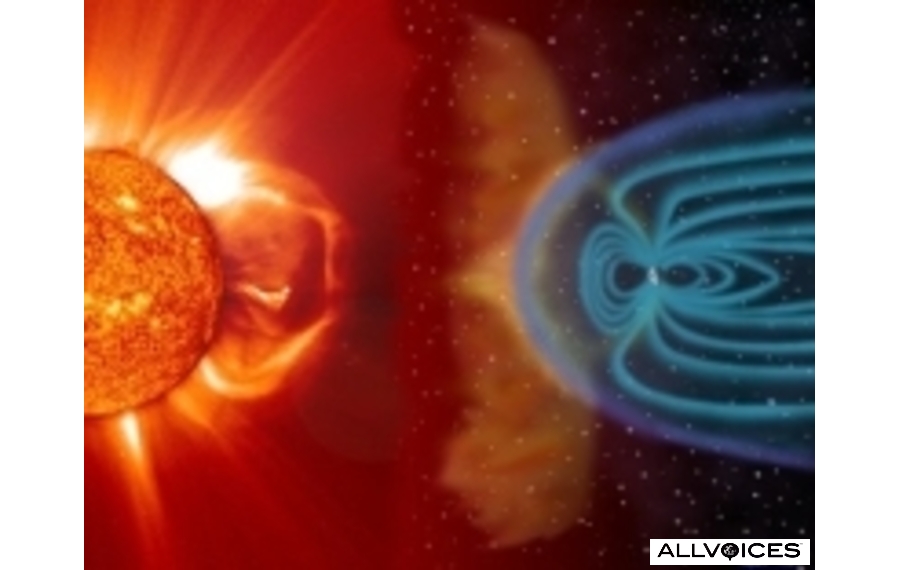 The intensity of solar storms is expected to peak in 2013 and may devastate critical infrastructure like satellite communications, navigation systems and electrical transmission equipment, a top scientist has warned. Kathryn Sullivan, assistant secretary of the US National Oceanic and Atmospheric Administration, said countries should prepare for “potentially devastating effects” from solar storms which are caused by massive explosions on the sun.
Solar storms, according to scientists, release particles that can temporarily disable or permanently destroy fragile computer circuits, the Daily Mail reported.
Dr Sullivan, a former NASA astronaut who in 1984 became the first woman to walk in space, told a UN weather conference in Geneva that “it is not a question of if, but really a matter of when a major solar event could hit our planet”. She is not the only expert to issue a warning about the threat posed by solar storms. In February, astronomers warned that mankind is now more vulnerable to such an event than at any time in history — and that the planet should prepare for a global Hurricane Katrina-style disaster.
A massive solar eruption, they said, would send waves of radiation and charged particles to Earth, damaging satellite systems used for synchronising computers, airline navigation and phone networks. If the storm is powerful enough it could even crash stock markets and cause power cuts that last weeks or months, experts told the American Association for the Advancement of Science.
The chances of a disruption from space are getting stronger because the sun is entering the most active period of its 11 to 12-year natural cycle. The world got a taster of the sun’s explosive power in February when the strongest solar eruption in five years sent a torrent of charged plasma hurtling towards the world at 580 miles per second. The storm created spectacular aurorae and disrupted radio communications.
Space storms are not new. The first major solar flare was recorded by British astronomer Richard Carrington in 1859. Other solar geomagnetic storms have been observed in recent decades. According to NASA, one huge solar flare in 1972 cut off long-distance telephone communication in the mid-western state of Illinois. Another similar flare in 1989 ‘provoked geomagnetic storms that disrupted electric power transmission’ and caused blackouts across the Canadian province of Quebec, the US space agency said.
Monster Storm Rearranges Saturn Before Our Eyes

The best views yet of a giant, once-in-a-generation storm on Saturn are now emerging, revealing how such tempests disrupt the ringed planet and create hot spots and cold vortexes, researchers say.
These findings could shed new light on the behavior of giant planets orbiting both alien stars and our sun. [Photo of Saturn’s huge storm]
The atmosphere of Saturn normally appears calm, but about once per Saturn year — equal to about 30 Earth years — the giant world is gripped by a titanic storm as spring comes to its northern hemisphere. The current monster Saturn storm erupted last Dec. 5.
“This disturbance in the northern hemisphere of Saturn has created a gigantic, violent and complex Read more…


![[Most Recent Quotes from www.kitco.com]](https://i0.wp.com/www.kitconet.com/charts/metals/gold/t24_au_en_usoz_2.gif)
![[Most Recent Quotes from www.kitco.com]](https://i0.wp.com/www.kitconet.com/charts/metals/silver/t24_ag_en_usoz_2.gif)

 crisisboom
 CRISISBOOM
You must be logged in to post a comment.