Archive
QE2 Is Damaging The Economy And Reducing GDP Growth
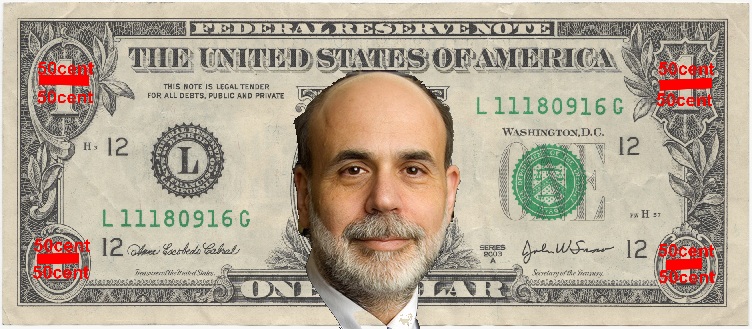 QE2 is going to go down as one of the worst monetary policy initiatives in the history of the modern Federal Reserve era. On almost any metric applied, QE2 ends up not only falling well short of its proposed goals, but actually turns certain metrics like GDP growth negative compared with the prior quarter, and heading in the wrong direction.
Costs Eat into Corporate Profits = No Hiring
Analysts all over Wall Street are starting to revise their 2nd quarter GDP forecasts down, and some like Goldman Sachs have made several downward revisions as higher input costs due to a weak dollar are creating an additional burden on businesses and consumers and thus slowing economic growth.
A weak dollar (Fig. 1) to a point can help exports, but an extremely weak dollar which in combination with QE2 liquidity juicing up commodities even further, turns out to be a net negative on the economy, and risks sending the Read more…
Chinese Know Real Value
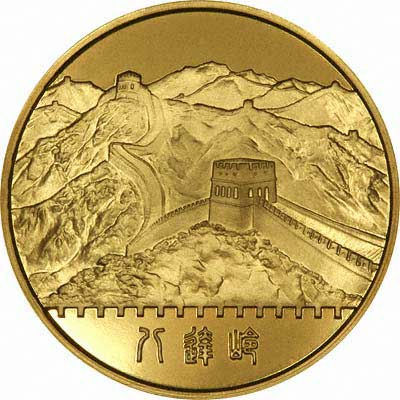 The International Monetary Fund reported without fanfare recently its projection that the candidate who wins the 2012 U.S. presidential election will be the last U.S. President to lead the world’s richest super power.
The IMF prediction is based on its calculation that within the next five years China will surpass the United States as the world’s largest economy.
The IMF forecast differs from that of most traditional forecasts, which put the date China’s economy outstrips the U.S. at least a decade or two into the future. However, those traditional forecasters are looking at value as calculated in currency—and as we at WealthCycles.com have reiterated many times, currency lies.
Gold and silver: through the roof
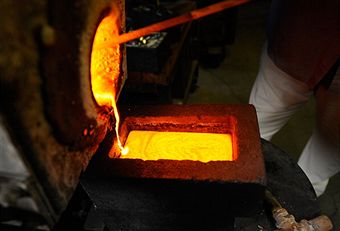 All that glitters is gold, and silver… at least that’s what the market thinks. The price of spot silver jumped 5 per cent to hit $49 a troy ounce, and gold hit a record high for the seventh consecutive session, at $1,517.71 a troy ounce in early trading on Monday. Meanwhile, the US dollar fell to a three-year low.
According to reports from Reuters, much of the interest looks to be coming from India and China.
“Everyone is buying… there is stop-loss buying, as well as a good buying interest from China,” Reuters reported, citing a trader in Hong Kong.
Gold has been at all time highs since the start of the year when oil prices jumped and geo-political concerns in the Middle East began to shake confidence in a global economic recovery. According to the FT’s Jack Farchy, investor holdings in gold through exchange traded funds have risen 1.38 per cent in April this year – the strongest monthly gain since August 2010.
But it’s not just gold that has generated interest in recent months. Holdings in iShares Silver trust, the Read more…
Dollar keeps sinking while gold tops $1,500
Silver, Gold up 49% 6% respectively on the year while Dollar keeps tumbling
The dollar is getting trashed again, driving a key index of the U.S. currency’s value to its lowest level in more than two years.
And as the greenback slumps further, gold and silver — the hard-money alternatives to paper currencies — are hitting new highs. Gold closed above $1,500 an ounce for the first time.
The DXY index, which measures the dollar’s value against six other major currencies (including the euro, the yen and the Swiss franc), slid to 74.10 on Thursday, down 0.4% from Wednesday and the lowest since August 2008.
Year-to-date the DXY index (charted at left) is down 6.2%.
“It’s a ‘sell the dollar, buy everything else’ market,” said Win Thin, a currency strategist at Brown Bros. Harriman in New York.
The euro hit a new 16-month high of $1.454 on Thursday, up from $1.451 on Wednesday. The dollar also hit a record low of 6.52 Chinese yuan, down from 6.56 yuan a month ago, as the Chinese government allows its currency to steadily strengthen.
The buck’s slump this year has been fueled in large part by the widening gulf between U.S. interest rates and Read more…
University of Texas’s Gold Buy Is a Game-Changer
 Over the weekend, an announcement was made that the University of Texas endowment fund had decided to take delivery of $1 billion worth of gold. This was an absolutely huge development on multiple fronts.
First, the UT endowment fund’s gold purchase was a radical deviation from the standard institutional portfolio, the possibility of which we have considered for some time. Since UT has about $20 billion in assets, a $1 billion gold allocation would indicate 5% of its assets in gold. The standard institutional allocation to gold is 1%; a 5% allocation is a huge increase. If (or in our opinion, when) other institutions adopt a similar stance, the price of gold will skyrocket.
Second, the endowment’s purchase of this large an amount of gold gives a huge vote of confidence to gold and precious metals as an investment. For the past few years, financial media has lined up “experts” to tell us all about how gold is an irrational and poor investment, including figures as large as Warren Buffett’s right hand man, Charlie Munger.
Well, the UT endowment fund is neither dumb nor stupid, and it helps that it’s not poor: It’s well-funded institutional investors who are making a tactical investment decision, not a short-term trade. As Kyle Bass, the hedge fund manager who advised UT to purchase the gold, explained, the gold was purchased as a hedge against Read more…
Gold Price, Silver Price As Well As Silver Dollar Values Will Profit From World Mishaps!
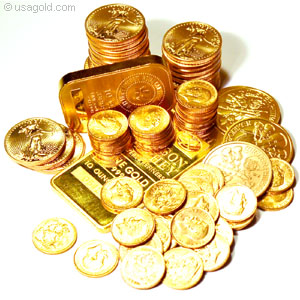 I am sure it will most likely to take really a few weeks or even months to obtain the complete impact from the crisis in Japan. The initial surge in volatility will most likely pave the way for particular possibilities in precious metals and beyond. Any impetus coming from a renewed interest in commodities as the nation rebuilds will bring whatever trading is not boosted by fears from the total score of the disaster. It may not occur right away, but the world’s third biggest economy will restore itself like a phoenix and till then there’s feasible in these markets. Maybe not an improve in jewelry buying or something that may be deemed a frivolity, but investment option demand and provide creating in Read more…
Pastor Lindsey Williams: Nwo to Target ‘Yemen’ Next!
Lindsey Williams announced on the Alex Jones Show that the New World Order will be targeting the fall of Yemen next. Saudi Arabia will be last to fall in the Middle East thus causing oil prices to escalate from $150 to $200 per barrel. He also touches on the current devaluation of the US Dollar and the current gold and silver explosion in commodities. If you are able to… listen to this interview and research it for yourself.
Silver soars to 31-year high
 Gold rose over 1 per cent to a near-record and silver surged Thursday as dollar weakness, inflation worries and a European debt crisis powered bullion to its biggest one-day gain in about seven weeks.
Silver futures soared to their highest since 1980, rising more than 4 per cent for their biggest one-day gain since November, as strong investment and speculative buying sent the gold/silver ratio to a low.
Gold received a boost from inflation worries triggered by a crude oil rally and data showing rising U.S. core producer prices in March, and as higher-than-expected jobless claims knocked the dollar.
“The combination of higher oil prices, weaker dollar and the resurrection of discussions of Greek sovereign risk problems has galvanized the gold market. It’s particularly impressive because we ran into selling above the market yesterday,” said James Steel, chief commodity analyst at HSBC.
Spot gold rose 1.4 per cent to $1,474.30 an ounce by 4:02 p.m. ET, within striking distance of its record $1,476.21 set on Monday. U.S. gold futures for June delivery settled up $16.80 at $1,472.40 an ounce.
Investors grew jittery on talk of debt restructuring by Greece, the first euro zone member to receive a bailout a year ago in the crisis Read more…
China Inflation Is `Somewhat Out of Control’ on Weak Currency, Soros Says
China’s decision to keep its currency weak has caused the government to lose control of inflation and risks fuelling wage-price gains, billionaire investor George Soros said.
While the policy helped insulate China from the financial crisis in 2008, the world’s second-biggest economy has missed its chance to allow the yuan to appreciate to tame inflation, Soros, chairman of Soros Fund Management LLC, said yesterday at a conference in Bretton Woods, New Hampshire.
“It would be very advantageous to allow the currency to appreciate as a way of controlling inflation,” Soros said. “The authorities missed that opportunity. You now have inflation somewhat out of control, and causing some serious danger of wage-price inflation.”
The yuan gained 4.6 percent against the U.S. dollar in the past two years, the second-smallest gain of 10 Asian currencies tracked by Bloomberg, even as economic growth rebounded and foreign-exchange reserves jumped to a record. Inflation accelerated to Read more…
China Buys 47% of the World’s Gold
 China is panicking.
Rampant inflation is driving Chinese consumers to buy gold on a massive scale…
In fact China is already set to buy almost half of all the gold that’ll be mined this year.
You read that right: The Chinese may buy nearly 50% of total world gold production in 2011.
This incredible demand will no doubt put significant strain on global supplies.
Today I want to talk about how this soaring demand may be the catalyst that pushes gold prices over the $1,500 level in as little as a few weeks.
Over 1.3 billion inflation-nervous Chinese eye gold
In January 2010, China recorded an inflation rate of 1.5%. But just 12 months later, the rate of Chinese inflation has climbed to 4.9%.
Rising inflation has sent food and property prices in China skyrocketing.
The price of food in China, for instance, has increased 10.3% on an annual basis; grain saw an increase of 15.1% and fruit is up 34.8% since January of last year:

China’s rising inflation stems from the $585 billion economic stimulus package its leaders pushed through in the depths of the financial crisis two years ago.
In dollar terms, China’s stimulus was much smaller than the $800 billion package the U.S. created. But it was much larger as a percentage of the Read more…


![[Most Recent Quotes from www.kitco.com]](https://i0.wp.com/www.kitconet.com/charts/metals/gold/t24_au_en_usoz_2.gif)
![[Most Recent Quotes from www.kitco.com]](https://i0.wp.com/www.kitconet.com/charts/metals/silver/t24_ag_en_usoz_2.gif)

 crisisboom
 CRISISBOOM
You must be logged in to post a comment.