Archive
What kinds of societies create wealth? What kinds destroy it?
There are some activities that are positive sum activities. That is, they are productive. They increase the total of real wealth in a society.
Bill Bonner
 There are other activities that are zero sum activities…or even negative sum activities. War, for example. Excess legal wrangling. Paperwork. Too much time spent in schools. Too much support for the unemployed, the malingerers and the loafers. These things decrease the total of real wealth in a society.
Sometimes people are bright, honest and hardworking. Sometimes they are lazy, shiftless and cunning. They always prefer to get wealth and status by the easiest means possible. In some societies, the best way is by working hard. In others, it is by being clever…becoming a lawyer…a banker…or a government hack.
A new society…or a fresh economy (such as one that has just been flattened by war or hyperinflation)…or a new model for an economy…is generally a wealth-creating society.
A free society is also generally a wealth creating society. People do what they want. If they want wealth, they are free to create it.
But as societies (or economies) age, they become Read more…
Chinese Silver Demand Surges Incredible Four Fold in Just One Year
Gold is flat and silver marginally lower despite dollar weakness this morning. Some market participants are blaming the precious metal sell off on speculation that China may take more monetary action to curb surging inflation. This is unlikely to be the reason for the sharp selloff, rather it looks like another paper driven sell off in the futures market by leveraged players on Wall Street with various motives.

The fact that silver is again in backwardation at the front end of the curve suggests that tightness in the physical bullion market continues and may even be deepening. Indeed, the massive increase in silver bullion demand from China (confirmed overnight – see below) suggests that silver’s bull market remains very much intact despite becoming overvalued in the short term towards the end of 2010.

Table Courtesy of Mitsui
Surging inflation in China, India, wider Asia and much of the world is of course positive for gold and silver as it will likely lead to an even greater appetite for the precious metals in order to protect against the ravages of inflation and the further depreciation of paper currencies. Read more…
Empty Store Shelves Coming to America
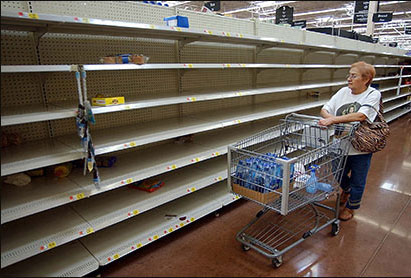 The National Inflation Association today issued a warning to all Americans that empty store shelves will likely be coming to America as a result of government price controls during the upcoming hyperinflationary crisis. This morning, NIA released a video preview of what hyperinflation will look like in the U.S. This extremely important must see video is now available on NIA’s video page.
NIA’s six-minute video released today goes into detail about an event that took place just outside of Boston, Massachusetts in May of this year. This story was widely ignored by the nationwide mainstream media, but NIA believes it was one of the most important news events of the first half of 2010. Although this particular crisis in Boston was due to decaying infrastructure, NIA believes a currency crisis will lead to the same type of panic on a nationwide basis.
NIA hopes that this video serves as a wake-up call for Americans to take the necessary steps to prepare for hyperinflation and become educated about the U.S. economy. In Zimbabwe during hyperinflation, Zimbabweans were forced to transact in gold and silver. It’s only a matter of time before the U.S. dollar becomes worthless and the only Americans with wealth will be those who own Read more…
Could the U.S. central bank go broke?
Reuters
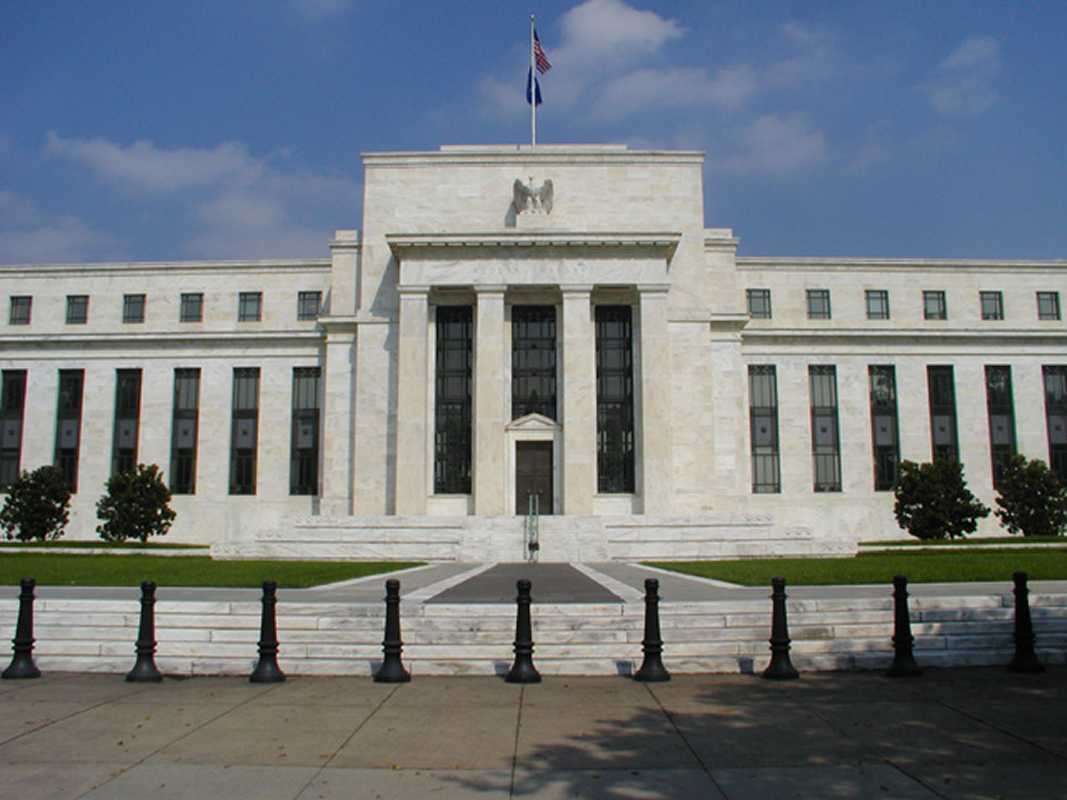 The U.S. Federal Reserve’s journey to the outer limits of monetary policy is raising concerns about how hard it will be to withdraw trillions of dollars in stimulus from the banking system when the time is right.
While that day seems distant now, some economists and market analysts have even begun pondering the unthinkable: could the vaunted Fed, the world’s most powerful central bank, become insolvent?
Almost by definition, the answer is no.
As the monetary authority, the central bank is the master of the printing press. It can literally conjure up money at will, and arguably did exactly that when it bought about $2 trillion of mortgage-backed securities and U.S. Treasuries to push down borrowing costs and boost the economy.
The Fed’s unorthodox steps helped it generate record profits in 2010, allowing it to send $78.4 billion to the U.S. Treasury Department. But its swollen balance sheet leaves the central bank unusually exposed to possible credit losses that could create a major headache at a time of increasing political encroachment on the Fed’s independence. Read more…
Federal Reserve Banking System Explained
Federal Reserve Banking System Explained
Either America Or China Will Crash In 2011
Andy Xie’s latest sees the liquidity war getting worse in 2011.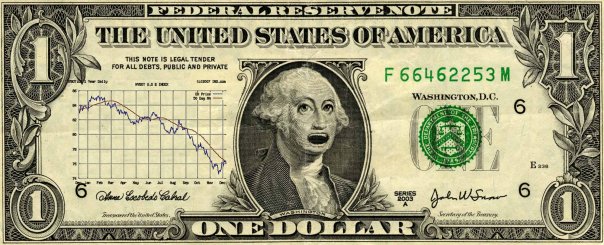
America will continue to pump the financial system with liquidity via tax cuts and quantitative easing. China will keep the yuan cheap and avoid clamping down on inflation.
The tense equilibrium can’t last for long, as either sovereign debt or inflation gets too heavy to bear. Whoever lasts longer, wins.
The most likely candidates to trigger the next global crisis are the U.S.’s sovereign debt or China’s inflation. When one goes down first, the other can prolong its economic cycle. China may have won the last race. To win the next one, China must tackle its inflation problem, which is ultimately a political and structural issue, in 2011. If China does, the U.S. will again be the cause for the next global crisis. China will suffer from declining exports but benefit from lower oil prices.
On the other hand, if China has a hard landing, the U.S.’s trade deficit can drop dramatically, maybe by 50 percent, due to lower import prices. It would boost the dollar’s value and bring down the U.S.’s treasury yield. The U.S. can have lower finacing costs and lower expenditures. The combination allows the U.S. to enjoy a period of good growth.
Xie notes that China may have the advantage here. While America has committed to a liquidity hose, Beijing still has the opportunity to crack down on inflation:
China’s inflation problem stems from the country’s rapid monetary growth in the past decade. That is due to the need to finance a vast property sector, which is, in turn, to generate fiscal revenues for local governments to finance their vast expenditure programs. Unless something is done to limit local government expenditure, China’s inflation problem is likely to get out of control…
There are two ways to limit local government expenditure. One is to cut their funding source. Their main revenue sources are land sales, property taxes, and bank loans. The last source is drying up a bit, as banks are saddled with high exposure to the sector already and are trying to decrease it. This change isn’t biting yet because local governments haven’t spent all the money they borrowed before.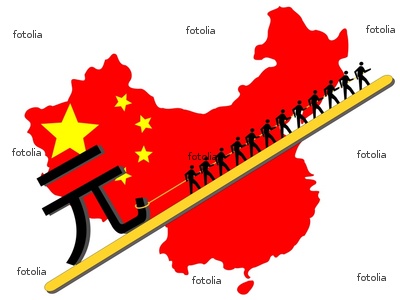
China needs America to consume their goods. This is the only way to keep its 1.3 billion people working and prevent protests and cause social instability. America has lost it manufacturing bases. They have only the printing press to print fit currency. America needs cheap imports from China to keep the illusion of high standard of living that they are used too.
Zimbabwe Hyperinflation comming soon to AMERICA?
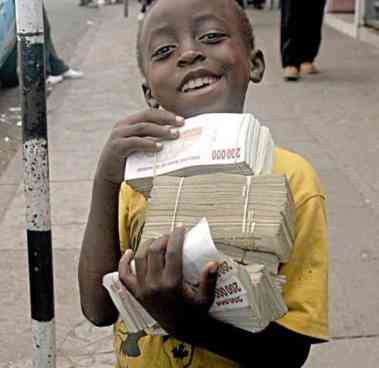
In November 2008 inflation in Zimbabwe hit 89.7 sextillion percent – that is 89 700 000 000 000 000 000 000%.
To get a rough idea how much that is – a sextillion is a billion trillions.In addition to the staggering hyperinflation, unemployment in Zimbabwe also went up to 85% and over the third of the people left the country. Check out the pictures below to get an idea how was life in Zimbabwe during the hyperinflation.
Zimbabwe’s inflation is hardly history’s worst — in Weimar, Germany in 1923, prices quadrupled each month, compared with doubling about once every three or four months in Zimbabwe. That said, experts agree that Zimbabwe’s inflation is currently the world’s highest, and has been for some time. Could this happen to America in the near future?
Fact: Hyperinflation has occurred in 30 nations within the last 100 years.
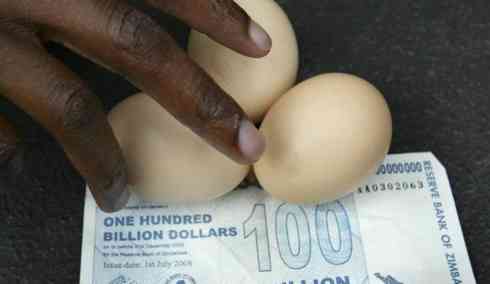
What can you buy with 100 billion dollars? Well… it’s not enough for 4 eggs but you can get 3…
Oil will exceed $145 per barrel in 2011
As predicted by Lindsey Williams on December 16, 2010 Ken Fromm (an former Alaskan oil exec/globalist elite) has been telling Mr. Williams of particular economic woes to come from his deathbed within the next 2 years. I have researched Lindsey’s prior statements regarding oil, precious metals, and other world events and my conclusion is that he is amazingly accurate! Gulf Oil CEO Joe Petrowski said “I think we’ll be at $100 in the first quarter,” he added, “and there’s 1 in 4 chance we’ll take out the $147 highs before Memorial Day.” It is very possible in the near future by the end of 2011 we will paying in the range of $5-$8 at the pump. As of today the current price of crude oil is at $91.51.
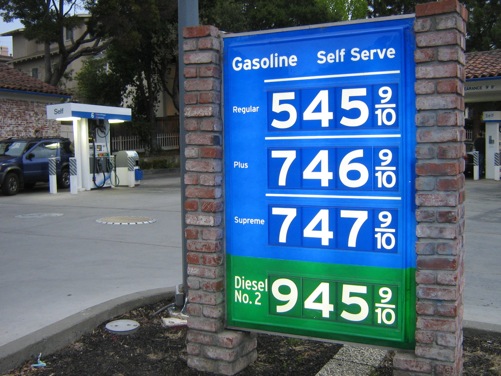
2011 Gas Prices
http://www.cnbc.com/id/40794066
http://www.infowars.com/lindsey-williams-crude-oil-price-targeted-for-150-200-per-barrel/
http://www.allbusiness.com/banking-finance/financial-markets-investing-securities/15335343-1.html


![[Most Recent Quotes from www.kitco.com]](https://i0.wp.com/www.kitconet.com/charts/metals/gold/t24_au_en_usoz_2.gif)
![[Most Recent Quotes from www.kitco.com]](https://i0.wp.com/www.kitconet.com/charts/metals/silver/t24_ag_en_usoz_2.gif)

 crisisboom
 CRISISBOOM
You must be logged in to post a comment.