Archive
Pakistan’s Gilani visits ally Beijing amid US rift
 BEIJING (AP) — Pakistani Prime Minister Yousuf Raza Gilani begins a visit to Beijing on Tuesday with old ally China looking more attractive after the U.S. killing of Osama bin Laden further strained Islamabad’s ties with Washington.
The sentiment is mutual, with China now in the process of shoring up its relations with Islamabad, Afghanistan and several other Central Asia states in step with an expected diminished U.S. presence as it winds down military operations in Afghanistan.
For Pakistan, Beijing represents an uncritical friend ready to provide aid, investment and military assistance. To the leaders in Beijing, ties with Pakistan and other countries in its neighborhood offer a bigger diplomatic footprint, better access to resources and a larger stable of allies to challenge U.S. supremacy.
Although Gilani’s four-day visit starting Tuesday was planned well in advance, it comes at a critical time for his country’s relations with the U.S., which have been thrown into crisis over the American raid that killed bin Laden in the northern Pakistani city of Abbottabad on May 2. Pakistan has called it a violation of its sovereignty and threatened to retaliate if there are any similar operations in future.
While American politicians served up withering criticisms over Pakistan’s failure to find bin Laden’s hide-out – or the possibility that officials were protecting him – China offered welcome Read more…
Gold demand strong; predicted prices around $2000
 Gold temporarily succeeded to recover some of the losses from the sizeable sell-off in early May, but fell back late Friday to end the week unchanged.
Bearish sentiment constrained gold to a weekly low of around $1479 on Thursday. However, the metal found good support at its 15-week uptrend line and rebounded, temporarily at least, back above $1500.
Physical demand for gold has raised in the Far East and Asia. Despite the 5% correction seen at the start of the month analysts continue to predict prices around the $2000 level at least by next year.
“Since the start of May, physical gold demand has been strong,” said Walter de Wet, an analyst at Standard Bank Plc in London.“While consistent physical buying interest has come from India specifically, we are witnessing a broader interest from Asia in general.”
Central banks are worth another mention as more of them look to purchase gold, with the surplus earning countries leading the way. Figures issued by the World Gold Council (WGC) show there were no transactions of gold bullion by central banks in February and March. The WGC‘s data confirm gold bullion purchases by Mexico, Thailand and Russia.
India’s Army Could Receive WMD-Resistant Gear
Russia announced that it would provide its military with these suits earlier this month.
 India’s army could receive new gear designed to provide protection against chemical, biological or nuclear materials, the Press Trust of India reported on Wednesday (see GSN, April 26).
Kanpur’s Defense Material and Stores Research Development Establishment “has developed a new NBC or nuclear-biological-chemical suit that would be proved effective against any kind of dangerous weapons or chemicals and protect soldiers from any sort of attack,” agency head Arvind Kumar Saxena said.
“The organization [has] developed the chemical attack-resistant suit, but the suits necessary for the nuclear and biological war situation has not been prepared,” the official said. “The work on the biological suit is likely to be completed by 2013, whereas the preparation for the Read more…
Gold and silver: through the roof
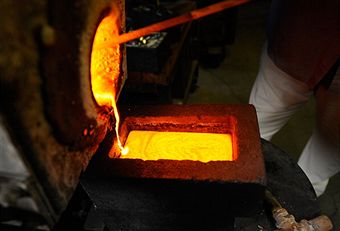 All that glitters is gold, and silver… at least that’s what the market thinks. The price of spot silver jumped 5 per cent to hit $49 a troy ounce, and gold hit a record high for the seventh consecutive session, at $1,517.71 a troy ounce in early trading on Monday. Meanwhile, the US dollar fell to a three-year low.
According to reports from Reuters, much of the interest looks to be coming from India and China.
“Everyone is buying… there is stop-loss buying, as well as a good buying interest from China,” Reuters reported, citing a trader in Hong Kong.
Gold has been at all time highs since the start of the year when oil prices jumped and geo-political concerns in the Middle East began to shake confidence in a global economic recovery. According to the FT’s Jack Farchy, investor holdings in gold through exchange traded funds have risen 1.38 per cent in April this year – the strongest monthly gain since August 2010.
But it’s not just gold that has generated interest in recent months. Holdings in iShares Silver trust, the Read more…
Gold Price, Silver Price As Well As Silver Dollar Values Will Profit From World Mishaps!
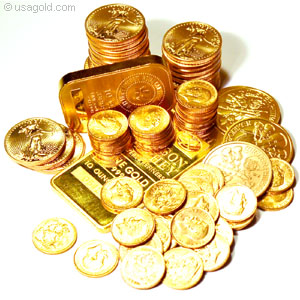 I am sure it will most likely to take really a few weeks or even months to obtain the complete impact from the crisis in Japan. The initial surge in volatility will most likely pave the way for particular possibilities in precious metals and beyond. Any impetus coming from a renewed interest in commodities as the nation rebuilds will bring whatever trading is not boosted by fears from the total score of the disaster. It may not occur right away, but the world’s third biggest economy will restore itself like a phoenix and till then there’s feasible in these markets. Maybe not an improve in jewelry buying or something that may be deemed a frivolity, but investment option demand and provide creating in Read more…
Prepare for the Next Conflict: Water Wars
 Every minute, 15 children die from drinking dirty water. Every time you eat a hamburger, you consume 2400 liters of the planet’s fresh water resources — that is the amount of water needed to produce one hamburger. Today poor people are dying from lack of water, while rich people are consuming enormous amounts of water. This water paradox illustrates that we are currently looking at a global water conflict in the making.
We are terrifyingly fast consuming one of the most important and perishable resources of the planet — our water. Global water use has tripled over the last 50 years. The World Bank reports that 80 countries now have water shortages with more than 2.8 billion people living in areas of high water stress. This is expected to rise to 3.9 billion — more than half of Read more…
BRICS demand global monetary shake-up, greater influence

(L-R) India's Prime Minister Manmohan Singh, Russia's President Dmitry Medvedev, China's President Hu Jintao, Brazil's President Dilma Rousseff and South African President Jacob Zuma attend a joint news conference at the BRICS Leaders Meeting in Sanya, Hainan province April 14, 2011. The development banks of the five BRICS nations agreed in principle on Thursday to establish mutual credit lines denominated in their local currencies, not in dollars. REUTERS/How Hwee Young/Pool
SANYA, China (Reuters) – The BRICS group of emerging-market powers kept up the pressure on Thursday for a revamped global monetary system that relies less on the dollar and for a louder voice in international financial institutions.
The leaders of Brazil, Russia, India, China and South Africa also called for stronger regulation of commodity derivatives to dampen excessive volatility in food and energy prices, which they said posed new risks for the recovery of the world economy.
Meeting on the southern Chinese island of Hainan, they said the recent financial crisis had exposed the inadequacies of the current monetary order, which has the dollar as its linchpin.
What was needed, they said in a statement, was “a broad-based international reserve currency system providing stability and certainty” — thinly veiled criticism of what the BRICS see as Washington’s neglect of its global monetary responsibilities.
The BRICS are worried that America’s large trade and budget deficits will eventually debase the dollar. They also begrudge the financial and political privileges that come with being the leading reserve currency.
“The world economy is undergoing profound and complex changes,” Chinese President Hu Jintao said. “The era demands that the BRICS countries strengthen dialogue and cooperation.”
In another dig at the dollar, the development banks of the five BRICS nations agreed to establish mutual credit lines denominated in their local currencies, not the U.S. currency.
The head of China Development Bank (CDB), Chen Yuan, said he was prepared to lend up to 10 billion yuan to fellow BRICS, and his Russian counterpart said he was looking to borrow the yuan equivalent of at least $500 million via CDB.
“We think this will undoubtedly broaden the opportunities for Russian companies to diversify their loans,” Vladimir Dmitriev, the chairman of VEB, Read more…
India objects to ‘smuggling’ superbug samples out to UK
 NEW DELHI: India on Thursday seriously objected to biological samples in the form of “swabs of seepage water and tap water” being carried out of the country “on the sly” by British scientists to test the presence of the multi-drug resistant superbug.
India said it was a signatory to World Health Organization’s International Materiel Transfer Agreement as per which permission is required to carry out any biological material from the country.
“The way scientists carried out samples from India to be tested in UK does not point to a good scientific motive. It is illegal,” said Dr V M Katoch, director general of Indian Council for Medical Research. “Some people want to keep the heat on India,” he added.
According to him, such multi-drug resistant bacteria — like what is being called a superbug caused by the NDM1 gene — exists in environment across the world. “To keep on pressing India as a hotbed of such superbugs is unfair, and its motive is questionable,” Dr Katoch added.
The scientists had collected 171 swabs of seepage water and 50 public tap water samples Read more…
South Korea shuts schools amid Japan radiation fears

Ahn Young-joon / AP
TOKYO — Dozens of schools in South Korea closed Thursday amid concerns about radioactive fallout from Japan’s nuclear disaster.
Classes were canceled or shortened at more than 150 schools as rain fell across the country.
Authorities said radiation levels in the rain posed no health threat.
However, school boards across the country — Japan’s closest neighbor — advised Read more…
Japan stops leaks from nuclear plant
TOKYO (Reuters) – Engineers have stopped highly radioactive water leaking into the sea from a crippled Japanese nuclear power plant, the facility’s operator said on Wednesday, a breakthrough in the battle to contain the worst nuclear crisis since Chernobyl.
However, Tokyo Electric Power (TEPCO) still needs to pump contaminated water into the sea because of a lack of storage space at the facility.
“The leaks were slowed yesterday after we injected a mixture of liquid glass and a hardening agent and it has now stopped,” a TEPCO spokesman told Reuters.
Desperate engineers had been struggling to stop the leaks and had used sawdust, newspapers and concrete as well as liquid glass to try to stem the flow of the highly-contaminated water.
Japan is facing its worst crisis since World War Two after a 9.0 magnitude earthquake and tsunami hit its northeast coast, leaving Read more…


![[Most Recent Quotes from www.kitco.com]](https://i0.wp.com/www.kitconet.com/charts/metals/gold/t24_au_en_usoz_2.gif)
![[Most Recent Quotes from www.kitco.com]](https://i0.wp.com/www.kitconet.com/charts/metals/silver/t24_ag_en_usoz_2.gif)

 crisisboom
 CRISISBOOM
You must be logged in to post a comment.