Archive
Nebraskans say a Canadian oil pipeline poses unacceptable risks
 Part of the Keystone pipeline (solid line) is already working. Construction on Keystone XL (red dotted line) is supposed to start soon so oil can flow to the Gulf
The 20,000 miles of pipes that carry oil and gas across Nebraska’s open prairies don’t bother Randy Thompson at all. Neither do greenhouse gas emissions or oil geopolitics.
Yet the 63-year-old, Republican-voting rancher and other Nebraska landowners have begun to kick up a lot of dust over the Keystone XL, a 1,711-mile pipeline that, if built, will cut across Nebraska’s heartland as it funnels oil from the Athabasca sands of Alberta, Canada, to Read more…
BREAKING NEWS! OIL LEAK IN GULF CONFIRMED FROM THE BP GULF OIL SPILL MACONDO WELL!
In this video shot near the site of the Deepwater Horizon accident, globs of oil are seen blooming on the Gulf surface in iridescent yellow circles. Chemical analysis of the Press-Register’s samples by LSU scientists found that the oil could be from the BP well, but results were not conclusive. BP meanwhile said no oil was present when the company flew over the area Saturday.
Read more…
Rupture of Shell pipeline causes ‘substantial’ spill

Royal Dutch Shell’s ruptured North Sea pipeline has caused a “substantial” spill, with oil still leaking into the sea, the British government and the company has said.
The department of energy and climate change said yesterday that “estimates are that the spill could be of several hundred tonnes”.
A spill on that scale would be the worst in the North Sea since 2000, when more than 500 tonnes was spilt, according to data supplied by the department.
Shell said about 216 tonnes of oil, equivalent to 1,300 barrels, had leaked into the North Sea in a “significant spill”.
“Work continues to stop the oil remaining in the flowline from leaking,” the company said in a separate statement. “We estimate the current rate of leakage is Read more…
China And Iran To Bypass Dollar, Plan Oil Barter System, And A Deeper Dive Into The Iranian Oil Bourse
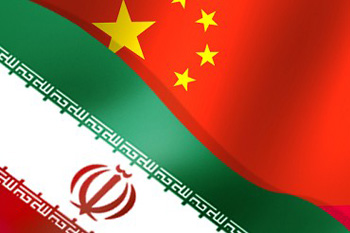 One of the more notable events in the past week was the previously discussed reopening of the Iranian Oil Bourse, an attempt by Iran to launch a venue that bypasses US sanctions against Iran which has prevented payment in the world’s reserve currency for Iranian goods. “Big deal”, some will say, this is not the first time Iran has attempt to upstage the Great Satan. Well, true, although as OilPrice said last week, “what it would take for Iran’s new exchange to survive and flourish are some heavy-duty customers that Washington would be wary of picking a fight with, and Tehran already has one – China… China, the world’s largest buyer of Iranian crude oil, has renewed its annual import pacts for 2011. In 2010 Iran supplied about 12 percent of China’s total crude imports. According to the latest report of the China Customs Organization, Iran’s total oil exports to China stood at Read more…
Iran Opens Oil Bourse – Harbinger of Trouble for New York and London?
 The last three years of global recession have dealt a major blow to American capitalist ideas trumpeted throughout the world on the value of “free markets.” Wall St has been revealed as a form of casino economy, with the bankster insiders gambling with other people’s, and eventually, the government’s money in the form of bailouts. As the Republicans in Congress, scenting victory in the 2012 presidential elections, hold a gun to the Obama administration’s head and rating agencies consider downgrading U.S. government bonds in light of Washington’s possible defaulting, many ideas around the world that previously seemed implausible because of the dominance of the U.S. economy are garnering renewed interest.
Not surprisingly, many of these concepts originate in countries not enamored with Washington’s influence, perhaps none so more than “Axis of Evil” charter member Iran, which has seen its economy Read more…
OPEC: Venezuela Has Largest Oil Reserves, Surpassing Saudi Arabia
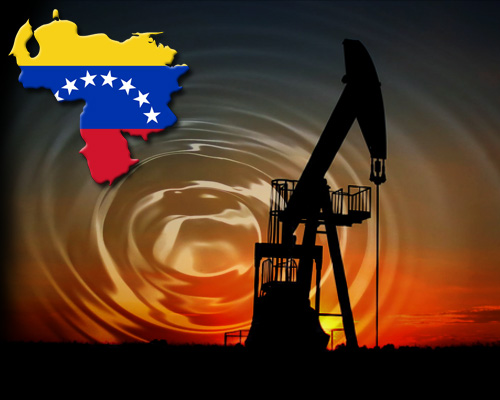 Venezuela’s crude oil proven reserves exceeded those of Saudi Arabia last year according to OPEC’s annual statistical report. In 2009, OPEC listed Saudi as having the highest reserves at 264.59 billion barrels or 25.9% of OPEC’s overall reserves and Venezuela at 211.17 billion barrels or 19.8% of OPEC reserves.
According to OPEC’s latest annual report, Venezuela’s proven crude oil reserves reached 296.5 billion barrels in 2010, up 40.4% on the year and higher than Saudi Arabia’s 264.5 billion barrels.
The data confirms statements by Venezuela’s national oil company (PDVSA) which reported it had this level of reserves as early as January of this year. Venezuela began certifying its oil reserves in the Orinoco belt in 2007 and since then the corporate media accused PDVSA of Read more…
Why China Wants South China Sea
By Tetsuo Kotani
Beijing is interested in more than just energy and fishery resources. The area is also integral to its nuclear submarine strategy.

In an effort to underscore its importance to Asia, geostrategist Nicholas Spykman once described it as the ‘Asiatic Mediterranean.’ More recently, it has been dubbed the ‘Chinese Caribbean.’ And, just as Rome and the United States have sought control over the Mediterranean and Caribbean, China now seeks dominance over the South China Sea.
It’s clear that China’s claims and recent assertiveness have increased tensions in this key body of water. Yet while most attention has focused on Beijing’s appetite for fishery and energy resources, from a submariner’s perspective, the semi-closed sea is integral to China’s nuclear strategy. And without understanding the nuclear dimension of the South China Sea disputes, China’s maritime expansion makes little sense.
Possessing a credible sea-based nuclear deterrent is a priority for China’s military strategy. China’s single Type 092, or Xia-class, nuclear-powered ballistic missile submarine, equipped with short-range JL-1 submarine-launched ballistic Read more…
‘Ice Wars’ heating up the Arctic


Editor’s note: CNN correspondent Kaj Larsen recently visited the Arctic to observe the U.S. naval exercise known as ICEX. His experience is part of the CNN documentary “Ice Wars,” which will air at 8 p.m. ET Sunday on CNN Presents.
(CNN) — On a small, floating piece of ice in the Beaufort Sea, several hundred miles north of Alaska, a group of scientists are documenting what some dub an “Arctic meltdown.”
According to climate scientists, the warming of the region is shrinking the polar ice cap at an alarming rate, reducing the permafrost layer and wreaking havoc on polar bears, arctic foxes and other indigenous wildlife in the region.
What is bad for the animals, though, has been good for commerce.
The recession of the sea ice and the reduction in permafrost — combined with advances in technology — have allowed access to oil, mineral and natural gas deposits that were previously trapped in the ice.
The abundance of these valuable resources and the opportunity to exploit them has created a Read more…
Food prices continue to skyrocket, even when gas prices fall
 Food prices are skyrocketing. Part of the reason why is because, as the world’s population rises, so too has food consumption.
Another reason, at least here in the United States, is because the dollar has slipped in value in recent months.
But one of the primary reasons why prices are climbing so dramatically is because fuel prices have shot up in the past year. Yet even as gas and diesel prices have begun to fall recently, food costs haven’t.
According to fuel price-tracking Web site Gasbuddy.com, prices have slipped nearly 20 cents in the past month, or just over 5 percent. But prices for commodities and some staples like coffee, bacon, fruits, meat, pastas and other items have shot up 40 percent in the past year. Cotton, too, has risen dramatically, making clothing more expensive.
As an example, the price of grapes has climbed 30 percent, while cabbage has risen 17 percent and orange juice 5 percent.
And while the government’s official inflation rate of 3.6 percent (annualize) doesn’t seem serious, that figure is masking the true cost of a number of commodities Americans traditionally buy.
For example, Read more…
Republic of South Sudan celebrates its Birth
 Church bells rang at midnight to mark the birth of the world’s newest nation – the Republic of South Sudan.
Despite the excitement of the independence celebrations and a mood of joyful expectation in its new capital – the Nile River city of Juba – the emerging country faces grim realities: It is one of the most underdeveloped countries on the planet and has only a 15-per-cent literacy rate. Most citizens live on $1 a day. Education and health facilities are sorely underdeveloped, and fears of renewed conflict abound. Read more…


![[Most Recent Quotes from www.kitco.com]](https://i0.wp.com/www.kitconet.com/charts/metals/gold/t24_au_en_usoz_2.gif)
![[Most Recent Quotes from www.kitco.com]](https://i0.wp.com/www.kitconet.com/charts/metals/silver/t24_ag_en_usoz_2.gif)

 crisisboom
 CRISISBOOM
You must be logged in to post a comment.