Archive
CERN ‘gags’ physicists about role of cosmic rays in climate change
theextinctionprotocol.wordpress
 July 20, 2011 – DENMARK – The chief of the world’s leading physics lab at CERN in Geneva has prohibited scientists from drawing conclusions from a major experiment. The CLOUD (“Cosmics Leaving Outdoor Droplets”) experiment examines the role that energetic particles from deep space play in cloud formation. CLOUD uses CERN’s proton synchrotron to examine nucleation. CERN Director General Rolf-Dieter Heuer told Welt Online that the scientists should refrain from drawing conclusions from the latest experiment. “I have asked the colleagues to present the results clearly, but not to Read more…
Bastille Day Solar Storm: Anatomy of a Gargantuan Sun Tempest

The "Bastille Day" solar flare as seen by SOHO's EIT instrument in the 195 Å emission line. CREDIT: NASA
One of the most violent sun storms in recorded history erupted 11 years ago today (July 14).
The event was called the Bastille Day Solar Storm, and it registered as an X-class flare, the highest designation possible. (One storm since then, in October 2003, was even more powerful.)
Ever wonder just how a solar storm brews? So do scientists. Here’s a rundown of what happened on July 14, 2000, one of the sun’s most violent days:
A sunspot was born. This occurred when magnetic field lines became tangled by the  churning and shifting of plasma bubbles on the sun’s surface. These twisted magnetic field lines formed a sunspot — an active region that appeared darker than the surrounding area. [Infographic: Anatomy of Solar Storms & Flares]
As the magnetic field lines became more and more twisted, magnetic potential energy built up, similar to how a roller coaster car at the top of the track builds up gravitational potential energy, which is then converted to the kinetic energy of motion as the car zooms downward.

CREDIT: NASA/TRACE
When the magnetic potential energy of the sun finally hit a certain point, it snapped, releasing that energy in the form of heat, light and the motion of particles. Plasma on the sun was heated up to 20 million or 30 million degrees Kelvin (36 million to 54 million degrees Fahrenheit). Plasma particles were accelerated along giant loops that traced magnetic field lines down through successive layers of the sun’s atmosphere.
These loops connected to form large ribbons of superheated plasma.
At the same time, some plasma particles from the sun’s atmosphere were accelerated away from the surface, out into space. Such a release of material is called a coronal mass ejection. Many of these protons and electrons made their way to Earth, where they disrupted satellites and blocked radio communications.
Though scientists understand many aspects of the storm’s process, there are still some pressing questions. One of the biggest is: What sparked the storm in the first place? [Hell Unleashed: Sun Spits Fire in Close-Up]
“The holy grail, which is not solved yet, is, what is the actual trigger mechanism that causes this buildup of energy to be released?” said Phil Chamberlin, a solar scientist at NASA’s Goddard Space Flight Center in Greenbelt, Md.
However, the Bastille Day solar storm did go a long way toward helping scientists piece together a general theory of how eruptions on the sun occur.
“This theory is all based on observations from the Bastille Day flare,” Chamberlin told SPACE.com.
That knowledge will come in especially handy in the coming years, as the sun ramps up toward a peak in its 11-year cycle of activity. Near the end of 2013, we are likely to see storms that rival, or even surpass, the Bastille Day event.
Comet’s Death by Sun Photographed for First Time
 |
| The Solar Dynamics Observatory AIA imager (observing in extreme ultraviolet light) actually spotted a sun-grazing comet as it disintegrated over about a 15 minute period (July 6, 2011), something never observed before. The angle of the comet’s orbit brought it across the front half of the Sun. Given the intense heat and radiation, the comet simply evaporated away completely. The comet was probably a member of the Kreutz sun-grazer family. CREDIT: NASA/SDO/AIA |
The death of a comet that plunged into the sun was captured on camera this month for the first time in history, scientists say.
The comet met its fiery demise on July 6 when it zoomed in from behind the sun and melted into oblivion as it crashed into the star. It was NASA’s Solar Dynamics Observatory (SDO), a satellite orbiting Earth that studies the sun, which witnessed the comet’s death-blow.
One of the SDO spacecraft’s high-definition imagers “actually spotted a sun-grazing comet as it disintegrated over about a 15 minute period (July 6, 2011), something never observed Read more…
Behemoth sunspots evolve
The SDO team has just prepared a beautiful movie of the explosion that produced the CME.
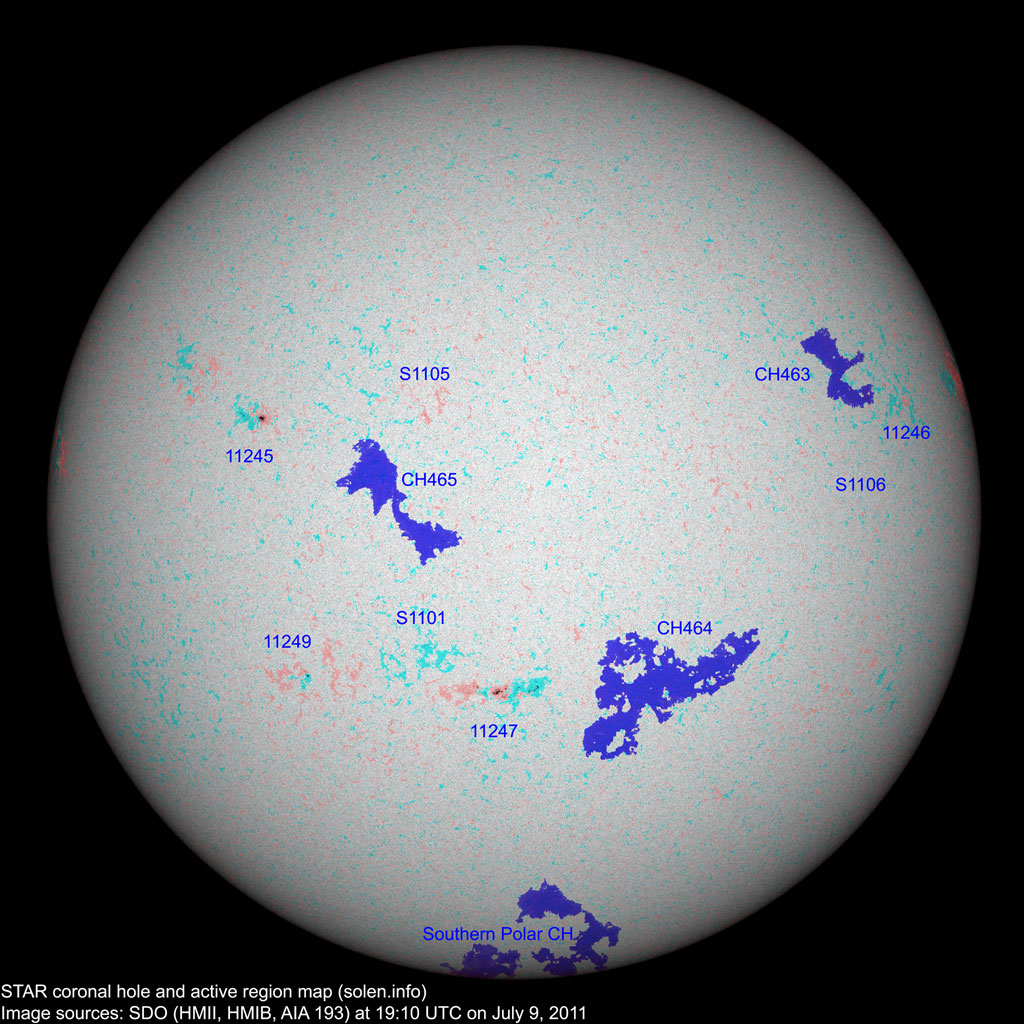
Sunspot group 1247 is expanding rapidly and in an interesting way. The active region is organizing itself as a linear Read more…
Mars is left behind, Earth is ahead!
 L. Elenin / ISON-NM observatory
At the end of June 2011, Comet Elenin will cross the orbit of the fourth planet of the Solar System – Mars. It must be noted that from April to June, the comet did not come closer to the Earth, but moved “parallel” with it. Right at the beginning of July, the comet will begin to very quickly move toward our planet. I again want to emphasize, the comet will pass 35 million kilometers from the Earth. It is an absolutely safe distance, just a little closer to the Earth than the second planet, Venus, comes.
At left you can see an image of the comet taken June 21th at our observatory. In the earthly sky the comet is quite close to the Sun, and soon it will be impossible to observe – it will be hidden the rays of the setting Sun. C/2010 X1 (Elenin) will not emerge from solar conjunction until the beginning of October, when it will be visible in binoculars and maybe even with the unaided eye.
Unidentified Object @ Antarctica’s Neumayer Station 061811- 062011
These are recent photos from the Antarctica Neumayer Station on 6/18/11 – 6/20/11.
http://www.antarcticconnection.com/antarctic/stations/neumayer.shtml
This object would confirm what we are seeing at 2:57 in this video…
http://www.youtube.com/watch?v=hUiKzdLb7Yc
Please take a look. This video confirms what we are seeing in the Antarctic.
These new photos have me extremely puzzled and concerned. We’ve identified the moon and the location of the Sun, but there is another large Read more…
Scientists discover brightest, earliest quasar
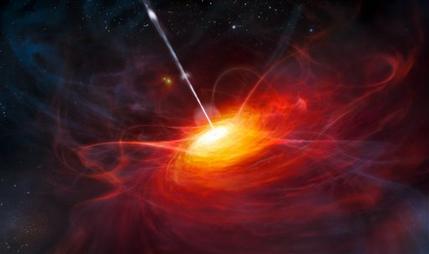
LOS ANGELES (AP) — A team of European astronomers, glimpsing back in time to when the universe was just a youngster, says it has detected the most distant and earliest quasar yet.
Light from this brilliant, starlike object took nearly 13 billion years to reach Earth, meaning the quasar existed when the universe was only 770 million years old – a kid by cosmic standards. The discovery ranks as the brightest object ever found.
To scientists’ surprise, the black hole powering this quasar was 2 billion times more massive than the sun. How it grew so bulky so early in the universe’s history is a mystery. Black holes are known to feed on stars, gas and other matter, but their growth was always thought to be slow.
The discovery was reported in Thursday’s issue of the journal Nature.
Since quasars are so luminous, they guide astronomers studying the conditions of Read more…
FDA officially declares the sun unsafe, urges public to lather toxic sunscreen on skin
 The absurdity of many US government recommendations would be humorous if not for the millions of Americans that take them seriously. The latest pseudo-scientific nonsense being peddled by Big Brother is the US Food and Drug Administration’s (FDA) ignorant claim that sunlight is dangerous, and that only “broad spectrum” sunscreens that block basically every type of sun ray from penetrating the skin are capable of preventing skin cancer and other alleged sun-induced diseases.
The FDA’s recent announcement deals primarily with a significant change in sunscreen labeling, but the devil is in the details as the agency purports in its press release that the sun is dangerous and must be avoided. The agency would rather have every American lather on a coating of toxic, chemical-laden sunscreen than risk the chance that even a single ray of “damaging’ sunshine penetrate their skin.
Such nonsense, of course, has been debunked by Read more…
Solar Activity Intensifying
Dr. Mark Sircus, Contributing Writer
Activist Post
On June 7th, Dr. C. Alex Young from the NASA Goddard Space Flight Center woke to an email from a friend saying, “I have never seen anything like this before.” There are many things happening around us that we have not seen before, but when it happens on the sun certain people take notice. On the 7th the sun produced a prominence eruption and Dr. Young had never seen such a spectacular event, which luckily did not affect the Read more…


![[Most Recent Quotes from www.kitco.com]](https://i0.wp.com/www.kitconet.com/charts/metals/gold/t24_au_en_usoz_2.gif)
![[Most Recent Quotes from www.kitco.com]](https://i0.wp.com/www.kitconet.com/charts/metals/silver/t24_ag_en_usoz_2.gif)

 crisisboom
 CRISISBOOM
You must be logged in to post a comment.