Archive
Warning of Recurring Food Crises
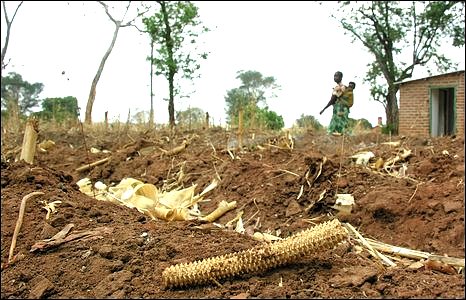 Soaring and volatile food prices have experts warning of recurring food crises, putting poor people – especially women and children – at risk.
Similar conditions existed during the 2007/2008 food crisis, when high prices and shortages ignited unrest in many countries around the world.
IFPRI, the International Food Policy Research Institute, is calling for urgent action to prevent a repeat of the crisis. Director-General Shenggen Fen says, “Many food items have become more expensive…since last May or June. Wheat prices have almost doubled. The maize price has also increased substantially. Many meat products, dairy products have also increased substantially.”
While the situation is not as serious as the food crisis three years ago, Fen says, “If we don’t take urgent actions, food prices will continue to rise and the poor people will suffer.”
What’s triggering the price hikes? Read more…
Japan crisis: ‘There’s no food, tell people there is no food’

The unshaven man in a tracksuit stops his bicycle on the roadside and glances over his shoulder to check that he is unobserved. Satisfied, he reaches quickly into the sludge-filled gutter, picks up a discarded ready-meal and stuffs it into a plastic carrier bag.
In another time, another place, Kazuhiro Takahashi could be taken for a tramp, out scavenging for food after a long night on the bottle. In fact, he is just another hungry victim of Japan’s tsunami trying to find food for his family.
“I am so ashamed,” says the 43-year-old construction worker after he realises he has been spotted. “But for three days we haven’t had enough food. I have no money because my house was washed away by the tsunami and the cash machine is not working.”
If his haul wasn’t so pitiful — his bag had two packets of defrosted prawn dumplings and a handful of Read more…
The Causes of Rising Food Prices
 Food prices are rising quickly around the world. Part of the problem is weather. The winter wheat crop in China has been poor. Australia has suffered floods, while Russia has undergone a drought. The earthquake and tsunami in Japan, no doubt, will hammer the very intensive agricultural production of the limited arable land on that archipelago. Weather-related agricultural problems, however, balance out fairly quickly. Mythical “global warming” aside, weather has ups and downs, and farmers, who are smart folks, take that into account. The Soviet Union, whose vassal state the Ukraine was once one of the best farmlands on earth, never managed to feed its people well, because a communist-controlled economy destroys Read more…
Recent droughts and floods have contributed to increases in food prices
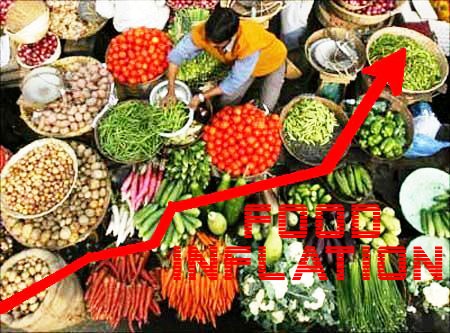 These are pushing millions more people into poverty and hunger, and are contributing to political instability and civil unrest. Climate change is predicted to increase these threats to food security and stability. Responding to this, the world’s largest agriculture research consortium today announced the creation of a new Commission on Sustainable Agriculture and Climate Change.
Chaired by the United Kingdom’s Chief Scientific Adviser, Professor Sir John Beddington, the Commission will in the next ten months seek to build international consensus on a clear set of policy actions to help global agriculture adapt to climate change, achieve food security and reduce poverty and greenhouse gas emissions.
There is a rich body of scientific evidence for sustainable agriculture approaches that can increase production of food, fiber and fuel, help decrease poverty and benefit the environment, but agreement is needed on how best to put these approaches into action at scale. Evidence also shows Read more…
The Oil-Food Price Shock
 When future historians attempt to trace the origins of the current turmoil in the Middle East, they will find that one of the earliest of the many explosions of rage occurred in Algeria and was triggered by the rising price of food. On January 5, young protesters in Algiers, Oran and other major cities blocked roads, attacked police stations and burned stores in demonstrations against soaring food prices. Other concerns—high unemployment, pervasive corruption, lack of housing—also aroused their ire, but food costs provided the original impulse. As the epicenter of youthful protest moved elsewhere, first to Tunisia and then to Egypt and other countries, the food price issue was subordinated to more explicitly political demands, but it never disappeared. Indeed, the rising cost of food has been a major theme of anti government demonstrations in Jordan, Sudan and Yemen. With the price of most staples still climbing—spurred in part by a parallel surge in oil costs—more such protests are bound to occur.
Global Food Prices Hit A Record High For The Third Straight Month
Global food prices broke another record in February: higher than January, December and the so-called food crisis of 2008.
The UN index showed a slight decline in sugar prices — still extremely high — with a rise in oil, cereal, dairy and meat.
At this point it’s hard not to see food as a key factor in the Arab revolts.
See Also: 25 Countries That Are Vulnerable To A Food Crisis

Food prices to skyrocket, riots could follow, suggests USDA
http://www.naturalnews.com/031545_USDA_food_prices.html
(NaturalNews) When the upswing in commodity prices eventually makes its way throughout the food system in mid-to-late 2011, food prices are sure to spike with levels potentially reaching those of 2008, announced U.S. Department of Agriculture (USDA) economist Ephraim Leibtag at the agency’s annual Outlook Forum. And if conditions escalate rapidly, there is also the potential for food riots and other civil unrest.
The USDA is predicting a 3.5 percent increase in food prices in 2011, which is about twice the overall inflation rate but less than the 2008 increase, according to a recent Reuters report. In 2008, food prices rose 5.5 percent, which represents the highest increase since 1990. But the possibility of food prices dramatically rising in 2011 like they did in 2008 is a definite possibility.
“Given that it’s still earlier in the year, I’m prone to be conservative on the side of the forecast,” said Leibtag. “It’s a possibility,” he added, concerning the likelihood of massive inflation in Read more…
The Chinese government started stockpiling food 3 years ago: What has the US government been doing beside spending money we don’t have?
 I wrote this three years ago, when the Chinese were reportedly stockpiling food in their cities. The world economic and political situation has worsened. With rising food prices, massive unemployment, union protests and government debt driving states to the brink of shut down and bankruptcy, the situation has worsened–and we owe the Chinese more than ever. ED.
by Monica Davis
Rumor has it that the Chinese government is advising its cities to start stockpiling food and fuel. The government news agency reports that the central government has told the largest cities to stockpile at least two weeks of food, until the world economic turmoil caused by the banking industry’s foreclosure woes slows down. Lots of luck on that.
With China’s exposure in the twitchy American financial markets, it is no wonder that the Chinese are getting nervous. They have a lot at stake in the American economy, as do many foreign investors, past and present.
In a historical analysis of foreign investment in the United States, one writer notes that: Read more…
Thousands in India protest increasing food prices
 NEW DELHI — Tens of thousands of trade unionists, including those from a group linked to India’s ruling party, marched through the streets of the capital on Wednesday to protest food prices, piling pressure on a government already under fire over graft. The demonstration in New Delhi was the latest in a wave of protests sweeping across the world, including the Middle East and Africa, ignited by a worldwide spike in food prices.
India, Asia’s third-largest economy and home to more than a billion people, has been grappling with double-digit food inflation. Hundreds of millions of poor have been hit the hardest.
In one of the largest anti-government protests in New Delhi in recent years, at least 50,000 people representing trade unions from the country’s political parties marched through the center of the capital towards the parliament building. In a sea of red flags and hats bearing their union name, protesters chanted Read more…
Rising world food prices may soon hit Africa hard, but could be a future boon
 Damaged rice is seen in a paddy field destroyed by flood- waters near a village in Manmunai West in Batticaloa district, about 199 miles east of Colombo, Sri Lanka, on Jan. 26. The floods inundated rice paddies, and according to the UN Food and Agriculture Organization, at least 15.5 percent of the main annual rice harvest could be lost.
Andrew Caballero-Reynolds/Reuters
Johannesburg, South Africa
Global food prices reached a historic high last month, a fact that may cause even the most comfortable of Americans to cinch in their belts and cut back on spending.
But what about the world’s poor?
“Global food prices are rising to dangerous levels and threaten tens of millions of poor people around the world,” World Bank Group President Robert Zoellick said Tuesday as he announced the bank’s findings that about 44 million people in developing countries have been pushed into poverty since Read more…


![[Most Recent Quotes from www.kitco.com]](https://i0.wp.com/www.kitconet.com/charts/metals/gold/t24_au_en_usoz_2.gif)
![[Most Recent Quotes from www.kitco.com]](https://i0.wp.com/www.kitconet.com/charts/metals/silver/t24_ag_en_usoz_2.gif)

 crisisboom
 CRISISBOOM
You must be logged in to post a comment.