Archive

Archive for the ‘India’ Category

India’s Army Could Receive WMD-Resistant Gear

May 13, 2011 Comments off

globalsecuritynewswire

Russia announced that it would provide its military with these suits earlier this month.

India’s army could receive new gear designed to provide protection against chemical, biological or nuclear materials, the Press Trust of India reported on Wednesday (see GSN, April 26).

Kanpur’s Defense Material and Stores Research Development Establishment “has developed a new NBC or nuclear-biological-chemical suit that would be proved effective against any kind of dangerous weapons or chemicals and protect soldiers from any sort of attack,” agency head Arvind Kumar Saxena said.

“The organization [has] developed the chemical attack-resistant suit, but the suits necessary for the nuclear and biological war situation has not been prepared,” the official said. “The work on the biological suit is likely to be completed by 2013, whereas the preparation for the Read more…

BRICS demand global monetary shake-up, greater influence

April 14, 2011 Comments off

yahoo.com

(L-R) India's Prime Minister Manmohan Singh, Russia's President Dmitry Medvedev, China's President Hu Jintao, Brazil's President Dilma Rousseff and South African President Jacob Zuma attend a joint news conference at the BRICS Leaders Meeting in Sanya, Hainan province April 14, 2011. The development banks of the five BRICS nations agreed in principle on Thursday to establish mutual credit lines denominated in their local currencies, not in dollars. REUTERS/How Hwee Young/Pool

SANYA, China (Reuters) – The BRICS group of emerging-market powers kept up the pressure on Thursday for a revamped global monetary system that relies less on the dollar and for a louder voice in international financial institutions.

The leaders of Brazil, Russia, India, China and South Africa also called for stronger regulation of commodity derivatives to dampen excessive volatility in food and energy prices, which they said posed new risks for the recovery of the world economy.

Meeting on the southern Chinese island of Hainan, they said the recent financial crisis had exposed the inadequacies of the current monetary order, which has the dollar as its linchpin.

What was needed, they said in a statement, was “a broad-based international reserve currency system providing stability and certainty” — thinly veiled criticism of what the BRICS see as Washington’s neglect of its global monetary responsibilities.

The BRICS are worried that America’s large trade and budget deficits will eventually debase the dollar. They also begrudge the financial and political privileges that come with being the leading reserve currency.

“The world economy is undergoing profound and complex changes,” Chinese President Hu Jintao said. “The era demands that the BRICS countries strengthen dialogue and cooperation.”

In another dig at the dollar, the development banks of the five BRICS nations agreed to establish mutual credit lines denominated in their local currencies, not the U.S. currency.

The head of China Development Bank (CDB), Chen Yuan, said he was prepared to lend up to 10 billion yuan to fellow BRICS, and his Russian counterpart said he was looking to borrow the yuan equivalent of at least $500 million via CDB.

“We think this will undoubtedly broaden the opportunities for Russian companies to diversify their loans,” Vladimir Dmitriev, the chairman of VEB, Read more…

India objects to ‘smuggling’ superbug samples out to UK

April 8, 2011 Comments off

timesofindia

NEW DELHI: India on Thursday seriously objected to biological samples in the form of “swabs of seepage water and tap water” being carried out of the country “on the sly” by British scientists to test the presence of the multi-drug resistant superbug.

India said it was a signatory to World Health Organization’s International Materiel Transfer Agreement as per which permission is required to carry out any biological material from the country.

“The way scientists carried out samples from India to be tested in UK does not point to a good scientific motive. It is illegal,” said Dr V M Katoch, director general of Indian Council for Medical Research. “Some people want to keep the heat on India,” he added.

According to him, such multi-drug resistant bacteria — like what is being called a superbug caused by the NDM1 gene — exists in environment across the world. “To keep on pressing India as a hotbed of such superbugs is unfair, and its motive is questionable,” Dr Katoch added.

The scientists had collected 171 swabs of seepage water and 50 public tap water samples Read more…

Researchers find superbug gene in New Delhi water

April 7, 2011 Comments off

cosmostv

By MARIA CHENG, AP Medical Writer
LONDON – A gene that can turn many types of bacteria into deadly superbugs was found in about a quarter of water samples taken from drinking supplies and puddles on the streets of New Delhi, according to a new study.
Experts say it’s the latest proof that the new drug-resistance gene, known as NDM-1, named for New Delhi, is widely circulating in the environment — and could potentially spread to the rest of the world.
Bacteria armed with this gene can only be treated with a couple of highly toxic and expensive antibiotics. Since it was first identified in 2008, it has popped up in a number of countries, including the United States, Australia, Britain, Canada and Sweden.
Most of those infections were in people who had recently traveled to or had medical Read more…

U.S. wants to use India in missile shield against Russia, China

April 5, 2011 Comments off

thehindu.com


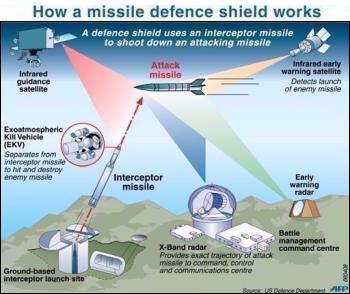
The United States has been trying to rope in India for its plans to build a global missile defence system threatening Russia and China, the Komsomoloskaya Pravda, a popular Russian daily published from Moscow reported on Thursday.

In a story based on the WikiLeaks releases, the report said the U.S. has not only been planning to deploy a missile shield against Russia in Europe, but had also been negotiating with countries along Russia’s borders, such as Japan and India, to jointly build missile defences that would also target Russia.

“The noose [around Russia] is tightening,” the newspaper said. “Thanks to WikiLeaks, it has become known that Washington has been simultaneously conducting talks with countries in other parts of the world for building U.S. missile defences on their territories. Those are different countries, but they form a chain around Russia.”

A 2007 confidential cable from the U.S. embassy in New Delhi carried by the daily refuted media reports that India had abruptly turned its back on a 2005 agreement with the U.S. to cooperate on missile defences. The cable said the Indian media had misinterpreted remarks by External Affairs Minister Pranab Mukherjee after the Russia-India-China trilateral meeting in Harbin, China, on October 24, 2007. Mr. Mukherjee had dismissed as “groundless” the idea that India was going to join a U.S.-led missile defence system.

Misconstrued

“MEA contacts confirm this did not mean India was not interested in continuing to cooperate with the U.S. on missile defence technology and that there has been no change from the current level of bilateral missile defence cooperation,” the U.S. embassy cable said.

The “MEA contacts” explained that Mr. Mukherjee’s comments were “misconstrued” by the Indian press. When Mr. Mukherjee said that “India does not take part in such military arrangements,” the officials said, he had had in mind the U.S. plan to install a missile-detection system in Europe, which his Russian and Chinese counterparts referred to in the same press interaction. Read more…

Census reveals that 17% of the world is Indian

April 1, 2011 1 comment

guardian

Uttar Pradesh, India
The Indian state of Uttar Pradesh has a population of 199,500,000, just under that of Britain, France and Germany combined. Photograph: David Sutherland


The first results from India‘s latest census – the second biggest in the world – were released on Thursday, revealing that the country has added 181 million new citizens in the last decade, making it home to 17% of the world’s population.

China remains the most populous country on the planet, with 1.34 billion, but India is closing the gap with 1.21 billion. The additional Indians found by the census are roughly equivalent to the population of Brazil, the fifth largest country in the world. One Indian state alone – Uttar Pradesh – now has a population of 199,500,000 people, just under that of Britain, France and Germany combined.

However C Chandramouli, the census commissioner, told reporters in Delhi that the new count showed Read more…

India Seeks Longer-Range Ballistic Missile

March 28, 2011 Comments off

globalsecuritynewswire

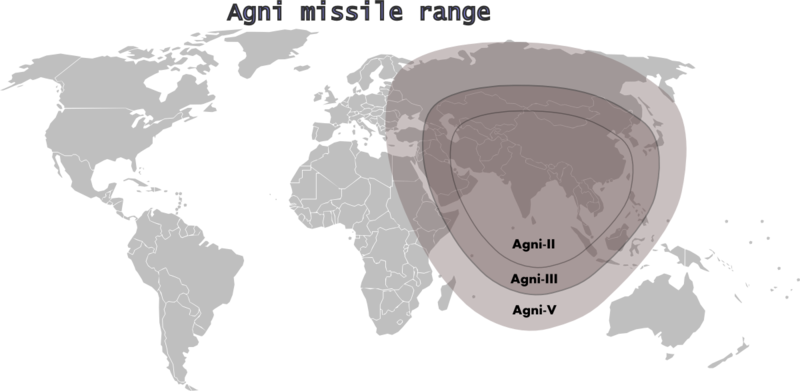
India is working on a new ballistic missile that could travel more than 3,000 miles, the Press Trust of India reported on Friday (see GSN, Jan. 5).

“India has reached an appreciable level of competence in missile technologies, with a reach capability of” 2,175 miles, Defense Minister A.K. Antony said during a gathering of Defense Research and Development Organization laboratory chiefs. The organization is now pursuing a version of the nuclear-capable Agni missile that could fly roughly 3,100 miles, he added. Informed insiders said the Agni 5 would be test-launched sometime in 2011.

India continues to work on other versions of its Agni series. An Agni 3 missile with a flight range of about 2,175 miles was successfully test-fired not long ago from a launch site. Other Agni missile variants have traveling distances between 435 and 1,553 miles.

The Defense Research and Development Organization also prepared the Prithvi missile series, whose missiles can travel as far as 217 miles.

Antony called on DRDO scientists to increase the pace of trials for ballistic missile defense interceptors (Press Trust of India/The Hindu, March 25).

WikiLeaks cables reveal a disturbing picture of India-U.S. relationship: Prakash Karat

March 25, 2011 Comments off

thehindu.com

T+  ·   T-

Prakash Karat

“They are a sad commentary of where Manmohan Singh and Congress leadership have landed the country”

The Communist Party of India (Marxist) said on Thursday that the WikiLeaks exposé laid bare the nature of India-U.S. relationship during the UPA and NDA regimes and revealed a disturbing picture.

“The publication and analysis of the U.S. embassy cables accessed by The Hindu through WikiLeaks is ongoing; but what has been made available so far reveals a disturbing picture… the cables are a sad and revealing commentary of where Manmohan Singh and the Congress leadership have landed the country,” general secretary Prakash Karat said an article in the latest edition of the party organ, People’s Democracy.

Washington’s reach

Commenting on the influential reach of Washington in India’s strategic affairs and foreign and economic policies, he said the U.S. had access to the bureaucracy, military, security and the intelligence system and successfully penetrated them at various levels.

Mr. Karat marks out specific areas — foreign policy, defence cooperation, security and intelligence cooperation, penetration and espionage, political influence and political corruption — where American Read more…

India says Monsanto covertly, illegally conducted GM corn trials without approval

March 24, 2011 Comments off

naturalnews.com

(NaturalNews) Recent reports out of India say that multinational biotechnology giant Monsanto has once against skirted the law by clandestinely planting its genetically-modified (GM) corn without receiving approval to do so. Nitish Kumar, chief minister of the Indian state of Bihar, recently wrote a letter to India’s environment minister Jairam Ramesh explaining the situation. Just days earlier, Ramesh had denied Monsanto permission to plant the crops at all.

When he discovered that Monsanto had schemed with India’s Genetic Engineering Approval Committee (GEAC) and the Indian Council for Agriculture Research (ICAR) to plant genetically-modified (GM) corn without official approval, Read more…

China May Match India as World’s Biggest Gold Consumer on ‘Amazing’ Demand

March 24, 2011 Comments off

bloomberg.com

Chinese consumption of gold may climb to rival that of India, the top user, as investors buy the metal as a store of value, said GFMS Ltd. and INTL FCStone.

Demand in China, the world’s second-biggest economy, almost tripled to 580 metric tons last year from 206 tons in 2001, data from the producer-funded World Gold Council show. Use in India may slump 5 percent to 26 percent this year from 963 tons in 2010, Morgan Stanley said in a report yesterday.

Bullion soared to a record $1,444.95 an ounce on March 7 and rallied 30 percent last year for a 10th annual gain as investors sought to preserve their wealth against inflation, Middle East unrest and currency debasement. Consumer prices in China climbed 4.9 percent in February from a year ago, exceeding the government’s 4 percent goal for the full year.

“The level of interest in gold as an asset class is just amazing,” Jeffrey Rhodes, global head of precious metals with INTL FCStone in Dubai, said in an interview. “There is potential for China to Read more…