Archive
Biometric recognition and privacy concerns
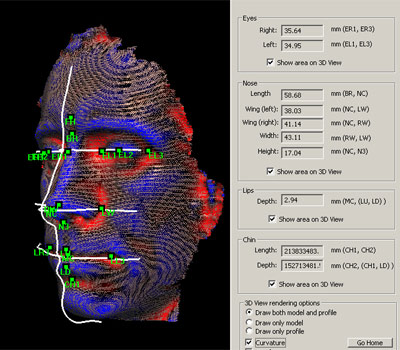
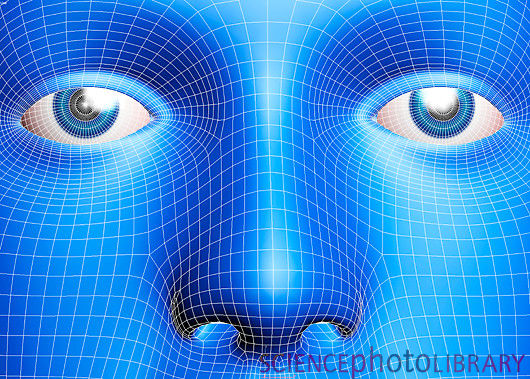 Face recognition software of the kind incorporated into biometric identification tools, photo-gallery applications and social media websites can be very useful but the technology raises privacy concerns, given the seeming ease with which faces in photos can now be tied to an individual. Researchers in Russia and Poland hope to take face recognition technology an important step forward with the even more powerful software they have developed.
Writing in the International Journal of Biometrics, Georgy Kukharev of Saint Petersburg Electrotechnical University in Russia, and colleagues Paweł Forczmański and Andrzej Tujaka of the West Pomeranian University of Technology, Szczecin, Poland, explain how Read more…
Facial recognition in use after riots
 LONDON (AP) — Facial recognition technology being considered for London’s 2012 Games is getting a workout in the wake of Britain’s riots, a law enforcement official told The Associated Press on Thursday, with officers feeding photographs of suspects through Scotland Yard’s newly updated face-matching program.
The official said that the Metropolitan Police’s sophisticated software was being used to help find those suspected of being involved in the worst unrest the force has faced in a generation, although he cautioned that police had a host of other strategies at their disposal.
“A lot of tools are being used to hunt down these criminals, and that’s just one of them,” the official said on condition of anonymity because he was not authorized to speak about an ongoing investigation. “The issue is that you have to have a good picture of a suspect and it is only useful if you have something to match it against. In other words, the Read more…
Electronic skin tattoo has medical, gaming, spy uses-Mark of the Beast?
A hair-thin electronic patch that adheres to the skin like a temporary tattoo could transform medical sensing, computer gamingand even spy operations, according to a US study published Thursday.
The micro-electronics technology, called an epidermal electronic system (EES), was developed by an international team of researchers from the United States, China and Singapore, and is described in the journal Science.
“It’s a technology that blurs the distinction between Read more…
Mobile biometrics to hit US streets
 |
| With new mobile gadgetry, suspects will no longer have to be taken to police stations for their fingerprints and irises to be scanned and recorded [GALLO/GETTY] |
We’re fast approaching a time when law enforcement will no longer need to ask you for your identification – your physical self, and the biometric data therein, are all that will be required to identify you.
A gadget attached to a mobile phone can photograph and plot key points and features on your face (breaking the numbers down into biometric data), scan your iris and take your fingerprints on the spot.
This gizmo doesn’t exist in a futuristic world – it’s already been prototyped and tested. By autumn, the Mobile Offender Recognition and Information System (MORIS), which will allow 40 law enforcement agencies across the US to carry out such biometric diagnostics, will be rolled out. So far, the 1,000 units on order – at $3,000 and 12.5 oz per device – will be going to sheriff and police departments.
Proponents of the technology figure the Read more…
FBI approves Neurotechnology’s latest biometric algorithms
 Last week Neurotechnology, a developer of sophisticated biometric identification solutions, announced that two of its newest fingerprint compression algorithms received WSQ Certification; the certification means that the FBI has verified that these two algorithms meet the accuracy requirements in its latest standard for exchange of fingerprint images within the biometrics and law enforcement community
Last week Neurotechnology, a developer of sophisticated biometric identification solutions, announced that two of its newest fingerprint compression algorithms received WSQ Certification.
The certification means that the FBI has verified that these two algorithms meet the accuracy requirements in the Wavelet Scalar Quantization (WSQ) Gray-Scale Fingerprint Image Compression Specification, Version 3.1, the latest standard for exchange of fingerprint images within the biometrics and law enforcement community.
Neurotechnology’s VeriFinger SDK fingerprint compression algorithms are Read more…
Police Use of iPhone Iris Scanners Raise Privacy Concerns
 The so-called “biometric” technology, which seems to take a page from TV shows like “MI-5″ or “CSI,” could improve speed and accuracy in some routine police work in the field. Dozens of police departments nationwide are gearing up to use a tech company’s already controversial iris- and facial-scanning device that slides over an iPhone and helps identify a person or track criminal suspects.
But its use has set off alarms with some people who are more concerned about possible civil liberties and privacy issues. Constitutional rights advocates are concerned, in part because the device can accurately scan an individual’s face from up to four feet away, potentially without a person’s being aware of it.
“This is (the technology) stepping out of the cruiser and riding on the officer’s belt, along with his flashlight, his handcuffs, his sidearm or the other myriad tools,” said John Birtwell, spokesman for the Plymouth County Sheriff’s Department in southeastern Massachusetts, one of the first departments to use the devices.
“What we don’t want is for them to become a general surveillance tool, where the Read more…
Biometrics for Indian cabs
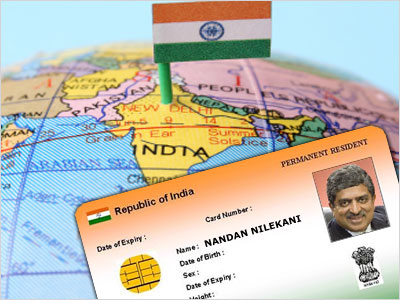 Officials at India’s New Delhi International Airport will soon begin using biometrics to monitor taxi drivers; the move comes after a Saudi businessman was abducted and murdered by two cab drivers in 2008
Officials at India’s New Delhi International Airport will soon begin using biometrics to monitor taxi drivers. The drivers of prepaid taxis will soon have their biometric data recorded on to cards that will be scanned every time they leave the airport with a passenger.
The move comes after a Saudi businessman was abducted and murdered by two cab drivers in 2008. Prior to that, an Australian Read more…
Cops to Get Facial Recognition Devices; Will They Need Warrants to Use Them?
 Police departments in several states are getting new high-tech devices that can scan irises, recognize faces and collect fingerprints.
The devices, made by BI2 Technologies, are attached to an iPhone for immediate searches of criminal databases, the Wall Street Journal (sub. req.) reports. The development is “raising significant questions about privacy and civil liberties,” the story says.
Currently the technology, called “Moris” for Mobile Offender Recognition and Information System, is used by the military to identify insurgents. But B12 has Read more…
Biometric access could control South Africa schools
 Liam Terblanche, CIO at Accsys
Many schools in South Africa may have considered biometric access control as a means of combating truancy and ensuring learner safety and security.
In the UK, an estimated 30% of all schools use biometric access control. Although concerns have been raised over privacy and the collection of fingerprints into national data sets, the Data Protection Act (1998) of that country allows schools to record fingerprint biometrics without the consent of the parents.
In South Africa, however, the almost to be promulgated Protection of Personal Information (POPI) bill prevents the collection of personal information without the written consent of the individual, or that of a legal guardian in the case of minors. (See section 25 – Prohibition on processing of special personal information).
This would imply that, even if a school’s governing body agrees to the implementation of biometric access control at a school, the individual learners would still be able to Read more…
Biometric Identity: The Great Divider
 The use of Biometrics in national identity cards has spliced the globe into two with people in developed nations looking at it as infringement of their privacy and civil liberties, reports Team Inclusion
A debate has been raging in India since Manmohan Singh government broadened the sphere of MNIC (Multi-purpose National Identity Cards) to National Population Register (NPR) appending into it a biometrics-based Unique Identification (UID) number. The opponents of the scheme have accused the central government of snooping into privacy of residents. They fear that the project would prove to be the death of right to privacy implicit in Article 21, which guarantees protection of life and personal liberty. They apprehend that the governmental Read more…


![[Most Recent Quotes from www.kitco.com]](https://i0.wp.com/www.kitconet.com/charts/metals/gold/t24_au_en_usoz_2.gif)
![[Most Recent Quotes from www.kitco.com]](https://i0.wp.com/www.kitconet.com/charts/metals/silver/t24_ag_en_usoz_2.gif)

 crisisboom
 CRISISBOOM
You must be logged in to post a comment.