Archive

Posts Tagged ‘China’

U.S. wants to use India in missile shield against Russia, China

April 5, 2011 Comments off

thehindu.com


The United States has been trying to rope in India for its plans to build a global missile defence system threatening Russia and China, the Komsomoloskaya Pravda, a popular Russian daily published from Moscow reported on Thursday.

In a story based on the WikiLeaks releases, the report said the U.S. has not only been planning to deploy a missile shield against Russia in Europe, but had also been negotiating with countries along Russia’s borders, such as Japan and India, to jointly build missile defences that would also target Russia.

“The noose [around Russia] is tightening,” the newspaper said. “Thanks to WikiLeaks, it has become known that Washington has been simultaneously conducting talks with countries in other parts of the world for building U.S. missile defences on their territories. Those are different countries, but they form a chain around Russia.”

A 2007 confidential cable from the U.S. embassy in New Delhi carried by the daily refuted media reports that India had abruptly turned its back on a 2005 agreement with the U.S. to cooperate on missile defences. The cable said the Indian media had misinterpreted remarks by External Affairs Minister Pranab Mukherjee after the Russia-India-China trilateral meeting in Harbin, China, on October 24, 2007. Mr. Mukherjee had dismissed as “groundless” the idea that India was going to join a U.S.-led missile defence system.

Misconstrued

“MEA contacts confirm this did not mean India was not interested in continuing to cooperate with the U.S. on missile defence technology and that there has been no change from the current level of bilateral missile defence cooperation,” the U.S. embassy cable said.

The “MEA contacts” explained that Mr. Mukherjee’s comments were “misconstrued” by the Indian press. When Mr. Mukherjee said that “India does not take part in such military arrangements,” the officials said, he had had in mind the U.S. plan to install a missile-detection system in Europe, which his Russian and Chinese counterparts referred to in the same press interaction. Read more…

China Sees New Emerging Markets Bloc Consensus

April 4, 2011 1 comment

abcnews

An upcoming meeting of the leaders of the world’s leading emerging economies should boost consensus and cooperation among them, although members of the group have yet to decide on whether to establish a permanent secretariat, a Chinese diplomat said Saturday.

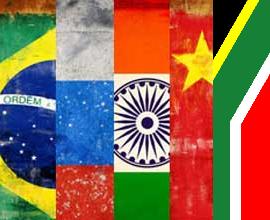
The April 14 meeting in the southern Chinese resort of Sanya will include the heads of Brazil, Russia, India, China and — for the first time — South Africa. The five make up the grouping known as the BRIC countries, whose members account for 40 percent of the world’s population and 15 percent of global trade.

Discussions in Sanya will cover trade and finance, as well as major political issues, with areas of agreement to be laid out in a final statement, Assistant Chinese Foreign Minister Wu Hailong told reporters at a briefing.

“We hope through the concerted efforts of all parties that this meeting will be an important Read more…

Genetically modified cows produce ‘human’ milk

April 3, 2011 Comments off

telegraph

Scientists have created genetically modified cattle that produce human milk in a bid to make cows' milk more nutritious.

Researchers say they are able to create cows that produce milk containing a human protein called lysozyme Photo: PA

The scientists have successfully introduced human genes into 300 dairy cows to produce milk with the same properties as human breast milk.

Human milk contains high quantities of key nutrients that can help to boost the immune system of babies and reduce the risk of infections.

The scientists behind the research believe milk from herds of genetically modified cows could provide an alternative to human breast milk and formula milk for babies, which is often criticised as being an inferior substitute.

They hope genetically modified dairy products from herds of similar cows could be sold in supermarkets. The research has the backing of a major biotechnology company.

The work is likely to inflame opposition to GM foods. Critics of the technology and animal welfare groups reacted angrily to the research, questioning the safety of milk from genetically modified animals and its effect on the cattle’s health.

But Professor Ning Li, the scientist who led the research and director of the State Key Laboratories for AgroBiotechnology at the China Agricultural University insisted that the GM milk would be as safe to drink as milk from ordinary dairy cows.

He said: “The milk tastes stronger than normal milk.

“We aim to commercialize some research in this area in coming three years. For the “human-like milk”, 10 years or maybe more time Read more…

“Unknown disease” outbreak detected in China HIV/ AIDS

April 1, 2011 2 comments

epochtimes.com

By March 28, 2011 Reuters (Associated Press Chen Yilian report) is a special disease spread in China, doctors detected the virus, the patient has a serious condition. Of these, the majority of people in high risk sexual behavior after the onset of symptoms, some experts that they are “fear of love disease”, but the patient does not recognize. With the increasing number of patients, causing widespread concern in society and the media. Ministry of Health has started investigations six provinces and cities, the basic rule of AIDS experts, but remained open.

“Unknown virus” troubled experts

“Express” reported on March 24, a group of special “patients” – they have suspect are infected with HIV, and some even dozens of times in a few months to detect HIV, all test results are shown to be negative, a lot of people So claiming the “negative infections”; then, they suspect are infected with a knowledge of modern medicine is still not, there are infectious, “unknown virus”, but clinical reports have shown that they are “no organic disease” .

February 23 night, in Beijing, China Center for Disease Control and Prevention (CDC) across a small hotel, wearing sterile clothing, “Express” 10 journalists from across the country with a special “patient” interviews for three hours. They had suspected their HIV infection, HIV testing several times but had shown negative results; then, they consider themselves infected with a “unknown virus”, but clinical reports have shown “no organic disease”; because of the disease fear, guilt of relatives and friends, the despair of the future, live in deep Read more…

Wal-Mart US CEO To America: “Prepare For Serious Inflation”

April 1, 2011 Comments off

zerohedge.com


To those who think that buying food in the corner deli is becoming a luxury, we have five words: you ain’t seen nuthin’ yet. U.S. consumers face “serious” inflation in the months ahead for clothing, food and other products, the head of Wal-Mart’s U.S. operations warned Wednesday talking to USA Today. And if Wal-Mart which is at the very bottom of commoditized consumer retail, and at the very peak of avoiding reexporting of US inflation by way of China is concerned, it may be time to panic, or at least cancel those plane tickets to Zimbabwe, which is soon coming to us.


The world’s largest retailer is working with suppliers to minimize the effect of cost increases and believes its low-cost business model will position it better than its competitors.

Still, inflation is “going to be serious,” Wal-Mart U.S. CEO Bill Simon said during a meeting with USA TODAY’s editorial board. “We’re seeing cost increases starting to come through at a pretty rapid rate.”

Along with steep increases in raw material costs, John Long, a retail strategist at Kurt Salmon, says labor costs in China and fuel costs for transportation are weighing heavily on retailers. He predicts prices will start increasing at all retailers in June. Read more…

Census reveals that 17% of the world is Indian

April 1, 2011 1 comment

guardian

Uttar Pradesh, India
The Indian state of Uttar Pradesh has a population of 199,500,000, just under that of Britain, France and Germany combined. Photograph: David Sutherland


The first results from India‘s latest census – the second biggest in the world – were released on Thursday, revealing that the country has added 181 million new citizens in the last decade, making it home to 17% of the world’s population.

China remains the most populous country on the planet, with 1.34 billion, but India is closing the gap with 1.21 billion. The additional Indians found by the census are roughly equivalent to the population of Brazil, the fifth largest country in the world. One Indian state alone – Uttar Pradesh – now has a population of 199,500,000 people, just under that of Britain, France and Germany combined.

However C Chandramouli, the census commissioner, told reporters in Delhi that the new count showed Read more…

Warning of Recurring Food Crises

March 31, 2011 Comments off

voanews.com

Soaring and volatile food prices have experts warning of recurring food crises, putting poor people – especially women and children – at risk.

Similar conditions existed during the 2007/2008 food crisis, when high prices and shortages ignited unrest in many countries around the world.

IFPRI, the International Food Policy Research Institute, is calling for urgent action to prevent a repeat of the crisis. Director-General Shenggen Fen says, “Many food items have become more expensive…since last May or June. Wheat prices have almost doubled. The maize price has also increased substantially. Many meat products, dairy products have also increased substantially.”

While the situation is not as serious as the food crisis three years ago, Fen says, “If we don’t take urgent actions, food prices will continue to rise and the poor people will suffer.”

What’s triggering the price hikes? Read more…

Mongolia Might Store Foreign Spent Nuclear Fuel, Senior U.S. Official Says

March 31, 2011 Comments off

globalsecuritynewswire

WASHINGTON — The Obama administration has held informal talks with Mongolia about the possibility that the Central Asian nation might host an international repository for its region’s spent nuclear fuel, a senior U.S. diplomat said yesterday (see GSN, March 9, 2010).

(Mar. 30) - A herder last year guides cattle through a frozen area in Mongolia's Tuv province. The United States and Mongolia have informally discussed the possibility of the Asian nation hosting a spent nuclear-fuel repository for the region, a high-level U.S. diplomat said yesterday (Paula Bronstein/Getty Images).

U.S. Energy Department officials and their counterparts in Ulaanbaatar, the Mongolian capital, are in the early stages of discussion and there has been no determination yet about whether to proceed with the idea, according to Richard Stratford, who directs the State Department’s Nuclear Energy, Safety and Security Office.

Speaking at the biennial Carnegie International Nuclear Policy Conference, Stratford said a spent-fuel depot in the region could be of particular value to Taiwan and South Korea, which use nuclear power but have few options when it comes to disposing of atomic waste.

“If Mongolia were to do that, I think that would be a very positive step forward in terms of internationalizing spent-fuel storage,” he said during a panel discussion on nuclear cooperation agreements. “My Taiwan and South Korean colleagues have a really difficult time with spent fuel. And if there really was an international storage depot, which I have always supported, then that would help to solve their problem.”

Stratford is Washington’s lead envoy for nuclear trade pacts, which are sometimes called “123 agreements” after the section of the Atomic Energy Act that governs them.

The United States provides fresh uranium rods to selected trade partners in Asia, including South Korea and Read more…

Billion-plus people to lack water in 2050: study

March 29, 2011 Comments off

(AFP)

WASHINGTON – More than one billion urban residents will face serious water shortages by 2050 as climate change worsens effects of urbanization, with Indian cities among the worst hit, a study said Monday.

The shortage threatens sanitation in some of the world’s fastest-growing cities but also poses risks for wildlife if cities pump in water from outside, said the article in the Proceedings of the National Academy of Sciences.

The study found that under current urbanization trends, by mid-century some 993 million city dwellers will live with less than 100 liters (26 gallons) each day of water each — roughly the amount that fills a personal bathtub — which authors considered the daily minimum.

Adding on the impact of climate change, an additional 100 million people will lack what they Read more…

12 Warning Signs of U.S. Hyperinflation

March 29, 2011 Comments off

inflation

One of the most frequently asked questions we receive at the National Inflation Association (NIA) is what warning signs will there be when hyperinflation is imminent. In our opinion, the majority of the warning signs that hyperinflation is imminent are already here today, but most Americans are failing to properly recognize them. NIA believes that there is a serious risk of hyperinflation breaking out as soon as the second half of this calendar year and that hyperinflation is almost guaranteed to occur by the end of this decade.

In our estimation, the most likely time frame for a full-fledged outbreak of hyperinflation is between the years 2013 and 2015. Americans who wait until 2013 to prepare, will most likely see the majority of their purchasing power wiped out. It is essential that all Americans begin preparing for hyperinflation immediately.

Here are NIA’s top 12 warning signs that hyperinflation is about to occur: Read more…