Archive
Disease hits wheat crops in Africa, Mideast
 PARIS — Aggressive new strains of wheat rust disease have decimated up to 40 percent of harvests in some regions of north Africa, the Middle East, Central Asia and the Caucasus, researchers said Wednesday.
The countries most affected are Syria and Uzbekistan, with Egypt, Yemen, Turkey, Iran, Morocco, Ethiopia and Kenya also hit hard, they reported at a scientific conference in Aleppo, Syria.
“These epidemics increase the price of food and pose a real threat to rural livelihoods and regional food security,” Mahmoud Solh, director general of the International Center for Agricultural Research in the Dry Areas (ICARDA), said in a statement.
In some nations hit by the blight, wheat accounts for 50 percent of calorie intake, and 20 percent of protein nutrition.
“Wheat is the cornerstone for food security in many of these countries,” said Hans Braun, director of the International Maize and Wheat Improvement Center (CIMMYT), near Mexico City, singling out Syria.
“Looking at the political and social situation, what they don’t need is a food crisis,” he told AFP by phone.
Wheat rust is a fungal disease that attacks the stems, grains and especially the Read more…
Mosquito borne virus alert for Western Australia
 There is a mosquito alert for people living and holidaying in northern and central WA after a high number of reports of encephalitis and Ross River virus. According to Department of Health entomologist Sue Harrington, it is confirmed that a Carnarvon resident has been diagnosed with the potentially fatal encephalitis while several other cases are currently being investigated.
This virus infection is characterized by fever, drowsiness, headache, stiff neck, nausea and dizziness. In severe cases, people can have fits, lapse into a coma and may be left with permanent brain damage or die Read more…
Stink bugs hit fruits, vegetables, field crops, also go into houses

A female version of the brown marmorated stink bug.
The Michigan Department of Agriculture (MDA) reported the coming of Asian stink bugs in January, and a report Monday morning said they are confirmed in Ingham, Eaton, Genessee and Berrien counties.
They do not bite or sting, but well, they do stink.
And, as is a big concern to the MDA and producers, they ruin fruit and other crops.
“Exotic pests such as the brown marmorated stink bug pose a serious threat to the economic health of Michigan’s $71.3 billion agri-food industry and our 53,000 farmers,” said Keith Creagh, MDA director. “MDA and Michigan State University researchers will work in concert to both identify control recommendations for our agriculture community, as well as monitor this pest’s spread in the state.”
For those who like to get technical, they are the brown marmorated stink bug (BMSB) or Halyomorpha halys (Stål).
The complete story appears in the Tuesday, April 12, 2011 edition and is available at coldwaterdailyreporter.mi.newsmemory.com.Report Asian stink bugs
BMSB superficially resembles several common species of stink bug native to Michigan. To distinguish them from other stink bugs, look for lighter bands on the antennae and darker bands on the membranous, overlapping part at the rear of the front pair of wings. They have patches of coppery or bluish-metallic colored punctures (small rounded depressions) on the head and pronotum. Those who believe they may have the pest should contact the local Michigan State University Extension office at (517) 279-4311.
For more information on brown marmorated stink bug, one can visit http://www.michigan.gov/mda.
India objects to ‘smuggling’ superbug samples out to UK
 NEW DELHI: India on Thursday seriously objected to biological samples in the form of “swabs of seepage water and tap water” being carried out of the country “on the sly” by British scientists to test the presence of the multi-drug resistant superbug.
India said it was a signatory to World Health Organization’s International Materiel Transfer Agreement as per which permission is required to carry out any biological material from the country.
“The way scientists carried out samples from India to be tested in UK does not point to a good scientific motive. It is illegal,” said Dr V M Katoch, director general of Indian Council for Medical Research. “Some people want to keep the heat on India,” he added.
According to him, such multi-drug resistant bacteria — like what is being called a superbug caused by the NDM1 gene — exists in environment across the world. “To keep on pressing India as a hotbed of such superbugs is unfair, and its motive is questionable,” Dr Katoch added.
The scientists had collected 171 swabs of seepage water and 50 public tap water samples Read more…
Researchers find superbug gene in New Delhi water

By MARIA CHENG, AP Medical Writer
LONDON – A gene that can turn many types of bacteria into deadly superbugs was found in about a quarter of water samples taken from drinking supplies and puddles on the streets of New Delhi, according to a new study.
Experts say it’s the latest proof that the new drug-resistance gene, known as NDM-1, named for New Delhi, is widely circulating in the environment — and could potentially spread to the rest of the world.
Bacteria armed with this gene can only be treated with a couple of highly toxic and expensive antibiotics. Since it was first identified in 2008, it has popped up in a number of countries, including the United States, Australia, Britain, Canada and Sweden.
Most of those infections were in people who had recently traveled to or had medical Read more…
“Unknown disease” outbreak detected in China HIV/ AIDS
 By March 28, 2011 Reuters (Associated Press Chen Yilian report) is a special disease spread in China, doctors detected the virus, the patient has a serious condition. Of these, the majority of people in high risk sexual behavior after the onset of symptoms, some experts that they are “fear of love disease”, but the patient does not recognize. With the increasing number of patients, causing widespread concern in society and the media. Ministry of Health has started investigations six provinces and cities, the basic rule of AIDS experts, but remained open.
“Unknown virus” troubled experts
“Express” reported on March 24, a group of special “patients” – they have suspect are infected with HIV, and some even dozens of times in a few months to detect HIV, all test results are shown to be negative, a lot of people So claiming the “negative infections”; then, they suspect are infected with a knowledge of modern medicine is still not, there are infectious, “unknown virus”, but clinical reports have shown that they are “no organic disease” .
February 23 night, in Beijing, China Center for Disease Control and Prevention (CDC) across a small hotel, wearing sterile clothing, “Express” 10 journalists from across the country with a special “patient” interviews for three hours. They had suspected their HIV infection, HIV testing several times but had shown negative results; then, they consider themselves infected with a “unknown virus”, but clinical reports have shown “no organic disease”; because of the disease fear, guilt of relatives and friends, the despair of the future, live in deep Read more…
Deaths and thousands infected with dengue in Paraguay and Bolivia
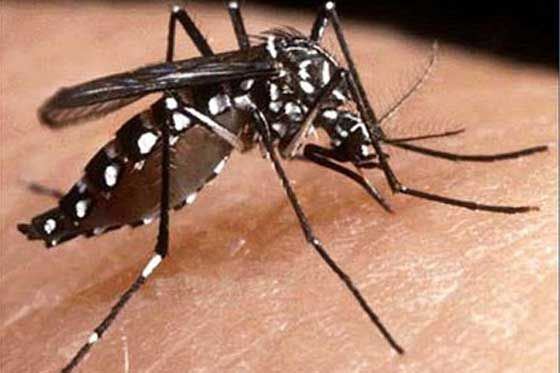
“We have 18 dengue deaths confirmed in Paraguay and 2.500 infected of which 1.300 are hospitalized” said Ivan Allende head of the Sanitary Vigilance Department in Asuncion. He also called on the population to immediately report to a clinic or hospital on suspicion of having contracted the disease, which again reappeared with extreme force in late December with the rainy season.
“In previous years we never had so many people hospitalized” added Allende who indicated that only zero temperatures can help eliminate the mosquito larvae. “Until then we must insist people must collaborate watching out for stagnant water in bottles, old tyres, and flower pots and obviously in toilets and sewage”.
In Bolivia the death toll has climbed to 20 and the number of infected totals 1,670. Read more…
Four Develop Vaccinia Infections Stemming From Smallpox Shot
 Four individuals became infected with the vaccinia virus through direct or second-hand exposure to a U.S. service member who had been vaccinated against smallpox, the Center for Infectious Disease Research and Policy reported on Monday (see GSN, Feb. 3).
The service member received his smallpox shot on February 23, 2010. Four days later he participated in wrestling matches, during which the covering over the injection spot fell off. The two men he wrestled against developed skin lesions within several days. One of the men on March 5 wrestled another man, who later Read more…
Superbug spreading to Southern California hospitals
A dangerous drug-resistant bacteria has spread to patients in Southern California, according to a study by Los Angeles County public health officials.
More than 350 cases of the Carbapenem-Resistant Klebsiella pneumoniae, or CRKP, have been reported at healthcare facilities in Los Angeles County, mostly among elderly patients at skilled-nursing and long-term care facilities, according to a study by Dr. Dawn Terashita, an epidemiologist with the Los Angeles County Department of Public Health.
It was not clear from the study how many of the infections proved fatal, but other studies in the U.S. and Israel have shown that about 40% of patients with the infection die. Tereshita was Read more…
Report warns flu pandemic could kill 200,000 in Britain
 50 percent of the British population could develop symptoms of the flu pandemic and may cost the British economy $42 million (GBP 28 billion).
A report released Tuesday identifies the outbreak of a new influenza pandemic as one of the greatest threats facing Britain. The U.K. Influenza Pandemic Preparedness Strategy 2011 estimates the number of potential deaths because of a new flu pandemic could be as high as 200,000.

Aside from the anticipated deaths, the report by the Department of Health said 50 percent of the British population could develop symptoms of the flu pandemic and may cost the British economy Read more…


![[Most Recent Quotes from www.kitco.com]](https://i0.wp.com/www.kitconet.com/charts/metals/gold/t24_au_en_usoz_2.gif)
![[Most Recent Quotes from www.kitco.com]](https://i0.wp.com/www.kitconet.com/charts/metals/silver/t24_ag_en_usoz_2.gif)

 crisisboom
 CRISISBOOM
You must be logged in to post a comment.