Archive
School Thinks Moms Are Too Dumb to Make Kids’ Lunch
 It was only a matter of time really. Our kids come home from kindergarten telling us that we’re not as smart as the teacher. Now a Chicago school has told all parents they’re too dumb to craft a healthy enough lunch for their kids. They’ve enacted a school-wide ban on the homemade lunch.
The kids now have the option to buy lunch or … well buy lunch (unless they have a medical condition and a doctor’s note). And all this is in the name, of course, of making the students healthier. Let me be the first to say bull-pucky! If I can’t make healthy enough food for my child, pray tell me, why are you even letting me be her parent?
Are you going to take her shoe shopping too? How about finding an orthodontist? Paying for it? Yeah, that’s what I thought. I’m not responsible enough to take care of my kid … until it starts to inconvenience them.
Making all kids eat school lunch is easy for a school. There are no fights between the haves and the have nots. No separate lines for the “buyers” and the “carriers.” And the cafeteria has an almost exact count for food orders. No more wasted food. It’s perfect really — for the school.
But the news that a school building could be better able to meet an individual child’s needs is more than a little ironic considering schools are being called out more and more in recent months for painting kids with a broad brush rather than attempting to work with the individual. And what is a one-size-fits-all lunch program other than a washing away of a child’s individual needs?
Take, for example, the way we balance our kids’ food, meal to meal, snack to snack. It’s a process for most parents. We know that Little Johnny had Read more…
China closes half the nation’s dairies
China on Sunday ordered the closure of nearly half the nation’s dairy companies in an attempt to clean up an industry blighted by scandal.

The General Administration of Quality Supervision, Inspection and Quarantine, says of over 1,100 dairies inspected, 426 failed to pass the licensing renewal test.
Another 107 were ordered to suspend production until they improved operations.
Fearing many dairy owners will ignore the production ban and secretly resume operations, officials also issued a warning. “Production without a license will be strictly punished according to the law,” the agency said.
Like other parts of China‘s food sector, the dairy industry has been riddled with poisoning Read more…
Genetically modified cows produce ‘human’ milk

The scientists have successfully introduced human genes into 300 dairy cows to produce milk with the same properties as human breast milk.
Human milk contains high quantities of key nutrients that can help to boost the immune system of babies and reduce the risk of infections.
The scientists behind the research believe milk from herds of genetically modified cows could provide an alternative to human breast milk and formula milk for babies, which is often criticised as being an inferior substitute.
They hope genetically modified dairy products from herds of similar cows could be sold in supermarkets. The research has the backing of a major biotechnology company.
The work is likely to inflame opposition to GM foods. Critics of the technology and animal welfare groups reacted angrily to the research, questioning the safety of milk from genetically modified animals and its effect on the cattle’s health.
But Professor Ning Li, the scientist who led the research and director of the State Key Laboratories for AgroBiotechnology at the China Agricultural University insisted that the GM milk would be as safe to drink as milk from ordinary dairy cows.
He said: “The milk tastes stronger than normal milk.
“We aim to commercialize some research in this area in coming three years. For the “human-like milk”, 10 years or maybe more time Read more…
Warning of Recurring Food Crises
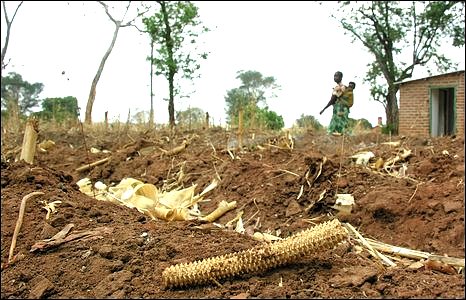 Soaring and volatile food prices have experts warning of recurring food crises, putting poor people – especially women and children – at risk.
Similar conditions existed during the 2007/2008 food crisis, when high prices and shortages ignited unrest in many countries around the world.
IFPRI, the International Food Policy Research Institute, is calling for urgent action to prevent a repeat of the crisis. Director-General Shenggen Fen says, “Many food items have become more expensive…since last May or June. Wheat prices have almost doubled. The maize price has also increased substantially. Many meat products, dairy products have also increased substantially.”
While the situation is not as serious as the food crisis three years ago, Fen says, “If we don’t take urgent actions, food prices will continue to rise and the poor people will suffer.”
What’s triggering the price hikes? Read more…
Severe floods claim 11 lives in southern Thailand
 BANGKOK, March 30 — The number of current flood-related deaths in the southern provinces now stands at 11 with the most casualties–seven persons–registered in Nakhon Si Thammarat followed by three victims in Surat Thani and one in Phatthalung, Disaster Prevention and Mitigation Director-General Vibul Sanguanpong said on Wednesday.
Their Majesties the King and Queen have given funds to the Red Cross for emergency help to flood victims in southern provinces, naval and other ships are involved in rescue and supply operations, and the prime minister and flood relief coordinator Satit Wonghnongtaey have Read more…
US bars some Japan foods over radiation fears
AFP
 WASHINGTON – The United States has announced it was barring some food imports from Japan due to fears of radiation and nuclear contamination in the wake of an earthquake and tsunami disaster.
The US Food and Drug Administration said it had placed an import alert on all milk, milk products, fresh vegetables and fruits from certain regions.
This means that no products of these types from the prefectures of Fukushima, Ibaraki, Tochigi and Gunma can enter the United States without first being shown to be safe.
“In addition, FDA will continue to flag all entries from Japan in order to determine whether they originated from the affected area. FDA will test all food and feed shipments from the affected area,” an email statement said.
“FDA import investigators operating at ports of entry have radiation detection devices (radiation pagers) available to them for their personal safety,” the statement Read more…
Japan crisis: ‘There’s no food, tell people there is no food’

The unshaven man in a tracksuit stops his bicycle on the roadside and glances over his shoulder to check that he is unobserved. Satisfied, he reaches quickly into the sludge-filled gutter, picks up a discarded ready-meal and stuffs it into a plastic carrier bag.
In another time, another place, Kazuhiro Takahashi could be taken for a tramp, out scavenging for food after a long night on the bottle. In fact, he is just another hungry victim of Japan’s tsunami trying to find food for his family.
“I am so ashamed,” says the 43-year-old construction worker after he realises he has been spotted. “But for three days we haven’t had enough food. I have no money because my house was washed away by the tsunami and the cash machine is not working.”
If his haul wasn’t so pitiful — his bag had two packets of defrosted prawn dumplings and a handful of Read more…
Currency Meltdown Coming
 By Greg Hunter’s USAWatchdog.com
The situation in Japan is getting worse, not better. There are shortages in food, fuel and warm dry shelter. To make matters exponentially worse, nuclear power plants there continue to burn out of control and emit high levels of radiation. Japan is a stark reminder of how fast a modern technologically advanced society can be brought to its knees by an unforeseen calamity.
On the other side of the Pacific, the devastating pictures from that island nation are taking the attention away from our own, much more predictable, calamity coming from a tsunami of debt. As the U.S. and other world governments continue to print money to keep the banks and system solvent, a ball of debt is growing. It is on course to Read more…
Untested nanoparticles showing up in thousands of consumer products
 (NaturalNews) Since 2006, the use of nanoparticles in consumer products has skyrocketed by over 600 percent. Nanotechnologies, which involve the manipulation of elements and other matter on the atomic and molecular scale, are now used in over 1,300 commercial and consumer products. And that number is expected to jump nearly three-fold by 2020. But are these nanoparticles safe for humans and the environment, particularly when used in food-related applications?
According to data provided by the Project on Emerging Nanotechnologies (PEN), a group formed in 2005 for the purpose of “creat[ing] an active public and policy dialogue” on nanotechnology, nanoparticles are now used in everything from car batteries and appliances, to aluminum foil and non-stick cookware. The “Food and Beverage” section of PEN even includes various vitamin and mineral supplements that contain nanoparticles, as well as McDonald’s Read more…
Dollar Declines to Lowest Since November on Wagers Fed Will Lag Behind ECB
 The dollar fell to its lowest level since November against the currencies of six U.S. trade partners on bets the European Central Bank will be more aggressive than the Federal Reserve about controlling inflation.
The euro rose against the dollar on speculation ECB President Jean-Claude Trichet may indicate this week a readiness to increase borrowing costs while Fed Chairman Ben S. Bernanke may signal economic stimulus will continue. Sweden’s krona climbed to a 30-month high after Riksbank Governor Stefan Ingves said interest rates may be raised at every meeting this year.
“The big driver for the euro has been short-term interest- rate differentials, which had moved against the dollar,” said Paresh Upadhyaya, head of Americas G-10 currency strategy at Bank of America Corp. in New York. “Since the beginning of the year it’s been pretty much a one-way trend.”
IntercontinentalExchange Inc.’s Dollar Index, which tracks the greenback against six currencies, decreased as much as 0.7 percent to 76.756, the lowest level since Nov. 9, before trading at 76.893 at 5 p.m. in New York, down 0.5 percent. The gauge, which is weighted 57.6 percent on euro movements, fell 1.1 percent in February. Read more…


![[Most Recent Quotes from www.kitco.com]](https://i0.wp.com/www.kitconet.com/charts/metals/gold/t24_au_en_usoz_2.gif)
![[Most Recent Quotes from www.kitco.com]](https://i0.wp.com/www.kitconet.com/charts/metals/silver/t24_ag_en_usoz_2.gif)

 crisisboom
 CRISISBOOM
You must be logged in to post a comment.