Archive
Fukushima Groundwater Contamination Worst in Nuclear History (Video)
Can’t seal Fukushima like Chernobyl – it all goes into sea
Cesium 137 Threat Grows While Corporate Media Remains Mute
Kurt Nimmo
Prison Planet.com
Wednesday, April 20, 2011
The hereditary communist dictatorship in North Korea reports on the spread of radiation from the Fukushima nuclear plant, but it has all but fallen off the corporate media radar screen here. Monitoring stations across North Korea from April 11 to 17 detected iodine-131 and cesium-137 in the air above Wonsan in the southeast and Chongjin in the southeast, according to the country’s state-run media.
Here is a recent map showing the spread of cesium-137. Note the increased concentration over the United States.

Secret Weapons Program Inside Fukushima Nuclear Plant?
Confused and often conflicting reports out of Fukushima 1 nuclear plant cannot be solely the result of tsunami-caused breakdowns, bungling or miscommunication. Inexplicable delays and half-baked explanations from Tokyo Electric Power Company (TEPCO) and the Ministry of Economy, Trade and Industry (METI) seem to be driven by some unspoken factor.
The smoke and mirrors at Fukushima 1 seem to obscure a steady purpose, an iron will and a grim task unknown to outsiders. The most logical explanation: The nuclear industry and government agencies are scrambling to prevent the discovery of atomic-bomb research facilities hidden inside Japan’s civilian nuclear power plants.
A secret nuclear weapons program is a ghost in the machine, detectable only when the system of information control momentarily lapses or breaks down. A close look must be taken at the gap between the official account and unexpected events.
Conflicting Reports
TEPCO, Japan’s nuclear power operator, initially reported three reactors were operating at the time of the March 11 Tohoku earthquake and tsunami. Then a hydrogen explosion ripped Unit 3, run on plutonium-uranium mixed oxide (or MOX). Unit 6 immediately disappeared from the list of operational reactors, as highly lethal particles of plutonium billowed out of Unit 3. Plutonium is the stuff of smaller, more easily delivered warheads.

A fire ignited inside the damaged housing of the Unit 4 reactor, reportedly due to overheating of spent uranium fuel rods in a Read more…
Japan Mulls to Move Capital over Disaster Worries

A handout picture taken and released by Tokyo Electric Power Co (TEPCO) 13 April 2011 shows a fire in the facilities takling seawater samples at Fukushima nuclear power plant in Okuma, Fukushima Prefecture. Photo by EPA/BGNES
As powerful earthquakes continue to jolt Japan and radiation levels near Tokyo are rising, the Asian country’s authorities are considering moving the capital to another city.
The most probable location for a new capital are Osaka and Nagoya, according to ITAR-TASS. Both cities are located near international airports.
The main conditions the new capital has to provide are a population over 50 000 and a sufficient capacity to accommodate the parliament, the government, the Emperor’s residency and the foreign diplomatic missions.
According to experts, should a 7.2 magnitude earthquake shake Tokyo, the casualties will be around 11 000, some 210 000 will be injured and the material damage will be worth about USD 1 B
Saudi US Rift widening
goldandsilverlinings
 Back when Egypt was falling apart, not that it still isn’t, the Saudi king was very upset with the US for allowing his good friend Hosni Mubarak to fall. Rumor has it that the King almost or in fact did suffer a heart attack after talking to Obama about the way things were going in the Egypt.
The Saudi’s are now raising concerns that the Bushehr reactor is another Fukushima waiting to happen. The US is turning a blind eye to Saudi Arabia’s concerns, granted the Saudi’s are likely taking advantage of Fukushima to draw attention to their objective of halting Bushehr coming online. Israel has also been very quiet on Bushekr Read more…
Japan may raise severity of nuclear crisis to top level: report
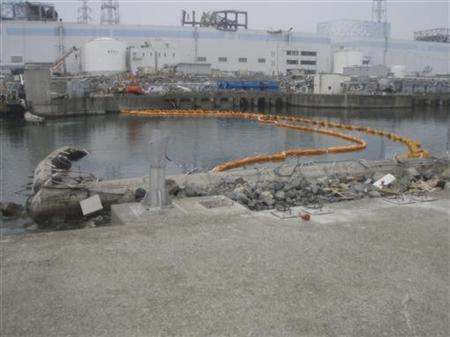 (Reuters) – Japan is weighing raising the severity level of its nuclear crisis at the Fukushima Daiichi nuclear power plant to a level 7 from level 5, putting it at par with the accident at the Chernobyl reactor in 1986, Kyodo news agency reported on Tuesday.
Kyodo said the government’s Nuclear Safety Commission has estimated the amount of radioactive material released from the reactors in Fukushima, northern Japan, reached a maximum of 10,000 terabequerels per hour at one point for several hours, which would classify the incident as a major accident according to the INES scale.
The scale, short for International Nuclear and Radiological Event Scale, is published by the International Atomic Energy Agency and ranks nuclear and radiological accidents and incidents by their severity from 1 to a maximum of 7.
Japan had previously assessed the accident at reactors operated by Tokyo Electric Power Co, which engineers are still trying to bring under control, at level 5, the same level as the Three Mile Island accident in 1979.
On March 11 a 9.0 magnitude earthquake and a massive tsunami triggered the nuclear disaster where reactors at the Fukushima Daiichi complex were crippled due to a loss of power which disabled cooling functions.
A spokesman for the Nuclear and Industrial Safety Agency, Japan’s nuclear safety watchdog, said on Tuesday that the level of the Fukushima incident was still a 5 and that he was unaware of any move by the government to raise the level.
Over 50,000 TONS Of Deadly Radioactive Fukushima Water
Work to dispose of highly radioactive water at the crippled Fukushima Daiichi nuclear power plant is not proceeding smoothly as more time is needed for preparations. Read more…
MAJOR EARTHQUAKE HITS JAPAN, BLACKOUTS IN SENDAI AND FUKUSHIMA
Could there be a connection with the Solar Storm from yesterday? Definitely.
 A major earthquake between 7.1 and 7.4 magnitude hit northeastern Japan at 11:32 Tokyo time. It was focused 60 kilometers below the seabed off Miyagi Prefecture, which also got slammed last time.
The quake has caused scattered gas leaks and fires. A few dozen injuries have been reported.
U.S. markets turned down on the news and Nikkei futures have plunged.
Tsunami warnings were issued, but then lifted an hour after the quake.
Power is out around Sendai and in parts of Fukushima and Yamagata. Even as two of the three local plants are blacked out, however, cooling activities will continue at Fukushima nuclear plant. No new damage is reported at the Fukushima nuclear plant or others. Workers at the Fukushima plant were briefly evacuated.
NHK reports Rokkasho plutonium reprocessing plant has lost off site power and is on emergency backup.
Bullet trains have started running again less than an hour after the quake. All highways are shut in Miyagi, local police tell Kyodo.
12:16 ET: Japanese officials say there is still a high risk of mud slides and collapsing buildings.
Here’s a video of the tremor in Sendai: What could that strange blue light be??? Read more…
Confidential U.S. document reveals “new threats” at Fukushima: Risk of explosions inside containment structures… “Likely no water” in No. 1 reactor core — “Could persist indefinitely”
U.S. Sees Array of New Threats at Japan’s Nuclear Plant, New York Times by James Glanz and William J. Broad, April 5, 2011:
[Emphasis Added]
United States government engineers sent to help with the crisis in Japan are warning that the troubled nuclear plant there is facing a wide array of fresh threats that could persist indefinitely, and that in some cases are expected to increase as a result of the very measures being taken to keep the plant stable, according to a confidential assessment [dated March 26] prepared by the Nuclear Regulatory Commission. …
The Times’ article spotlighted several items of extreme importance:
- “Semimolten” fuel rods and salt are “impeding the flow of fresh water meant to cool the nuclear cores” in ALL THREE REACTORS
- The water flow in reactor No. 1 “is severely restricted and likely blocked“
- Similar problems exist in No. 2 and No. 3, although the blockage is probably less severe
- “There is likely no water level” inside the core of reactor No. 1
- There is a possibility of “explosions inside the containment structures”
Read the article here.


![[Most Recent Quotes from www.kitco.com]](https://i0.wp.com/www.kitconet.com/charts/metals/gold/t24_au_en_usoz_2.gif)
![[Most Recent Quotes from www.kitco.com]](https://i0.wp.com/www.kitconet.com/charts/metals/silver/t24_ag_en_usoz_2.gif)

 crisisboom
 CRISISBOOM
You must be logged in to post a comment.