Archive
African Pathogens Must Be Secured, Lugar Says
 A senior U.S. senator highlighted the need to protect deadly pathogen samples housed in African laboratories from hostile actors who might seek to deploy them in a biological attack, Chemical & Engineering News reported on Monday (see GSN, Nov., 23, 2010).
During the Cold War, the former Soviet Union conducted research into the biowarfare uses of African-origin disease agents. While Russia has since shuttered that biological weapons effort, a number of those naturally occurring pathogens are sill being studied in facilities throughout Africa that often have limited defenses.
“Al-Qaeda and other terrorist groups are active in Africa, and it is imperative that deadly pathogens stored in labs there are secure. This is a threat we cannot ignore,” said Senator Richard Lugar (R-Ind.), a co-creator of the U.S. Cooperative Threat Reduction initiative.
Lugar and a delegation of U.S. defense officials traveled last fall to Uganda and Kenya to assess security at biological research facilities that stored such deadly agents as Ebola and anthrax. While biodefense laboratories in the United States that work with similarly dangerous pathogens have advanced security measures in place, defenses at the African research institutes were more likely to consist of barbed wire, according to the magazine.
At a laboratory in Uganda’s capital, the U.S. delegation observed significant security vulnerabilities including a failure to track Read more…
Recent droughts and floods have contributed to increases in food prices
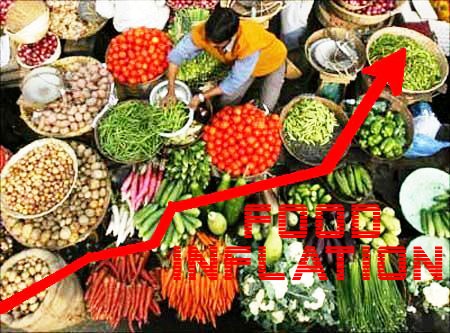 These are pushing millions more people into poverty and hunger, and are contributing to political instability and civil unrest. Climate change is predicted to increase these threats to food security and stability. Responding to this, the world’s largest agriculture research consortium today announced the creation of a new Commission on Sustainable Agriculture and Climate Change.
Chaired by the United Kingdom’s Chief Scientific Adviser, Professor Sir John Beddington, the Commission will in the next ten months seek to build international consensus on a clear set of policy actions to help global agriculture adapt to climate change, achieve food security and reduce poverty and greenhouse gas emissions.
There is a rich body of scientific evidence for sustainable agriculture approaches that can increase production of food, fiber and fuel, help decrease poverty and benefit the environment, but agreement is needed on how best to put these approaches into action at scale. Evidence also shows Read more…
5 million aquatic animals die at Mara river in Kenya
The National Environmental Management Authority (Nema), Public Health Ministry and Kenya Wildlife Service are investigating the deaths of fish in Mara River. Conservationists suspect the deaths that started last week might have been caused by agro chemicals from farms, that drain into the river. Hoteliers in Masai Mara Game Reserve are now expressing fear that the chemicals might kill animals that depend on the river.
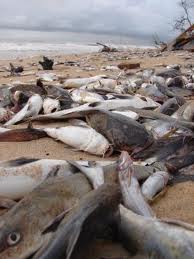 “The deaths could have been caused by agro chemicals from large scale farms on the upper side of the river. The chemicals might also kill hippos, crocodiles and other animals that drink water from the river,” said Ben Kipeno, a conservationist from the northern side of the reserve. Mr Kipeno said on Wednesday there were unconfirmed reports that apart from fish, a crocodile and a hippo have already succumbed to effects of the chemicals. He urged the Government to rein in farmers along the river who use potent chemicals and claimed that despite several complaints to Nema no action has been taken. Officials from KWS who were dispatched from Nairobi took samples of the fish to the Government Chemist for further tests to ascertain the cause of the deaths. When The Standard visited the river, dead fish were floating with scavengers, including the Marabou stork, feeding on them. The Narok South Nema officer in charge Gabriel Tambushi said initial reports had indicated that more than five million fish were killed at the confluence of the seasonal Moyan River in Transmara with the Mara following a heavy flood.
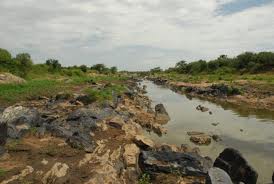
“The sudden change of weather that resulted into heavy mist covering the water surface, inhibiting fish and other animals that depend on the river from breathing might have been the cause of the deaths,” said Tambushi. He did not rule out poisonous agro chemicals from farms, which depended on Mara River for irrigation.
Drought ravages northern Kenya
Millions of people in northern Kenya are facing hunger and an uncertain future as a drought continues to destroy their crops and livestock.
The drought is also taking its toll on the population’s health and the number of malnourished and ill, increases by the day. And there seems to be little respite.
With no rains forecast over the next three months and the government saying that the country’s food reserves are dwindling fast, some in this region might not make it through.
Al Jazeera’s Mohammed Adow reports from Turkana, in Kenya.
The What? And Why? Of Rare Earth Metals
Over the past few months, there’s been a buzz surrounding rare earth metals. These are metals such as europium, lanthanum, neodymium and 14 others found in small concentrations attached to other metals and resource deposits. They’re actually not that rare, just expensive and difficult to pull out of the ground.
These naturally occurring elements are essential in everything from wind turbines to lasers to iPads.
Rare earths are a conundrum for the environmentally conscious—they hold the key to green energies but create toxic waste when being separated away from other elements. “Just one wind turbine generating 3 megawatts of electricity requires 600 kilograms of rare earths for its magnets,” a source told the United Kingdom’s Guardian newspaper.
 Electric and hybrid cars can contain more than twice as much rare earth metals as a standard car. This image from the NY Times breaks down how these metals make up critical elements of a Prius.
Currently, China controls 97 percent of the world’s production of rare earth metals. In October 2010, the country cut exports of the metals by 70 percent, disrupting manufacturing in Japan, Europe and the U.S., and sending the prices of these metals up 40 percent.
China currently controls production but the country only has 37 percent of Read more…
Climate phenomenon La Nina to blame for global extreme weather events

Cyclone Yasi over Australia in February 2011. Image credit: NASA
(PhysOrg.com) — Recent extreme weather events as far as Australia and Africa are being fueled by a climate phenomenon known as La Nina — or “the girl” in Spanish. La Nina has also played a minor role in the recent cold weather in the Northeast U.S.
The term La Niña refers to a period of cooler-than-average sea-surface temperatures in the Equatorial Pacific Ocean that occurs as part of natural climate variability. This situation is roughly the opposite of what happens during El Niño (“the boy”) events, when surface waters in this region are warmer than normal. Because the Pacific is the largest ocean on the planet, any significant changes in average conditions there can have consequences for temperature, rainfall and vegetation in distant places.
Scientists at the International Research Institute for Climate and Society (IRI), part of Columbia’s Earth Institute, expect moderate-to-strong La Niña conditions to continue in the tropical Pacific, potentially causing additional shifts in rainfall patterns across Read more…


![[Most Recent Quotes from www.kitco.com]](https://i0.wp.com/www.kitconet.com/charts/metals/gold/t24_au_en_usoz_2.gif)
![[Most Recent Quotes from www.kitco.com]](https://i0.wp.com/www.kitconet.com/charts/metals/silver/t24_ag_en_usoz_2.gif)

 crisisboom
 CRISISBOOM

You must be logged in to post a comment.