Archive
Texas Wildfires Threaten Wheat Crop, Drive Food Prices Higher

As firefighters from around the country and the National Guard continue to battle the many blazes scattered across the state, with no immediate end to the crisis in sight, the future looks bleak for Texas farmers. Many farmers’ fields were already damaged by drought, and now some crops have been further harmed by smoke or entirely destroyed by flame.
Some agricultural experts are now predicting that Texas will lose two thirds of this year’s wheat crop to drought and Read more…
Fires and Drought Trouble Texas and Other US Plains States

Photo: Alberto Tomas Halpern
A volunteer firefighter fights a fire which began outside Marfa, Texas, and was carried by winds to nearby Fort Davis, April 9, 2011
Drought conditions and high winds have fueled destructive wildfires in northern Mexico and the southern U.S. plains states, especially Texas, where dozens of homes have burned in recent days. The dry weather is also having an impact on agriculture that is likely to cause some food prices to rise.
Fast-moving wildfires scorched around 32,000 hectares of land in the west Texas ranch country around Fort Davis on Saturday and Sunday, killing cattle and horses, and leaving pastures charred and smoky. The fires reached populated areas near Fort Read more…
Drought In Amazon Could Lead To Accelerated Global Warming
A new study reveals a drought last year in the Amazon basin caused the forest to lose significant levels of vegetation, which in turn could accelerate the pace of global warming.
The study, conducted by an international team of scientists and funded by NASA, uses specific satellite imaging data provided by the agency to draw its conclusions. The Moderate Resolution Imaging Spectroradiometer (MODIS) and Tropical Rainfall Measuring Mission (TRMM) satellites provided more than a decade’s worth of data for scientists who studied the de-vegetation of the Amazon rainforest.
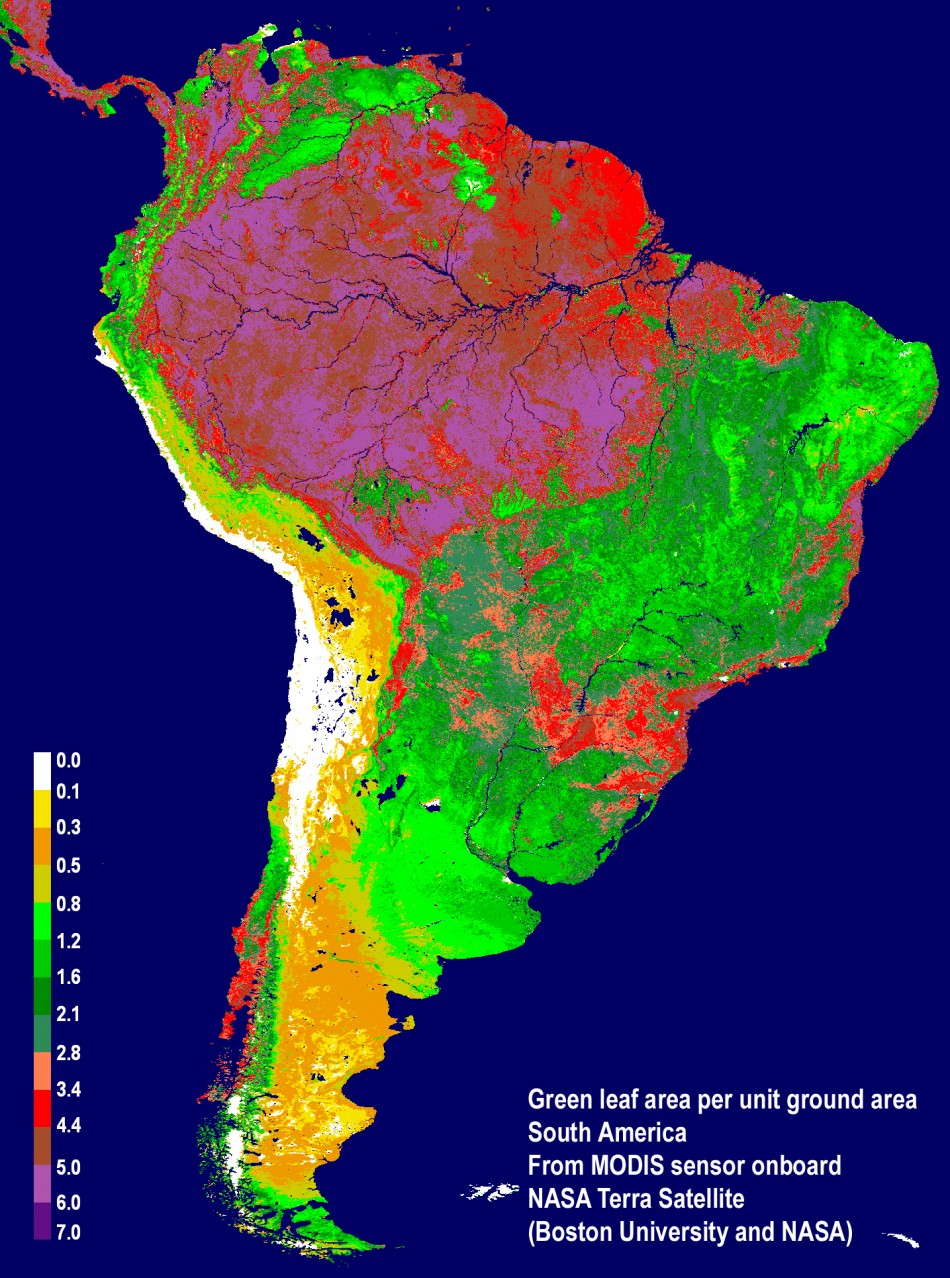
(Photo: NASA/BU) NASA satellite sensors, such as MODIS, showed an average pattern of greenness of vegetation on South America: Amazon forests which have very high leaf area are shown in red and purple colors, the adjacent cerrado (savannas) which have lower leaf area are shown in shades of green, and the coastal deserts are shown in yellow colors.


The scientists say changing climates with warmer temperatures and altered rainfall could lead to the rainforests turning into grasslands or woody savannas. This causes carbon stored in the rotting wood to be released into the atmosphere, which would add to the greenhouse gases present.
“The greenness levels of Amazonian vegetation — a measure of its health — decreased dramatically over an area more than three and one-half times the size of Texas and did not recover to normal levels, even after the drought ended in late October 2010,” Liang Xu, the study’s lead author from Boston University, said in a statement.
“The MODIS vegetation greenness data suggest a more widespread, severe and long-lasting impact to Amazonian vegetation than Read more…
Recent droughts and floods have contributed to increases in food prices
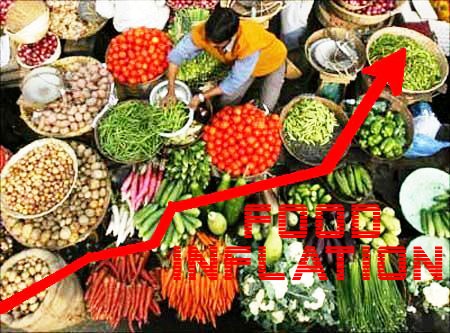 These are pushing millions more people into poverty and hunger, and are contributing to political instability and civil unrest. Climate change is predicted to increase these threats to food security and stability. Responding to this, the world’s largest agriculture research consortium today announced the creation of a new Commission on Sustainable Agriculture and Climate Change.
Chaired by the United Kingdom’s Chief Scientific Adviser, Professor Sir John Beddington, the Commission will in the next ten months seek to build international consensus on a clear set of policy actions to help global agriculture adapt to climate change, achieve food security and reduce poverty and greenhouse gas emissions.
There is a rich body of scientific evidence for sustainable agriculture approaches that can increase production of food, fiber and fuel, help decrease poverty and benefit the environment, but agreement is needed on how best to put these approaches into action at scale. Evidence also shows Read more…
China’s droughts nears worst in 200 years, adding pressure to world food prices
The recent unrest in the Middle East, which has been attributed, in part, to high food prices, gives us a warning of the type of global unrest that might result in future years if the climate continues to warm as expected. A hotter climate means more severe droughts will occur. We can expect an increasing number of unprecedented heat waves and droughts like the 2010 Russian drought in coming decades. This will significantly increase the odds of a world food emergency far worse than the 2007 – 2008 global food crisis. When we also consider the world’s expanding population and the possibility that peak oil will make fertilizers and agriculture much more expensive, we have the potential for a perfect storm of events aligning in the near future, with droughts made significantly worse by climate change contributing to events that will cause disruption of the global economy, intense political turmoil, and war. Read more…
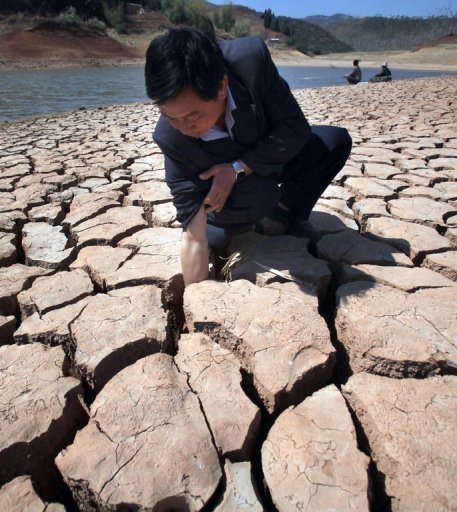
NATO Warns of Food Crisis and More Unrest, Prices Increase 15% in Four Months
The World Food Program’s representative in one of the countries which has seen protests, Yemen, recently stated: ‘There is an obvious link between high food prices and unrest.’

Credit: NATO
The 2008 food crisis was a warning of things to come. More recently, food prices rose by 15% in just the period October 2010 to January 2011, according to the World Bank’s Food Price Watch.
This time, the impacts have been felt more keenly in political and security circles. The President of Read more…
Inflation in China rises as food prices soar

In January, the price of fresh fruit soared by 34.8 percent over a year earlier, while eggs rose 20.2 percent, the National Bureau of Statistics reported.
Adding to a squeeze on food supplies, China’s wheat-growing northeast is in the grip of a severe drought that threatens its crop. Beijing has launched a $1 billion emergency campaign of cloud-seeding to induce rains and expanded irrigation.
Also in January, inflation that so far has been confined mostly to food began to spread to Read more…
China spends $1 billion to tackle drought
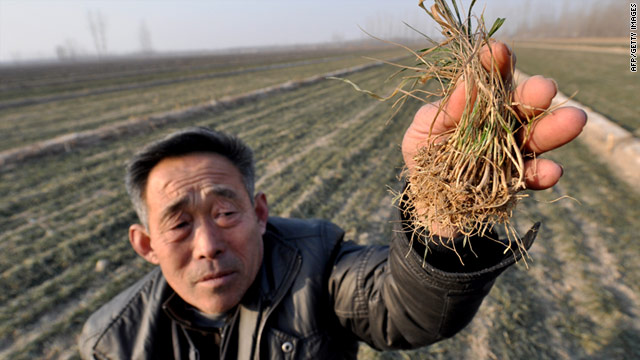
Beijing (CNN) — China’s government will invest $1 billion to combat a three month drought crippling the country’s north.
The worst drought in six decades threatens to ruin China’s winter harvest, the world’s largest producer of wheat.
To combat it, China’s government plans to spend around 6.7 billion yuan ($1.02 billion) to divert water to affected areas and irrigation facilities according to the state news agency, Xinhua.
Some 2.57 million people and 2.79 million livestock are suffering from drinking water shortages, Xinhua said.
The main affected provinces include Shandong, Jiangsu, Henan, Hebei and Shanxi, which together account for about 60% of the wheat planted this winter.
The United Nation’s Food and Agriculture Organization (FAO) issued an alert Tuesday, warning of severe wheat shortages, saying “the ongoing drought is potentially a serious problem.”
According to the FAO the drought is now affecting an area of around 5.16 million hectares, representing two-thirds of China’s wheat production.
Meanwhile the country’s capital Beijing got it first snowfall in more than three months overnight on Wednesday. But the precipitation is unlikely to end the area’s drought, reported Xinhua.
The precipitation followed cloud seeding by the municipal artificial weather intervention office, the agency said.
Drought ravages northern Kenya
Millions of people in northern Kenya are facing hunger and an uncertain future as a drought continues to destroy their crops and livestock.
The drought is also taking its toll on the population’s health and the number of malnourished and ill, increases by the day. And there seems to be little respite.
With no rains forecast over the next three months and the government saying that the country’s food reserves are dwindling fast, some in this region might not make it through.
Al Jazeera’s Mohammed Adow reports from Turkana, in Kenya.
CO2 Fears After Amazon Rainforest Droughts
Two severe Amazon droughts have sparked fears that the rainforest’s ability to absorb carbon emissions is being diminished – and, worse still, it may soon release almost as much CO2 as the US.
 A rare drought in 2005 – billed as a once-in-a-hundred-years event – was then followed by another drought in 2010 that may have been even worse, according to a study by a team of British and Brazilians scientists in the journal Science.
With a huge number of trees dying as a result of the droughts, the scientists predict that the Amazon will not be able to absorb as much carbon dioxide from the atmosphere as usual in future.
This would remove an important global buffer against pollution.
Even worse, rotting trees may release into the atmosphere as much as five billion tons of C02 in the coming years.
That would be almost as much as the 5.4 billion tons emitted from fossil fuel use by the US in 2009.
Based on the impact of the dry spell on tree deaths in 2005, the team projected that Read more…


![[Most Recent Quotes from www.kitco.com]](https://i0.wp.com/www.kitconet.com/charts/metals/gold/t24_au_en_usoz_2.gif)
![[Most Recent Quotes from www.kitco.com]](https://i0.wp.com/www.kitconet.com/charts/metals/silver/t24_ag_en_usoz_2.gif)

 crisisboom
 CRISISBOOM

You must be logged in to post a comment.