Archive
China drought ignites global grain supply concerns
 A prolonged drought in China could hit grains output in key growing regions, further squeezing global supplies and putting upward pressure on prices, but plentiful domestic wheat stocks will act as a cushion and keep import volumes low.
Analysts are closely watching the weather in China, warning any further supply shocks in the grain markets would fuel a further rally in U.S. corn and wheat futures, already stoked by harsh crop weather in the United States and Europe.
“Parts of China have been too dry and if we did see crop failures in that part of the world they are going to look to the global market for supplies,” said Luke Mathews, a commodity strategist with Commonwealth Bank of Australia in Sydney.
“They are going to be looking to North America and Europe and there is significant amount of concern whether those particular countries will be able to satisfy those needs.”
Chicago Board of Trade corn has climbed 80 percent since the start of May last year, while wheat has risen around 50 percent. Last week alone corn and wheat jumped more than 10 percent on expectations of a global squeeze in supplies.
CROP CONCERNS & TIGHT GLOBAL SUPPLIES
Timely corn seeding is crucial for optimal yields needed to replenish U.S. supplies that are projected at the lowest level in 15 years amid strong demand from livestock feeders, ethanol makers and exporters.
About 80 percent of the U.S. corn crop has been planted, according to the U.S. Agriculture Department, but showers this week are expected to bring the final corn seedings to Read more…
Where is the Global Economy Headed? The Experts Weigh In
 I’m writing today after spending the last three days in Boca Raton, Florida, attending The Next Few Years: A Casey Research Summit. If you’re not already familiar, the purpose of this summit was to bring together many of the world’s top economic and investing minds to share with us where they believe we’re headed in the months and years ahead.
The cast of speakers was impressive, to say the least. They brought a variety of view points, an almost overwhelming amount of data and analysis, and a perspective on what the current world means for investors that would be hard to build on. Yet, with all this variety of thought and perspective, one central theme seemed to emerge.
If you’re able to see the annihilation of your currency coming down the pike, and you take the right steps to protect your wealth, you can come out on the other side largely unscathed. Given the right investment strategy, you may even be able to grow your wealth significantly during this time.
While I knew this on some level coming into this event – I’ve been reading Casey Research’s work for just a few months now, and this was the first of their events I’ve attended – I was given pause by Casey CEO Olivier Garret’s welcoming remarks.
“While no one can predict the future with complete certainty,” he said, “it should give you comfort to know that the faculty for this summit have in common that they correctly anticipated the trends now dominating the global landscape.”
When you bring together 35 experts who each correctly predicted what’s happened in recent years – while the mainstream media Read more…
Global Press Freedom at Lowest Level in More Than Decade

Photo: Reuters
Journalists and activists participate in a rally calling for press freedom in central Ankara, Turkey, March 19, 2011 (file photo)
Freedom House, a U.S.-based group that monitors human rights around the world says the number of people with access to free and independent media has declined to its lowest level in more than a decade. In its newly released annual survey, the group says several key countries saw significant declines last year and that only one-in-six people live in countries with a press designated as free.
In this year’s annual index of global media freedom of 196 countries and territories, Freedom House says it rated 68 as “free” and the remaining two thirds as “partly free” or “not free.”
Freedom House Senior Editor Karin Karlekar says this is roughly an even breakdown, but a closer look reveals a different picture. “If you look at the population statistics, they are much bleaker, only Read more…
NASA issues warning of solar superstorm 2012: One billion could die
 Could a superstorm generated by the sun destroy civilization as we know it in 2012?
No less than NASA thinks it’s a distinct possibility. In a remarkable move the normally conservative US space agency has taken the extraordinary step of warning the world.
The headlines reverberating around the world speak volumes: ‘Leaks discovered in Earth’s magnetic field,’ Solar storms to wreak havoc,’ ‘The end of life as we know it,’ ‘Magnetic shift to cause global superstorms.’
NASA and the European Space Agency say yes.
2012 and the rising specter of doom
Among all the countries with exposure to the solar devastation, the United States is the most susceptible. Read more…
March 9.0 Japanese quake set off tremors around the world

The earthquake that launched a series of disasters in Japan in March triggered micro-quakes and tremors around the world, scientists find.
The catastrophic magnitude 9.0 earthquake that struck off the coast of the Tohoku region of Japan March 11 set off tremors mostly in places of past seismic activity, including southwest Japan, Taiwan, the Aleutians and mainland Alaska, Vancouver Island in Canada, Washington state, Oregon, central California and the central United States. It was unlikely that any of these events exceeded magnitude 3.
Researchers noted, however, that temblors also were detected in Cuba. “Seismologists had never seen tremor in Cuba, so this is an exciting new observation,” Justin Rubinstein, a seismologist with the U.S. Geological Survey at Menlo Park, Calif., told OurAmazingPlanet.
Part of the excitement of the find is the insight it could add into the inner workings of earthquakes.
“Studying long-range triggering may help us to better understand the underlying physics of how earthquakes start,” explained seismologist Zhigang Peng at the Georgia Institute of Technology in Atlanta.
Quakes where normally quiet
Most of these micro-earthquakes and tremors occurred in places that already had high background levels of seismic activity, including California’s Geysers Geothermal Field and the San Andreas Fault. Some of the quakes occurred in low-activity areas, such as central Nebraska, central Arkansas and near Beijing.
“Seismologists generally think of the central U.S. as relatively Read more…
Prepare for the Next Conflict: Water Wars
 Every minute, 15 children die from drinking dirty water. Every time you eat a hamburger, you consume 2400 liters of the planet’s fresh water resources — that is the amount of water needed to produce one hamburger. Today poor people are dying from lack of water, while rich people are consuming enormous amounts of water. This water paradox illustrates that we are currently looking at a global water conflict in the making.
We are terrifyingly fast consuming one of the most important and perishable resources of the planet — our water. Global water use has tripled over the last 50 years. The World Bank reports that 80 countries now have water shortages with more than 2.8 billion people living in areas of high water stress. This is expected to rise to 3.9 billion — more than half of Read more…
World Bank president: ‘One shock away from crisis’
 The president of the World Bank has warned that the world is “one shock away from a full-blown crisis”.
Robert Zoellick cited rising food prices as the main threat to poor nations who risk “losing a generation”.
He was speaking in Washington at the end of the spring meetings of the World Bank and International Monetary Fund.
Meanwhile, G20 finance chiefs, who also met in Washington, pledged financial support to help new governments in the Middle East and North Read more…
World Bank: Food prices have entered the ‘danger zone’
 Robert Zoellick, World Bank president, said food prices are at “a tipping point”, having risen 36pc in the last year to levels close to their 2008 peak. The rising cost of food has been much more dramatic in low-income countries, pushing 44m people into poverty since June last year.
Another 10pc rise in food prices would push 10m into extreme poverty, defined as an effective income of less than $1.25 a day. Already, the world’s poor number 1.2bn.
Mr Zoellick said he saw no short term reversal in the damaging effect of food inflation, which is felt much more in the developing world as packaging and distribution accounts for a far larger proportion of the cost in the advanced economies.
Asked if he thought prices would remain high for a year, Mr Zoellick said: “The general trend lines are ones where we are in a danger zone… because prices have already gone up and stocks are relatively low.”
Rising prices have been driven by the changing diet of the ballooning middle classes in the emerging markets. “There is a demand change going on, with the higher incomes in developing countries. People will eat more meat products, for example, that will use more grain.
“I am not suggesting that the improved diets in the developing world are the source of the problem but it means it takes longer to Read more…
Global planetary tremor sends seismometers into the black
 April 12, 2011- JAPAN – Following the 6.2 quake that hit eastern Japan, telemetry data from seismographs across the planet registered very dense bands of seismic disturbances- indicating there were massive movements along tectonic plate boundaries. These events are happening now every 72 to 96 hours on average and have been increasing their frequency cycle of occurrence every since the massive 9.0 earthquake struck off the eastern coast of Japan on March 11, 2011. It is therefore reasonable to conclude that the planet is becoming more unstable after the mega-thrust quake ruptured the sea-floor off the coast of Japan and is now more sensitive to tectonic plate movements after the earthquake afflicted the planet. Below are recent readings from seismographs highlighting areas across the globe which registered strong disturbances. –The Extinction Protocol


(left) Dense bands of activity under China and Japan (right)


(left) Troubling patterns seen in Dominican Republic (Caribbean) and (right) Johnston Island in the Pacific
Warning of Recurring Food Crises
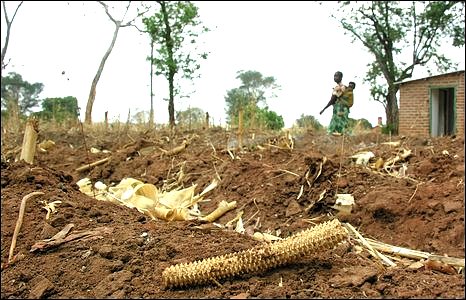 Soaring and volatile food prices have experts warning of recurring food crises, putting poor people – especially women and children – at risk.
Similar conditions existed during the 2007/2008 food crisis, when high prices and shortages ignited unrest in many countries around the world.
IFPRI, the International Food Policy Research Institute, is calling for urgent action to prevent a repeat of the crisis. Director-General Shenggen Fen says, “Many food items have become more expensive…since last May or June. Wheat prices have almost doubled. The maize price has also increased substantially. Many meat products, dairy products have also increased substantially.”
While the situation is not as serious as the food crisis three years ago, Fen says, “If we don’t take urgent actions, food prices will continue to rise and the poor people will suffer.”
What’s triggering the price hikes? Read more…


![[Most Recent Quotes from www.kitco.com]](https://i0.wp.com/www.kitconet.com/charts/metals/gold/t24_au_en_usoz_2.gif)
![[Most Recent Quotes from www.kitco.com]](https://i0.wp.com/www.kitconet.com/charts/metals/silver/t24_ag_en_usoz_2.gif)

 crisisboom
 CRISISBOOM
You must be logged in to post a comment.