Archive
World Hunger and Food Shortages Are Pressing Global Issues, Say Experts in Current Events and Politics
 PASADENA, Calif.–(BUSINESS WIRE)–In an article for the quarterly journal Vision titled “What Shall We Eat and Drink?” publisher and international relations scholar David Hulme discusses the global issues of world hunger and water security. Slicing through the Gordian Knot of current events and politics, Hulme explores the complex factors relating to food shortages and the building water crisis.
People share a universal need to eat and drink, yet nearly a billion people go hungry every day. Concerns about food and water shortages were behind the eight goals of the 2000 UN Millennium Declaration, with the primary Millennium Development Goal being to reduce the number of undernourished and poverty-stricken people in developing countries from the current 16 percent to 10 percent by 2015.
“Part of the difficulty,” writes Hulme, “arises from the potential volatility of food prices accentuated by natural disasters, severe weather, surging fuel Read more…
Global food inflation hits hemp seed, coconut oil and other superfoods: Here’s why it’s happening
 Food inflation is hitting the superfood industry right where it hurts — in the wallet. Thanks to several factors you’ll read about here, prices on hemp seeds, hemp oils, coconut oil and other superfoods are set to skyrocket beginning in just a few days. One of the largest superfood suppliers in the USA, Nutiva, has announced an 11% price increase coming May 27th, and that may be just the beginning of an accelerating trend in steady increases.
In anticipation of this price increase, we’ve taken on a huge inventory of Nutiva’s Certified Organic Hemp Seed and Hemp Oil at the old prices, and we have a generous supply available to NaturalNews readers who want to beat the price increase (see below).
Why hemp and coconut oil prices are heading into the stratosphere
In a letter sent to us by Nutiva, founder John Roulac explains that the price of coconut oil has doubled in the last six months. While coconut oil suppliers are able to absorb some of this cost in the short term, they cannot do so on a permanent basis. This means that the prices consumers pay for coconut oil are headed sharply higher.
Impacting hemp seeds and hemp oil, the price of crude oil (up 30% or more over the last few months) adds to the cost of transporting these foods. Remember, thanks to the completely idiotic and utterly anti-American stance of the DEA, President Obama and most of the U.S. Congress, it is illegal to grow hemp seeds in America, Read more…
Anti-locust programme in Central Asia and Caucasus

19 May 2011, Rome – FAO will assist ten countries in Central Asia and the Caucasus to save up to 25 million hectares of cultivated farmland from a locust crisis. Locusts are a serious threat for agriculture, food security and livelihoods in both regions including adjacent areas of northern Afghanistan and the southern Russian Federation.
A five-year programme to develop national capacities and launch regional cooperation is about to start thanks to assistance from the United States of America. Support from other donors is expected soon.
Ten countries at risk
In all, ten countries are at risk: Afghanistan, Armenia, Azerbaijan, Georgia, Kazakhstan, Kyrgyzstan, Russian Federation, Tajikistan, Turkmenistan and Uzbekistan. There are three locust pests in the Read more…
Alarming Number of Disasters Striking World “Food Baskets”
Millennium-Ark
May 16, 2011
Holly Deyo
Dear Friends and Readers of Millennium-Ark,
For the last 5 years, we have posted countless articles covering both natural disasters and their impact on our food supplies as well as on many other timely topics. After several decades of monitoring these events, it’s hard to convey how shocked we are by the sheer number of disasters that have occurred just in the first 4 months of 2011.
Yesterday, all day, I spent analyzing natural disasters and plotted them against our food belts. Never, ever, have I seen so many federally declared disasters this early in the year.
The DHS/FEMA maps were defined by 2 colors: blue signified no disasters (to distinguish the disaster-free areas from water, they are shown in white below) and yellow indicated declared disasters. Map after map, state after state were mostly yellow. Surely this must be an error? Thinking through the numerous news items on Earth Changes, with sinking feeling, I knew they were correct. It was only when the state information was transferred to a single national map, the implications become uncomfortably clear.
Notice how many disasters have occurred in food-producing areas. They are striking the heart of our food growing regions. Many food crops have been wiped out by drought, flood, hail and freezes. These food destroyers are occurring in greater frequency and having larger impact. America’s food belts are taking mighty hits. Some growing areas will not recover this entire year.

Bat disease could allow insects to destroy crops

A deadly disease to bats could become a major financial headache for agriculture, costing Ohio farmers as much as $1.7 billion a year.
A new study is the first to tie a dollar value to the millions of crop-damaging insects that bats routinely devour each year. Now, the night-flying hunters face the threat of a fungal disease that kills most of the bats it infects.
White-nose syndrome, named for the fungus that spreads over bats while they hibernate, has killed at least 1 million bats in 15 states and Canada since it was discovered in New York in 2006.
On March 30, Ohio officials announced that they found the disease among bats hibernating in an abandoned limestone mine in the Wayne National Forest. They fear it will march through Ohio as it has Read more…
Europe is facing the worst drought in century

Traditional Easter fairs in the east and the north of the Netherlands have been cancelled because of the risk of fires posed by the extraordinarily dry weather affecting northern Europe. In the eastern half of the country, one of Europe’s biggest traders, outdoor family barbecues, smoking and camp fires are a strict no-no.
In the Swiss canton of Zurich, officials began moving trout this week from the river Toess before their habitat dried up. This year threatens to bring “one of the most significant droughts since 1864,” the year when records began in Switzerland. The drought in western Switzerland over the last 12 months is as severe as those recorded in 1884 and 1921. Several cantons have also imposed bans on lighting fire in and close to forests. A grass shortage could also lead to a Read more…
Texas Wildfires Threaten Wheat Crop, Drive Food Prices Higher

As firefighters from around the country and the National Guard continue to battle the many blazes scattered across the state, with no immediate end to the crisis in sight, the future looks bleak for Texas farmers. Many farmers’ fields were already damaged by drought, and now some crops have been further harmed by smoke or entirely destroyed by flame.
Some agricultural experts are now predicting that Texas will lose two thirds of this year’s wheat crop to drought and Read more…
Stink bugs hit fruits, vegetables, field crops, also go into houses

A female version of the brown marmorated stink bug.
The Michigan Department of Agriculture (MDA) reported the coming of Asian stink bugs in January, and a report Monday morning said they are confirmed in Ingham, Eaton, Genessee and Berrien counties.
They do not bite or sting, but well, they do stink.
And, as is a big concern to the MDA and producers, they ruin fruit and other crops.
“Exotic pests such as the brown marmorated stink bug pose a serious threat to the economic health of Michigan’s $71.3 billion agri-food industry and our 53,000 farmers,” said Keith Creagh, MDA director. “MDA and Michigan State University researchers will work in concert to both identify control recommendations for our agriculture community, as well as monitor this pest’s spread in the state.”
For those who like to get technical, they are the brown marmorated stink bug (BMSB) or Halyomorpha halys (Stål).
The complete story appears in the Tuesday, April 12, 2011 edition and is available at coldwaterdailyreporter.mi.newsmemory.com.Report Asian stink bugs
BMSB superficially resembles several common species of stink bug native to Michigan. To distinguish them from other stink bugs, look for lighter bands on the antennae and darker bands on the membranous, overlapping part at the rear of the front pair of wings. They have patches of coppery or bluish-metallic colored punctures (small rounded depressions) on the head and pronotum. Those who believe they may have the pest should contact the local Michigan State University Extension office at (517) 279-4311.
For more information on brown marmorated stink bug, one can visit http://www.michigan.gov/mda.
Billion-plus people to lack water in 2050: study
(AFP)

WASHINGTON – More than one billion urban residents will face serious water shortages by 2050 as climate change worsens effects of urbanization, with Indian cities among the worst hit, a study said Monday.
The shortage threatens sanitation in some of the world’s fastest-growing cities but also poses risks for wildlife if cities pump in water from outside, said the article in the Proceedings of the National Academy of Sciences.
The study found that under current urbanization trends, by mid-century some 993 million city dwellers will live with less than 100 liters (26 gallons) each day of water each — roughly the amount that fills a personal bathtub — which authors considered the daily minimum.
Adding on the impact of climate change, an additional 100 million people will lack what they Read more…
Tree-killing disease found in Florida
The Associated Press
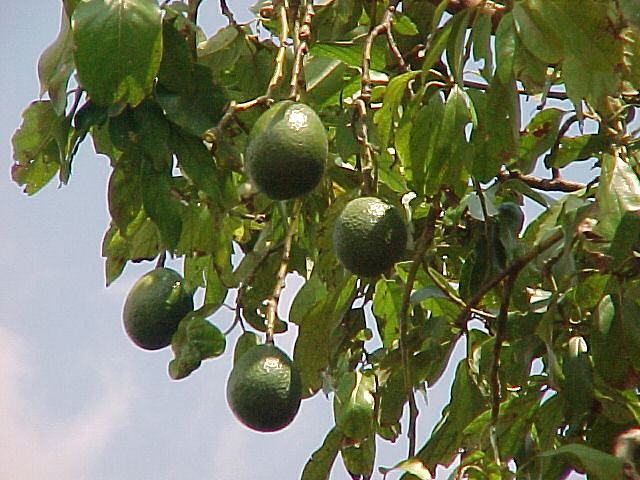 MIAMI — The Florida Department of Agriculture and Consumer Services has positively identified the presence of a destructive disease that affects avocado trees and other trees in the laurel family.
State and federal agriculture experts say laurel wilt disease has been detected on three swamp bay trees in Miami Dade County.
The fungal disease is spread by the redbay ambrosia beetle.
If the disease spreads, it could potentially harm Florida’s avocado industry, which represents nearly $13 million to the local economy, with more than 6,773 production acres in Miami-Dade County, with some acreage in Collier County.


![[Most Recent Quotes from www.kitco.com]](https://i0.wp.com/www.kitconet.com/charts/metals/gold/t24_au_en_usoz_2.gif)
![[Most Recent Quotes from www.kitco.com]](https://i0.wp.com/www.kitconet.com/charts/metals/silver/t24_ag_en_usoz_2.gif)

 crisisboom
 CRISISBOOM
You must be logged in to post a comment.