Archive
North America, southern Europe and China all likely to undergo extreme temperature shifts within 60 years
Tropical regions in Africa, Asia and South America could see ‘the permanent emergence of unprecedented summer heat’ in the next 20 years, scientists have warned.
The tropics and much of the  Northern Hemisphere are likely to experience an irreversible rise in summer temperatures if greenhouse gas emissions continue at their present rate, a study claims.
Researchers at Stanford University said North America – including the U.S. – southern Europe and China are likely to undergo extreme summer temperature shifts within 60 years.
Red dunes in Namibia. Much of Africa, Asia and South America could see ‘the permanent emergence of unprecedented summer heat’ in the next 20 years
This dramatic change could have severe consequences for human health, agricultural production and Read more…
Anti-locust programme in Central Asia and Caucasus

19 May 2011, Rome – FAO will assist ten countries in Central Asia and the Caucasus to save up to 25 million hectares of cultivated farmland from a locust crisis. Locusts are a serious threat for agriculture, food security and livelihoods in both regions including adjacent areas of northern Afghanistan and the southern Russian Federation.
A five-year programme to develop national capacities and launch regional cooperation is about to start thanks to assistance from the United States of America. Support from other donors is expected soon.
Ten countries at risk
In all, ten countries are at risk: Afghanistan, Armenia, Azerbaijan, Georgia, Kazakhstan, Kyrgyzstan, Russian Federation, Tajikistan, Turkmenistan and Uzbekistan. There are three locust pests in the Read more…
Gold demand strong; predicted prices around $2000
 Gold temporarily succeeded to recover some of the losses from the sizeable sell-off in early May, but fell back late Friday to end the week unchanged.
Bearish sentiment constrained gold to a weekly low of around $1479 on Thursday. However, the metal found good support at its 15-week uptrend line and rebounded, temporarily at least, back above $1500.
Physical demand for gold has raised in the Far East and Asia. Despite the 5% correction seen at the start of the month analysts continue to predict prices around the $2000 level at least by next year.
“Since the start of May, physical gold demand has been strong,” said Walter de Wet, an analyst at Standard Bank Plc in London.“While consistent physical buying interest has come from India specifically, we are witnessing a broader interest from Asia in general.”
Central banks are worth another mention as more of them look to purchase gold, with the surplus earning countries leading the way. Figures issued by the World Gold Council (WGC) show there were no transactions of gold bullion by central banks in February and March. The WGC‘s data confirm gold bullion purchases by Mexico, Thailand and Russia.
China-Russia relations and the United States: At a turning point?
 By Dr. Richard Weitz
Since the end of the Cold War, the improved political and economic relationship between Beijing and Moscow has affected a range of international security issues. China and Russia have expanded their bilateral economic and security cooperation. In addition, they have pursued distinct, yet parallel, policies regarding many global and regional issues.
Yet, Chinese and Russian approaches to a range of significant subjects are still largely uncoordinated and at times in conflict. Economic exchanges between China and Russia remain minimal compared to those found between most friendly countries, let alone allies.
Although stronger Chinese-Russian ties could present greater challenges to other countries (e.g., the establishment of a Moscow-Beijing condominium over Central Asia), several factors make it unlikely that the two countries will form such a bloc.
The relationship between the Chinese and Russian governments is perhaps the best it has ever been. The leaders of both countries engage in numerous high-level exchanges, make many mutually supportive statements, and manifest other displays of Russian-Chinese cooperation in what both governments refer to as their developing strategic partnership.
The current benign situation is due less to common values and shared interests than to the fact that Chinese and Russian security concerns are Read more…
China blocks coastal waters, enlarges military
Pacific’s chief calls shadowy move ‘troubling’

**file photo **Chinese paramilitary police patrol in Urumqi, western China’s Xinjiang province. (AP Photo/Eugene Hoshiko)
NavyAdm. Robert F. Willard said during a hearing of the Senate Armed Services Committee that China’s intentions behind its decades-long buildup remain hidden and are undermining stability in the Asia-Pacific region.
The four-star admiral said the arms buildup is understandable because of China’s economic rise, but “the scope and pace of its modernization without clarity on China’s ultimate goals remains troubling.”
“For example, China continues to accelerate its offensive air and missile developments without corresponding public clarification about how these forces will be utilized,” he said.
Chinese officials, in meetings with their U.S. counterparts, have refused to explain the pace or goal of the arms buildup, defense Read more…
India Seeks Longer-Range Ballistic Missile
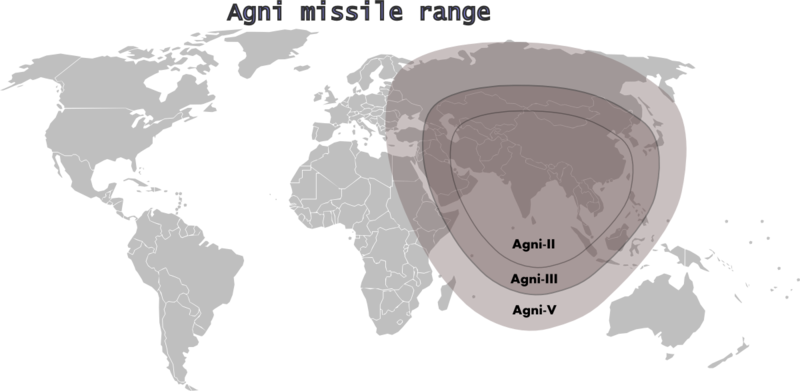 India is working on a new ballistic missile that could travel more than 3,000 miles, the Press Trust of India reported on Friday (see GSN, Jan. 5).
“India has reached an appreciable level of competence in missile technologies, with a reach capability of” 2,175 miles, Defense Minister A.K. Antony said during a gathering of Defense Research and Development Organization laboratory chiefs. The organization is now pursuing a version of the nuclear-capable Agni missile that could fly roughly 3,100 miles, he added. Informed insiders said the Agni 5 would be test-launched sometime in 2011.
India continues to work on other versions of its Agni series. An Agni 3 missile with a flight range of about 2,175 miles was successfully test-fired not long ago from a launch site. Other Agni missile variants have traveling distances between 435 and 1,553 miles.
The Defense Research and Development Organization also prepared the Prithvi missile series, whose missiles can travel as far as 217 miles.
Antony called on DRDO scientists to increase the pace of trials for ballistic missile defense interceptors (Press Trust of India/The Hindu, March 25).
EARTHQUAKE WARNING FROM RUSSIAN INSTITUTE of PHYSICS of the EARTH

A new report released today in the Kremlin prepared for Prime Minister Putin by the Institute of Physics of the Earth, in Moscow, is warning that the America’s are in danger of suffering a mega-quake of catastrophic proportions during the next fortnight (14 days) with a specific emphasis being placed on the United States, Mexico, Central America and South American west coast regions along with the New Madrid Fault Zone region.
This report further warns that catastrophic earthquakes in Asia and the sub-continent are, also, “more than likely to occur” with the 7.3 magnitude quake in Japan today being “one of at least 4 of this intensity” to occur during this same time period.
Raising the concerns of Read more…
E. Asia, S. America under tsunami warning after Japan quake
03/11/2011 10:45
Biggest earthquake to hit Japan in 140 years triggers 10-meter tsunami, kills at least 6 people; 4 million homes without power; hotel collapses in city of Sendai, people feared buried in rubble; UN rescue teams on standby.
SINGAPORE – A tsunami warning has been issued for areas across East Asia and the western coast of South America following a huge earthquake that hit Japan on Friday, the Pacific Tsunami Warning Center said.
Among the countries for which a tsunami warning is in effect are: Read more…
Avian influenza continues to spread across Asian countries
 Across Japan a total of 22 cases of avian flu have been reported as the infection continues to spread. On Sunday, 33,000 more chickens were culled in the Miyazaki Prefecture, bringing the total chickens culled to around 990,000 birds since the first infection was reported on Jan 22, 2011.
In India, further cases have been confirmed on a Tripura farm where the culling process has started to take place. This is the second time bird flu has been detected in the state following an outbreak in February this year. Health and veterinary workers had then culled more than 4,000 chickens.
South Korea has also had 12,400 birds test positive for avian flu last week, marking the 49th outbreak since December 29. The latest outbreak is a poultry farm in Cheonan, 92 km south of Seoul, the National Veterinary Research and Quarantine Service (NVRQS) said. All ducks on the farm will be culled with quarantine authorities asking nearby farms to be vigilant and protect their birds.
This is the second case of the highly pathogenic avian influenza reported in the country this month although the number of AI cases has started to fall off in recent weeks. The government has culled more than 6.04 million birds in six provinces across the country.
China Takes Giant Step Towards Making the Yuan the World’s Reserve Currency
 For years, I’ve been writing about the long-term decline of the Dollar, and the rise of the Chinese Yuan … and it’s potential to become the world’s next reserve currency.
As I pointed out in 2007, many countries have started moving out of the Dollar as the basis for international trade settlements, including:
-
Venezuela and 12 other Latin American countries as well as Cuba
-
Many other countries
In 2008, I wrote: Read more…


![[Most Recent Quotes from www.kitco.com]](https://i0.wp.com/www.kitconet.com/charts/metals/gold/t24_au_en_usoz_2.gif)
![[Most Recent Quotes from www.kitco.com]](https://i0.wp.com/www.kitconet.com/charts/metals/silver/t24_ag_en_usoz_2.gif)

 crisisboom
 CRISISBOOM
You must be logged in to post a comment.