Archive
Mars is left behind, Earth is ahead!
 L. Elenin / ISON-NM observatory
At the end of June 2011, Comet Elenin will cross the orbit of the fourth planet of the Solar System – Mars. It must be noted that from April to June, the comet did not come closer to the Earth, but moved “parallel” with it. Right at the beginning of July, the comet will begin to very quickly move toward our planet. I again want to emphasize, the comet will pass 35 million kilometers from the Earth. It is an absolutely safe distance, just a little closer to the Earth than the second planet, Venus, comes.
At left you can see an image of the comet taken June 21th at our observatory. In the earthly sky the comet is quite close to the Sun, and soon it will be impossible to observe – it will be hidden the rays of the setting Sun. C/2010 X1 (Elenin) will not emerge from solar conjunction until the beginning of October, when it will be visible in binoculars and maybe even with the unaided eye.
Unidentified Object @ Antarctica’s Neumayer Station 061811- 062011
These are recent photos from the Antarctica Neumayer Station on 6/18/11 – 6/20/11.
http://www.antarcticconnection.com/antarctic/stations/neumayer.shtml
This object would confirm what we are seeing at 2:57 in this video…
http://www.youtube.com/watch?v=hUiKzdLb7Yc
Please take a look. This video confirms what we are seeing in the Antarctic.
These new photos have me extremely puzzled and concerned. We’ve identified the moon and the location of the Sun, but there is another large Read more…
Scientists discover brightest, earliest quasar
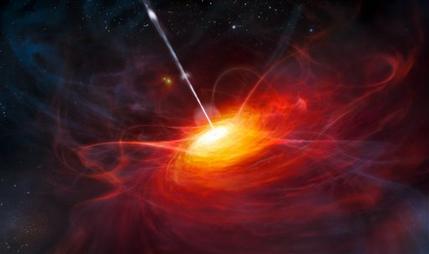
LOS ANGELES (AP) — A team of European astronomers, glimpsing back in time to when the universe was just a youngster, says it has detected the most distant and earliest quasar yet.
Light from this brilliant, starlike object took nearly 13 billion years to reach Earth, meaning the quasar existed when the universe was only 770 million years old – a kid by cosmic standards. The discovery ranks as the brightest object ever found.
To scientists’ surprise, the black hole powering this quasar was 2 billion times more massive than the sun. How it grew so bulky so early in the universe’s history is a mystery. Black holes are known to feed on stars, gas and other matter, but their growth was always thought to be slow.
The discovery was reported in Thursday’s issue of the journal Nature.
Since quasars are so luminous, they guide astronomers studying the conditions of Read more…
Is the Massive Puerto Rico Trench Awakening?
by Zen Gardner
“What Puerto Rico Trench?” Exactly.
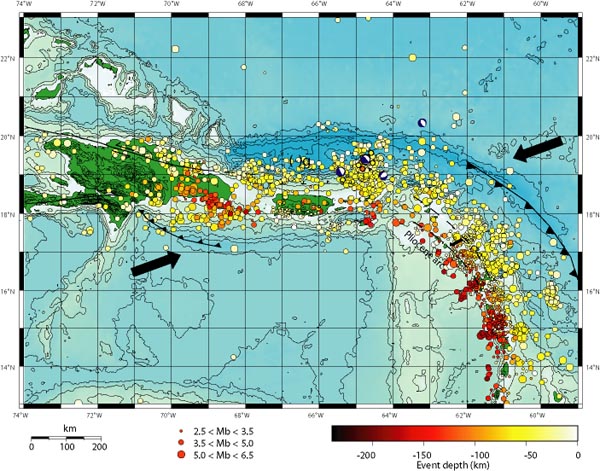
The arrows in the map above show the direction the underlying Caribbean tectonic plates are moving, with the resultant build-up of pressure releasing into a myrid of earthquakes in the region over the years. Puerto Rico is the smaller green island in the middle, with the Dominican Republic the larger island to the left. The string of other Caribbean islands is buried under the earthquake markers that Read more…
Another Asteroid To Give Earth a Close Shave June 27, 2011
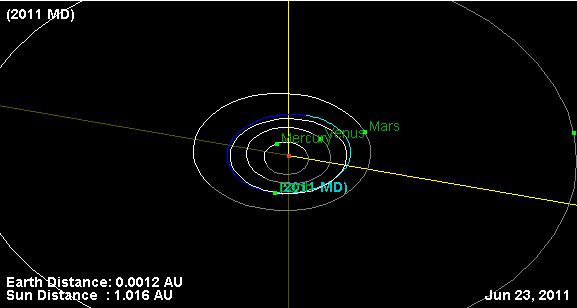 2011 MD’s orbital parameters. Credit: JPL Small-Body Database Browser
A newly discovered house-sized asteroid will miss the Earth by less than 17,700 km (11,000 miles) on Monday June 27, 2011. That’s about 23 times closer than the Moon. The size and location of the asteroid, named 2011 MD, should allow observers in certain locations to take a look at the space rock, even with small telescopes. It’s closest approach will be at 13:26 UTC on June 27.
According to Skymania, 2011 MD was found just yesterday, June 22, by LINEAR, a pair of robotic telescopes in New Mexico that Read more…
Monster Chinese Telescope the Next ET Hunter?
In radio astronomy, the bigger the telescope, the better. And in 2016, the Chinese are expected to blow the international radio telescope competition out of the water with the Five-hundred-meter Aperture Spherical radio Telescope (FAST).
Construction has begun in the Guizhou Province in southern China where the world’s largest single dish radio telescope will take up residency in a natural depression in the landscape, not dissimilar to the world-famous Arecibo radio telescope in Puerto Rico. However, FAST will be bigger, faster and Read more…
Volcano ash could turn Australia eclipse blood red
 Australian night owls will be treated to a lunar eclipse, and ash in the atmosphere from a Chilean volcano could turn it blood red.
The Sydney Observatory says the eclipse will begin at 3:25 a.m. Thursday (1:25 p.m. EDT, 5:25 p.m. GMT Wednesday) and last until after 5 a.m.
Scientists say the specific phenomenon happening Thursday — known as a “deep lunar eclipse” — often exudes a coppery color. But the intensity of the color depends on the amount of ash and dust in the atmosphere. Luckily for moon-gazers, there’s plenty of ash in the air. Air travelers haven’t been so lucky: The ash has grounded hundreds of flights around the region.
Scientists say the eclipse can be safely observed with the naked eye.
Spacecraft Captures Video Of Giant Asteroid Approach
Scientists working with NASA’s Dawn spacecraft have created a new video showing the giant asteroid Vesta as the spacecraft approaches this unexplored world in the main asteroid belt.
The video loops 20 images obtained for navigation purposes on June 1. The images show a dark feature near Vesta’s equator moving from left to right across the field of view as Vesta rotates. Images also show Vesta’s jagged, irregular shape, hinting at the enormous crater known to exist at Vesta’s south pole.
Scientists working with NASA’s Dawn spacecraft have created a new video showing the giant asteroid Vesta as the spacecraft approaches this unexplored world in the main asteroid belt.
The video loops 20 images obtained for navigation purposes on June 1. The images show a dark feature near Vesta’s equator moving from left to right across the field of view as Vesta rotates. Images also show Vesta’s jagged, irregular shape, hinting at the enormous crater known to exist at Vesta’s south pole.
This movie shows surface details beginning to resolve as NASA’s Dawn spacecraft closes in on the giant asteroid Vesta. The framing camera aboard NASA’s Dawn spacecraft obtained the images used for this animation on June 1, 2011, from a distance of about 300,000 miles (483,000 kilometers).
To see the video, visit: Read more…
‘Dramatic’ solar flare could disrupt Earth communications
Handout photo released by NASA Earth Observatory on June 7, 2011 and taken from NASA’s Solar Dynamics Observatory (SDO), sunspot complex 1226-1227, shows the Sun unleashing an M-2 (medium-sized) solar flare.
WASHINGTON – An unusual solar flare observed by a NASA space observatory on Tuesday could cause some disruptions to satellite communications and power on Earth over the next day or so, officials said.
The potent blast from the Sun unleashed a firestorm of radiation on a level not witnessed since 2006, and will likely lead to moderate geomagnetic storm activity by Wednesday, according to the National Weather Service.
“This one was rather dramatic,” said Bill Murtagh, program coordinator at the NWS’s Space Weather Prediction Center, describing the M-2 (medium-sized) solar flare that peaked at 1:41 a.m. Eastern time in North America, or 0541 GMT.
“We saw the initial flare occurring and Read more…


![[Most Recent Quotes from www.kitco.com]](https://i0.wp.com/www.kitconet.com/charts/metals/gold/t24_au_en_usoz_2.gif)
![[Most Recent Quotes from www.kitco.com]](https://i0.wp.com/www.kitconet.com/charts/metals/silver/t24_ag_en_usoz_2.gif)

 crisisboom
 CRISISBOOM
You must be logged in to post a comment.