Archive
DHS to gain real-time access to DoD biometrics
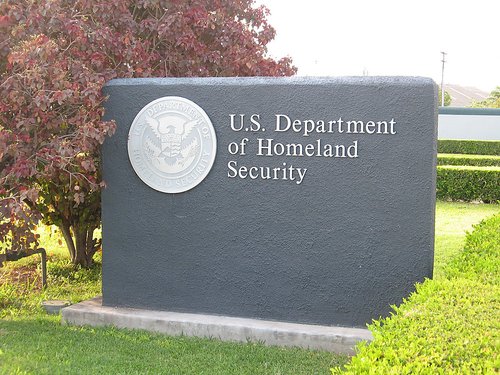 The Homeland Security Department hopes to soon have real-time access to the military’s biometrics database letting them better sort out who’s who at U.S. points of entry.
The capability will be similar to what DHS is already doing with the FBI, and through it, local law enforcement agencies around the country, said Bob Mocny, director of the Homeland Security Department’s U.S. VISIT program. U.S. VISIT, the office responsible for screening foreign visitors to the U.S.-is the main repository for DHS’ biometric data. That information, mainly fingerprint data, can be shared between DHS and the criminal record system that the FBI holds at its Criminal Justice Information Services division in West Virginia.
Mocny said DHS had already proven the value of biometric information sharing through the Secure Communities program, which lets participating local law enforcement see data Read more…
All children to be registered in national biometric records
By Jerome R. Corsi
© 2011 WorldNetDaily
 Below the radar of public opinion, Mexico has started to assemble the type of biometric national identity database that could be used to document names for a North American Trusted Traveler border pass card, a plan already being developed by the U.S. Department of Homeland Security for Mexican citizens.
It apparently would be similar to the program that has become commonplace in the European Union to allow free transit for EU citizens to move, live and work wherever they choose within the EU, disregarding nation-of-origin and national border restrictions.
On Jan. 19, 2011, Mexico’s President Felipe Calderon signed an executive order requiring within the next five years all Mexicans 17 years old and younger have a biometric national identity card that would include a facial photograph, all 10 fingerprints, and an iris scan.
To carry out the presidential executive order, the Mexican Directorate General of the National Population Register plans to go to all Read more…
Doctor convicted of surgery to alter immigrant fingerprints
By Ros Krasny
 BOSTON, Feb 10 (Reuters) – A doctor from the Dominican Republic was convicted and sentenced in Boston on Thursday of offering to surgically alter the fingerprints of illegal aliens, the U.S. Department of Justice said.
The case is one of a number of attempts in recent years to subvert the federal government’s new biometric border security program, known as the Integrated Automated Fingerprint Identification System.
Jose Elias Zaiter-Pou, 62, pleaded guilty of conspiring to conceal illegal aliens from detection by law enforcement authorities, by surgically altering their fingerprints in exchange for payment.
He was sentenced to a year and a day in prison, followed by deportation and three years of supervised release.
Authorities said Zaiter-Pou met at a hotel in Woburn, Massachusetts, with a Read more…
Moscow’s Sheremetyevo airport completes first stage testing of novel biometric security system
 Sheremetyevo International Airport has completed the first stage of testing of the Russian-owned Artec Ventures new novel biometric security system BROADWAY 3D, which is based on using one of the most reliable biometrics – the three-dimensional surface of the face. The system delivers highly reliable identity recognition with minimal human involvement in the process of identification, which is of particular importance given the requirements set out in the Rules on the protection of airports and their infrastructural facilities (approved by Resolution No 42 of the government of the Russian Federation, dated 1 February 2011).
The company is headquartered in Palo Alto, California, USA with its R&D office in Moscow, Russia.
the team invented 3D face recognition technology in 1999 and cultivated it from an idea stage to a biometric solution that became an industry standard worldwide in 2006. This technology is widely Read more…
Chinese Develop Gait-Biometrics Surveillance
Another way to be under surveillance.

A confidential United States embassy dispatch released by Wikileaks provides details about a new technology developed by the Chinese Academy of Science to identify people by their gait.
The technology is designed to be deployed beneath existent flooring. From there it measures pedestrian pace and walking pressure to create a unique biometrics profile which can be used to identify and track the movements of individuals without their knowledge…
According to the dispatch, when questioned about the technology’s potential applications, scientists “stated the device was being used by ‘secret’ customers and was not available on the commercial market.” Officials went on to note the technology was involved with “Program 863.”
Program 863, or the State High Tech Development Plan, is a civil-military program created in 1986, according to Lev Navrozov – a former dissident Soviet writer – for the purpose of developing a “post-nuclear superweapon” possibly incorporating nanotechnology.
Germany deploys contactless national ID
 Germany began issuing the new contactless national ID to citizens in November. The program is one of the first contactless-only electronic ID programs. It also employs a unique privacy scheme to protect cardholders.
National ID cards aren’t new in the European Union and many countries use smart card technology to power the credentials. But the contactless German ID is a bit of a departure from what other countries have done and thus necessitated a slightly different take on existing contactless smart cards.
The country expects to issue 60 million cards over the next 10 years to replace existing paper documents, says Rudy Stroh, executive vice president of the ID business and country manager for Germany at NXP Semiconductors. NXP is providing the chip–its 128-kilobyte SmartMX secure contactless microcontroller–for the German e-ID.
“The contactless technology used in the e-ID enables strong privacy protection,” Stroh says.
The first difference between the German ID card and other contactless smart cards is that is can only be read from four centimeters, whereas most other cards can be read from Read more…
Mexico to pioneer iris technology on ID cards
Its only a matter of time until the U.S. moves to this widespread technology.

Mexico will on Monday become the first country to start using iris scans for identity cards, according to the government, which claims the scheme will be highly secure.
“The legal, technical and financial conditions are ready to start the process of issuing this identity document,” Felipe Zamora, responsible for legal affairs at the Mexican Interior Ministry, told journalists Thursday.
The documents, which will include the eye’s image as well as fingerprints, a photo and signature, will be 99 percent reliable, Zamora said.
Critics, including the National Human Rights Commission, have slammed the system, expressing concern that compiling personal data could violate individual rights.
The move will be introduced gradually, with some 28 million minors taking part in a first two-year stage, due to cost 25 million dollars.
The cards are due to start for adults from 2013.
Iris recognition is increasingly used in airports, controlling access to restricted areas, and prisoner booking and release.
Report: heavy growth in biometrics
The research firm MarketsandMarkets has released a new study of the biometrics marketplace that projects a heavy growth rate over the next four years. Advances in Biometric Technologies and Market Analysis breaks down the various modes of biometrics such as fingerprint, iris and facial and by regions such as North America, Asia and Europe.
Specifically, the report projects a compound annual growth rate of 21.6% between 2010 and 2015 which would result in a marketplace worth over $11 billion.
While the mode projected to have the largest share of the marketplace in 2015 is still fingerprint biometrics with a 19% growth rate, iris, vein and facial biometrics are expected to close their respective gaps with growth rates of 27.5%, 25.4% and 24.2%. Majority of the reasoning the authors are using for the expected booms in the marketplace are due to growing concerns for national security and the need for ID programs to deal with such concerns


![[Most Recent Quotes from www.kitco.com]](https://i0.wp.com/www.kitconet.com/charts/metals/gold/t24_au_en_usoz_2.gif)
![[Most Recent Quotes from www.kitco.com]](https://i0.wp.com/www.kitconet.com/charts/metals/silver/t24_ag_en_usoz_2.gif)

 crisisboom
 CRISISBOOM
You must be logged in to post a comment.