Archive
Loss of top animal predators has massive ecological effects
 When sea otters, which feed on sea urchins, were hunted to extinction in some coastal areas of the Pacific Ocean, sea urchins increased in abundance and decimated underwater kelp forests, also affecting other species that inhabit the kelp. Credit: Matt Knoth. |
“Trophic Downgrading of Planet Earth,” a review paper that will be published on July 15, 2011, in the journal Science, concludes that the decline of large predators and herbivores in all regions of the world is causing substantial changes to Earth’s terrestrial, freshwater, and marine ecosystems.
The paper claims that the loss of apex consumers from ecosystems “may be humankind’s most pervasive influence on nature.” The research was funded primarily by the Institute for Ocean Conservation Science at Stony Brook University with support from The Pew Charitable Trusts.
The paper is co-authored by the Institute’s executive director, Dr. Ellen K. Pikitch, and the lead author is Dr. James A. Estes, professor of ecology and evolution at the University of California at Santa Cruz.
The review, conducted by an international team of 24 scientists, illuminates the Read more…
CERN ‘gags’ physicists about role of cosmic rays in climate change
theextinctionprotocol.wordpress
 July 20, 2011 – DENMARK – The chief of the world’s leading physics lab at CERN in Geneva has prohibited scientists from drawing conclusions from a major experiment. The CLOUD (“Cosmics Leaving Outdoor Droplets”) experiment examines the role that energetic particles from deep space play in cloud formation. CLOUD uses CERN’s proton synchrotron to examine nucleation. CERN Director General Rolf-Dieter Heuer told Welt Online that the scientists should refrain from drawing conclusions from the latest experiment. “I have asked the colleagues to present the results clearly, but not to Read more…
Why is Time Speeding Up?
 More and more frequently people are suggesting that time is speeding up. We hear people saying things like “I never seem to have enough time to get everything done anymore” or “where has the time gone to”. The years are certainly flying by faster than ever and there is a scientific reason why time is speeding up. There are also a number of reasons why we are changing so rapidly and it is all related to time speeding up. Human beings are becoming more consciously aware and people are being drawn towards spirituality and personal development in greater numbers than ever before. Why is this happening?
Scientists discovered many years ago that the earth gives off a pulse. This pulse or frequency which has been likened to a heartbeat has been stable at Read more…
Reservoirs Can Trigger Earthquakes Say Chinese Geologists Studying Complex Interaction Of Earth And Water
This figure is a presentation of viscous stress and Reynolds stress at multiple micro-spatial scales under ultra-high temperature and pressure conditions.

Credit: ©Science China Press
The extended Coulomb failure stress (ECFS) criteria and anisotropic porosity and permeability tensor at micro/meso/macro scale under ultra‑high temperature and pressure (UTP) conditions were developed employing the flow driven pore‑network crack (FDPNC) model under multiple temporal–spatial scales and the hybrid hypersingular integral equation‑lattice Boltzmann method (HHIE‑LBM). The correlation of the Zipingpu reservoir and Longmenshan slip was then analyzed and the fluid–solid coupled three‑dimensional facture mechanism of the reservoir and earthquake fault was explored.
Describing the correlation of a reservoir and Read more…
Rising Oceans – Too Late to Turn the Tide?
(Click to enlarge) If sea levels rose to where they were during the Last Interglacial Period, large parts of the Gulf of Mexico would be under water (red areas), including half of Florida and several Caribbean islands. (Photo illustration by Jeremy Weiss)
Melting ice sheets contributed much more to rising sea levels than thermal expansion of warming ocean waters during the Last Interglacial Period, a UA-led team of researchers has found. The results further suggest that ocean levels continue to rise long after warming of the atmosphere has leveled off.
Thermal expansion of seawater contributed only slightly to rising sea levels compared to melting ice sheets during the Last Interglacial Period, a University of Arizona-led team of researchers has found.
The study combined paleoclimate records with computer simulations of Read more…
Military Hush-Up: Incoming Objects Now Classified .. Closing the Eyes of a Nation

The upshot: Space rocks that explode in the atmosphere are now classified.
“It’s baffling to us why this would suddenly change,” said one scientist familiar with the work. “It’s unfortunate because there was this great synergy…a very good cooperative arrangement. Systems were put into Read more…
Study: Volcanoes can trigger bigger climate impact

Volcanic eruptions might affect earth’s climate by releasing far more weather-altering particles than scientists have suspected previously, a new study has found.
A team of researchers, who wanted to find out the influence of volcanoes on global climate, investigated the huge eruption of the Eyjafjallajokull volcano in Iceland on March 20, 2010.
From a research station in France, they monitored the volcano’s eruption, which rapidly ejected large ash particles into the atmosphere and spread all over Europe. They then analysed how many secondary particles this ash generated upon reacting chemically with Read more…
Behemoth sunspots evolve
The SDO team has just prepared a beautiful movie of the explosion that produced the CME.
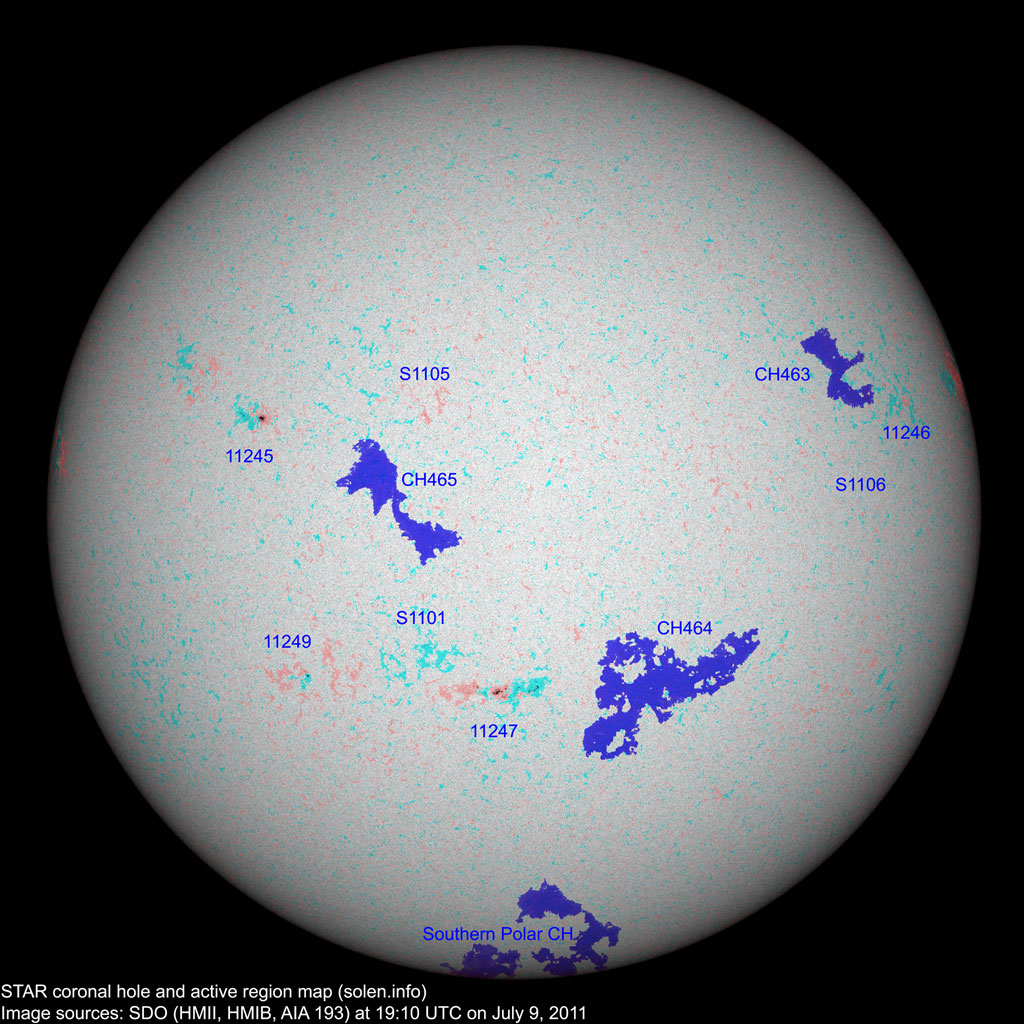
Sunspot group 1247 is expanding rapidly and in an interesting way. The active region is organizing itself as a linear Read more…
New industrial revolution needed to avert ‘planetary catastrophe’ – UN report

NASA Elenin 2011 Comet – Planetary Alignments with Comet Elenin Causing Big Earthquakes
USGS Worldwide Deadly and Destructive Earthquakes Between Magnitudes 6 and 8 Over Last 100 Years

NASA Elenin 2011 Comet – Planetary Alignments with Comet Elenin Causing Big Earthquakes Read more…


![[Most Recent Quotes from www.kitco.com]](https://i0.wp.com/www.kitconet.com/charts/metals/gold/t24_au_en_usoz_2.gif)
![[Most Recent Quotes from www.kitco.com]](https://i0.wp.com/www.kitconet.com/charts/metals/silver/t24_ag_en_usoz_2.gif)

 crisisboom
 CRISISBOOM
You must be logged in to post a comment.