Archive
Saudi US Rift widening
goldandsilverlinings
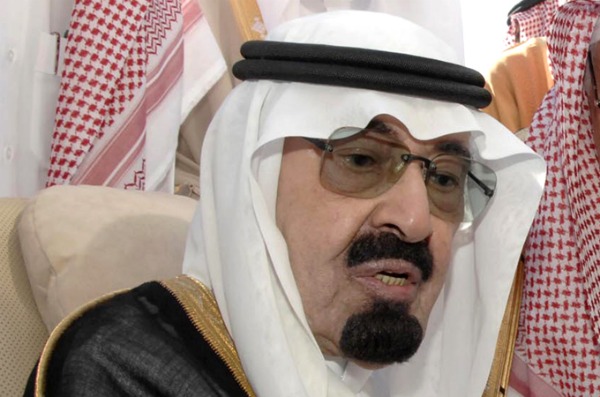 Back when Egypt was falling apart, not that it still isn’t, the Saudi king was very upset with the US for allowing his good friend Hosni Mubarak to fall. Rumor has it that the King almost or in fact did suffer a heart attack after talking to Obama about the way things were going in the Egypt.
The Saudi’s are now raising concerns that the Bushehr reactor is another Fukushima waiting to happen. The US is turning a blind eye to Saudi Arabia’s concerns, granted the Saudi’s are likely taking advantage of Fukushima to draw attention to their objective of halting Bushehr coming online. Israel has also been very quiet on Bushekr Read more…
Moment of truth for Yemen
 “The shooting started from different buildings around the same time and continued for more than 30 minutes.”
An eyewitness describing to Amnesty International an attack on a protest camp in Sana’a on 18 March 2011 which reportedly left 52 people dead.
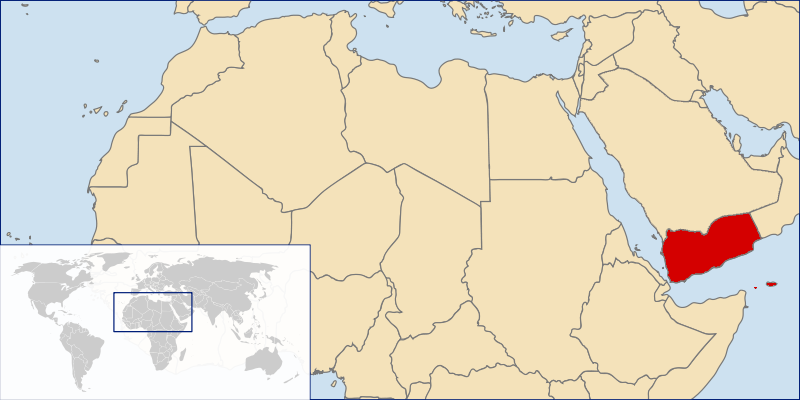
The first few months of 2011 have seen a rapid deterioration in the human rights situation in Yemen. The most shocking manifestation of this has been the brutal repression of protests calling for reform, and increasingly for President Ali Abdullah Saleh to stand down, fuelled by frustration at corruption, unemployment and repression of freedoms in the country and partly inspired by events in Tunisia and Egypt. Scores of protesters have been killed and hundreds injured after security forces have repeatedly used live ammunition to break up demonstrations.
The response of the authorities has been woefully inadequate. While investigations have been announced into some of the killings, they inspire little confidence. In some cases, almost no details have been made public about the nature and scope of the investigation. In others, information revealed about the nature of the investigating body raises serious questions about its ability to conduct thorough, independent and impartial investigations. As far as Amnesty International is aware, the judicial authorities have launched only one investigation – into the killings of protesters on 18 March. No judicial proceedings against members of the security forces are known to have been opened.
The track record of the authorities in investigating allegations of serious human rights violations by the security forces is very poor. Crucially, they have failed to adequately investigate reports of massive violations committed in the context of the unrest in the south Read more…
China May Match India as World’s Biggest Gold Consumer on ‘Amazing’ Demand
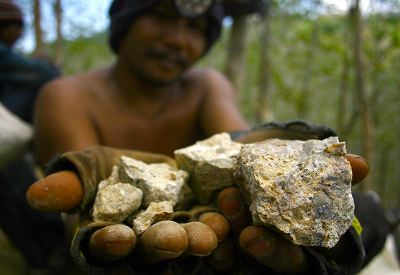 Chinese consumption of gold may climb to rival that of India, the top user, as investors buy the metal as a store of value, said GFMS Ltd. and INTL FCStone.
Demand in China, the world’s second-biggest economy, almost tripled to 580 metric tons last year from 206 tons in 2001, data from the producer-funded World Gold Council show. Use in India may slump 5 percent to 26 percent this year from 963 tons in 2010, Morgan Stanley said in a report yesterday.
Bullion soared to a record $1,444.95 an ounce on March 7 and rallied 30 percent last year for a 10th annual gain as investors sought to preserve their wealth against inflation, Middle East unrest and currency debasement. Consumer prices in China climbed 4.9 percent in February from a year ago, exceeding the government’s 4 percent goal for the full year.
“The level of interest in gold as an asset class is just amazing,” Jeffrey Rhodes, global head of precious metals with INTL FCStone in Dubai, said in an interview. “There is potential for China to Read more…
The Coming “Egyptian Moment” in South Africa
 As we watch the Egyptian government concede to the demands of their citizens and closely follow the unraveling of the North African governments, one must acknowledge the millions of youth who are courageously going against the grain by breaking down social and political barriers. The global disenfranchisement of youth in underserved communities is creating a perfect storm for additional revolutions to occur around the world.
As a South African, I wonder how South Africa’s leadership might respond if it were to reach a similar tipping point with its disenfranchised youth — where conservative estimates tell us that more than half of South Africans under the age of 25 are unemployed. I do believe it would be foolish for South African leaders to think that these unemployed and disconnected youth may not one day ignite a revolution.
As signs of discontentment emerge at Read more…
‘The West is to be forgotten. We will not give them our oil’ – Gaddafi
This is just the first step in a long line for the US on not receiving any oil that is pumped from any country in the Middle East resulting in third world status. Lindsey Williams mentioned it on the Alex Jones Show almost a month ago.
http://rt.com/news/libya-oil-gaddafi-arab/
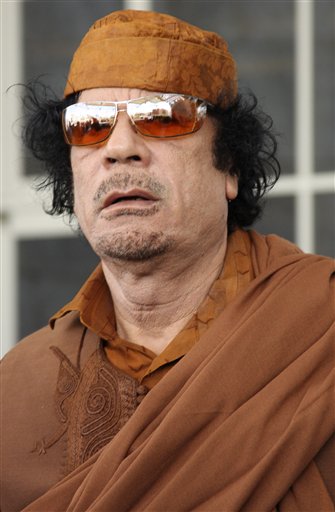 Libyan leader Muammar Gaddafi dismissed his Western partners in an exclusive interview to RT, saying he will give all the country’s oil contracts to Russia, China and India.
“We do not believe the West any longer, that is why we invite Russian, Chinese and Indian companies to invest in Libya’s oil and construction spheres” Gaddafi told RT in an exclusive interview about how he sees the current situation in Libya and the international reaction to events there.
“He condemned the Western powers, saying Germany was the only country with a chance of doing business with Libyan oil in the future. “We do not trust their firms – they took part in the conspiracy against us.”
The Libyan leader also added that as far as he is concerned, the Arab League has ceased to exist since it stood up against his country.
According to Gaddafi, the recent upheavals in his country were a “minor event” planned by Al Qaeda that will soon end.
Meanwile, Libyan Deputy Foreign Minister Khaled Kaim promised that Libya will honor Read more…
India #1 for Arms Imports Over Last 5 Years
 India (NEWSTABULOUS) – Arms importers: You would probably be surprised to know that over the last five years, the most weapons have been imported by India.
According to “Yahoo Finance”, The Stockholm International Peace Research Institute (SIPR) said, as it released its latest report on trends in the international arms trade, “India is the world’s largest arms importer”.
The largest arms suppliers have been in competition to trade with Arab countries involved in the current pro-democracy and anti-government uprisings, including Libya.
Of the total amount of international arms received during 2006-2010, 9% were received by India, and Russia was responsible for 82% of the imports by India. India’s imports of arms skyrocketed 21% from the prior 5 year span and 71% of orders were for Read more…
Recent droughts and floods have contributed to increases in food prices
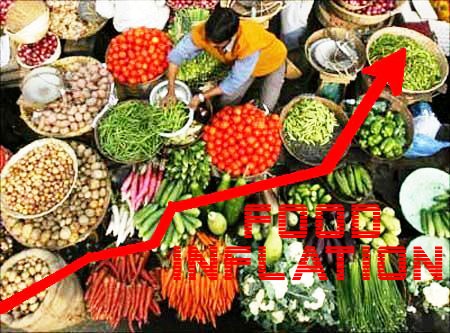 These are pushing millions more people into poverty and hunger, and are contributing to political instability and civil unrest. Climate change is predicted to increase these threats to food security and stability. Responding to this, the world’s largest agriculture research consortium today announced the creation of a new Commission on Sustainable Agriculture and Climate Change.
Chaired by the United Kingdom’s Chief Scientific Adviser, Professor Sir John Beddington, the Commission will in the next ten months seek to build international consensus on a clear set of policy actions to help global agriculture adapt to climate change, achieve food security and reduce poverty and greenhouse gas emissions.
There is a rich body of scientific evidence for sustainable agriculture approaches that can increase production of food, fiber and fuel, help decrease poverty and benefit the environment, but agreement is needed on how best to put these approaches into action at scale. Evidence also shows Read more…
Russia warns the West against interference: Medvedev suggests that revolts in the Arab world were instigated by outside forces
Moscow is concerned that the turmoil in the Arab world aggravated by western interference may destabilise Russia’s restive North Caucasus and former Soviet Central Asia
-Although Russian leaders have not named any country, experts and politicians have pointed a finger at the United States.
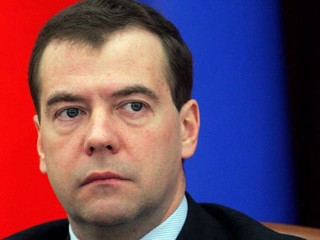 “The Arab revolt may have begun as spontaneous protests, but the West has now moved to take the endgame under its control,” says Konstantin Kosachyov, chairman of the Foreign Affairs Committee of the State Duma. Analysts say the U.S. is using the same techniques in the Arab East it earlier used in staging “coloured revolutions” in the former Soviet Union — in Georgia, Ukraine and Kyrgyzstan. They noted the role of CIA-linked foundations such as the Freedom House and the National Endowment for Democracy (NED), in supporting and training civil activists and Twitter and Facebook organisers of the protests in Egypt and Tunisia.
“The events [in the Arab world] bear all the traits of a total ‘network war’ (netwar) as formulated by John Arquilla and David Ronfeldt of the RAND Corporation back in 1996,” says Alexander Knyazev of the Moscow-based Institute of Oriental Read more…
Oil Should Spike Higher Following Saudi Riots and Nigerian Elections in April
 The following special report on oil (LA Blog Only, leverageacademy.com/blog) discusses the oil market, providing reasons to be bullish on the commodity given unrest in the Middle East, Nigerian elections in April, and rising domestic consumption in oil producing countries, including Venezuela, Nigeria, and Iran. According to the article, the rise of oil prices could easily cause the next recession. In 2010, soft commodities outperformed energy, but that will certainly change given the political headwinds abroad and continued monetary easing in the developed world. Therefore, the Bernanke “Put,” combined with political unrest will be to blame for continued sharp price increases in the energy commodity sector.
Emerging market demand, especially in China, which now consumes nearly 10mm barrels of oil per day, will also be driving the demand side of the equation. Money supply in China was also up 19.7% in 2010, because of the rapid Read more…
The Oil-Food Price Shock
 When future historians attempt to trace the origins of the current turmoil in the Middle East, they will find that one of the earliest of the many explosions of rage occurred in Algeria and was triggered by the rising price of food. On January 5, young protesters in Algiers, Oran and other major cities blocked roads, attacked police stations and burned stores in demonstrations against soaring food prices. Other concerns—high unemployment, pervasive corruption, lack of housing—also aroused their ire, but food costs provided the original impulse. As the epicenter of youthful protest moved elsewhere, first to Tunisia and then to Egypt and other countries, the food price issue was subordinated to more explicitly political demands, but it never disappeared. Indeed, the rising cost of food has been a major theme of anti government demonstrations in Jordan, Sudan and Yemen. With the price of most staples still climbing—spurred in part by a parallel surge in oil costs—more such protests are bound to occur.


![[Most Recent Quotes from www.kitco.com]](https://i0.wp.com/www.kitconet.com/charts/metals/gold/t24_au_en_usoz_2.gif)
![[Most Recent Quotes from www.kitco.com]](https://i0.wp.com/www.kitconet.com/charts/metals/silver/t24_ag_en_usoz_2.gif)

 crisisboom
 CRISISBOOM
You must be logged in to post a comment.