Archive
U.S. braces for floods as Red River rises
 Movers this week pulled furniture from the lower level of the Sterns’ house and ripped out the carpet to reduce damage from seeping water as the Red River continued a rapid rise.
“Any spring there is anxiety,” Sherri Stern said on Thursday. “We didn’t expect to have water that we would have to start pumping this fast.”
The Red River swelled to within four feet of its forecasted crest at Fargo-Moorhead on Thursday as volunteers piled up sandbags. At the forecasted level, the Red River crest would be the third highest on record behind 2009 and 1997.
The flood has potential to force thousands of people from their homes in North Dakota and Minnesota based on past similar floods, but protection is better this year, said Cecily Fong, spokeswoman for the North Dakota Department of Emergency Services.
RED TO CREST SUNDAY AT FARGO
The Red, which forms the boundary between the two states, rose to 35.9 feet at Fargo- Read more…
The Causes of Rising Food Prices
 Food prices are rising quickly around the world. Part of the problem is weather. The winter wheat crop in China has been poor. Australia has suffered floods, while Russia has undergone a drought. The earthquake and tsunami in Japan, no doubt, will hammer the very intensive agricultural production of the limited arable land on that archipelago. Weather-related agricultural problems, however, balance out fairly quickly. Mythical “global warming” aside, weather has ups and downs, and farmers, who are smart folks, take that into account. The Soviet Union, whose vassal state the Ukraine was once one of the best farmlands on earth, never managed to feed its people well, because a communist-controlled economy destroys Read more…
Recent droughts and floods have contributed to increases in food prices
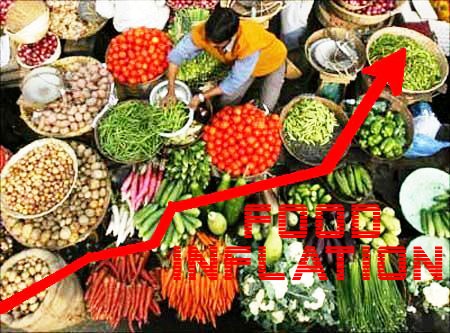 These are pushing millions more people into poverty and hunger, and are contributing to political instability and civil unrest. Climate change is predicted to increase these threats to food security and stability. Responding to this, the world’s largest agriculture research consortium today announced the creation of a new Commission on Sustainable Agriculture and Climate Change.
Chaired by the United Kingdom’s Chief Scientific Adviser, Professor Sir John Beddington, the Commission will in the next ten months seek to build international consensus on a clear set of policy actions to help global agriculture adapt to climate change, achieve food security and reduce poverty and greenhouse gas emissions.
There is a rich body of scientific evidence for sustainable agriculture approaches that can increase production of food, fiber and fuel, help decrease poverty and benefit the environment, but agreement is needed on how best to put these approaches into action at scale. Evidence also shows Read more…
Floodwaters are still rising in Wayne, other N.J. towns

WAYNE — Floodwaters continued to rise in Fairfield, Little Falls and Wayne today, submerging entire neighborhoods under water and leaving some with no other option but to travel by boat to reach their homes.
“It sucks, but you have to live with it. What can you do?” said Wieslaw Borek, as he Read more…
The Oil-Food Price Shock
 When future historians attempt to trace the origins of the current turmoil in the Middle East, they will find that one of the earliest of the many explosions of rage occurred in Algeria and was triggered by the rising price of food. On January 5, young protesters in Algiers, Oran and other major cities blocked roads, attacked police stations and burned stores in demonstrations against soaring food prices. Other concerns—high unemployment, pervasive corruption, lack of housing—also aroused their ire, but food costs provided the original impulse. As the epicenter of youthful protest moved elsewhere, first to Tunisia and then to Egypt and other countries, the food price issue was subordinated to more explicitly political demands, but it never disappeared. Indeed, the rising cost of food has been a major theme of anti government demonstrations in Jordan, Sudan and Yemen. With the price of most staples still climbing—spurred in part by a parallel surge in oil costs—more such protests are bound to occur.
Need Versus Greed

NEW YORK – India’s great moral leader Mohandas Gandhi famously said that there is enough on Earth for everybody’s need, but not enough for everybody’s greed. Today, Gandhi’s insight is being put to the test as never before.
The world is hitting global limits in its use of resources. We are feeling the shocks each day in catastrophic floods, droughts, and storms – and in the resulting surge in prices in the marketplace. Our fate now depends on whether we cooperate or fall victim to self-defeating greed.
The limits to the global economy are new, resulting from the unprecedented size of the world’s population and the unprecedented spread of economic growth to nearly the entire world. There are now seven billion people on the planet, compared to just three billion a half-century ago. Today, average per capita income is $10,000, with the rich world averaging around $40,000 and the developing world around $4,000. That means that the world economy is now producing around $70 trillion in total annual output, compared to around $10 trillion in 1960.
China’s economy is growing at around 10% annually. India’s is growing at Read more…
NATO Warns of Food Crisis and More Unrest, Prices Increase 15% in Four Months
The World Food Program’s representative in one of the countries which has seen protests, Yemen, recently stated: ‘There is an obvious link between high food prices and unrest.’

Credit: NATO
The 2008 food crisis was a warning of things to come. More recently, food prices rose by 15% in just the period October 2010 to January 2011, according to the World Bank’s Food Price Watch.
This time, the impacts have been felt more keenly in political and security circles. The President of Read more…
Flood-hit town sees off Dianne but Carlos is on the horizon
HARD-HIT residents of Western Australia’s northern Gascoyne region are bracing for more floods after high river levels left a family stranded and crops damaged on the weekend.
 At Carnarvon, 910km north of Perth, the river’s peak was among the highest ever recorded on Saturday because of rain from Cyclone Dianne.
This week, the town is expected to be affected by a re-formed Cyclone Carlos.
On Saturday, the Gascoyne River peaked at 7.1m, leaving one family with two small children stranded on its north side.
Fire and Emergency Services Authority media liaison officer Brian Halberg said the family had been evacuated by emergency workers and their home was undamaged by the floodwaters.
Flooding was much Read more…
NOAA: Another Spring of Major Flooding Likely in North Central U.S.

A large swath of the country is at risk of moderate to major flooding this spring, from northeastern Montana through western Wisconsin following the Mississippi River south to St. Louis, National Weather Service flood experts are forecasting. Today the agency released an initial spring flood outlook for this high risk region and will release a national spring flood outlook on March 17.
For the third consecutive year, forecasters predict moderate to major flooding along the Red River of the North, which forms the state line between eastern North Dakota and northwest Minnesota and includes the Souris River Basin and the Devils Lake and Stump Lake drainages in North Dakota.
If the current forecast holds, the main stem Mississippi River is at risk for Read more…
Farmers Deposit Seeds in Arctic Doomsday Vault, Patrolled by Polar Bears
Farmers from Australia are the latest donors to a polar bear-patrolled Arctic doomsday vault that stores seeds as insurance against an international food emergency.
The Svalbard Global Seed Vault, a converted mine, is located about 800 miles from the North Pole in Arctic Norway.
An Australian delegation of farmers and scientists next week will deposit 301 samples of peas and 42 rare chickpeas in the vault, intending to protect the plant species from extinction by climatic or man-made events.

“It’s a very robust structure, concrete, made into the Read more…


![[Most Recent Quotes from www.kitco.com]](https://i0.wp.com/www.kitconet.com/charts/metals/gold/t24_au_en_usoz_2.gif)
![[Most Recent Quotes from www.kitco.com]](https://i0.wp.com/www.kitconet.com/charts/metals/silver/t24_ag_en_usoz_2.gif)

 crisisboom
 CRISISBOOM
You must be logged in to post a comment.