Archive
Indian Opposition Leader Urges Change to “No-First-Use” Policy


A senior member of India’s main political opposition party on Tuesday called for changing the nation’s longstanding policy of “no-first-use” of its nuclear arsenal, the Indian Express reported (see GSN, Nov. 1, 2010).
 (Mar. 16) – Indian Bharitaya Janata Party lawmaker Jaswant Singh, shown last year, on Tuesday urged his country to alter its “no-first-use” nuclear weapons policy (Farooq Naeem/Getty Images).
“I am of the view that the policy-framework that the [National Democratic Alliance] devised in 1998 is very greatly in need of revision because the situation that warranted the enunciation of the policy of ‘no-first-use’ or ‘nonuse against non-nuclear weapons [states],’ ‘credible deterrence with minimum force,’ etc. has long been overtaken by Read more…
India #1 for Arms Imports Over Last 5 Years
 India (NEWSTABULOUS) – Arms importers: You would probably be surprised to know that over the last five years, the most weapons have been imported by India.
According to “Yahoo Finance”, The Stockholm International Peace Research Institute (SIPR) said, as it released its latest report on trends in the international arms trade, “India is the world’s largest arms importer”.
The largest arms suppliers have been in competition to trade with Arab countries involved in the current pro-democracy and anti-government uprisings, including Libya.
Of the total amount of international arms received during 2006-2010, 9% were received by India, and Russia was responsible for 82% of the imports by India. India’s imports of arms skyrocketed 21% from the prior 5 year span and 71% of orders were for Read more…
Recent droughts and floods have contributed to increases in food prices
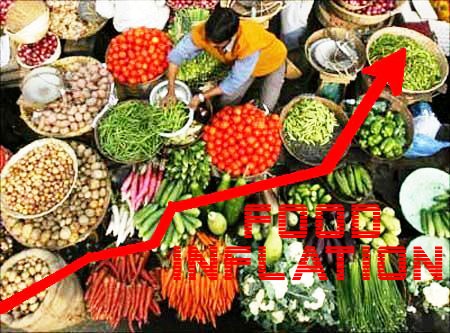 These are pushing millions more people into poverty and hunger, and are contributing to political instability and civil unrest. Climate change is predicted to increase these threats to food security and stability. Responding to this, the world’s largest agriculture research consortium today announced the creation of a new Commission on Sustainable Agriculture and Climate Change.
Chaired by the United Kingdom’s Chief Scientific Adviser, Professor Sir John Beddington, the Commission will in the next ten months seek to build international consensus on a clear set of policy actions to help global agriculture adapt to climate change, achieve food security and reduce poverty and greenhouse gas emissions.
There is a rich body of scientific evidence for sustainable agriculture approaches that can increase production of food, fiber and fuel, help decrease poverty and benefit the environment, but agreement is needed on how best to put these approaches into action at scale. Evidence also shows Read more…
EARTHQUAKE WARNING FROM RUSSIAN INSTITUTE of PHYSICS of the EARTH

A new report released today in the Kremlin prepared for Prime Minister Putin by the Institute of Physics of the Earth, in Moscow, is warning that the America’s are in danger of suffering a mega-quake of catastrophic proportions during the next fortnight (14 days) with a specific emphasis being placed on the United States, Mexico, Central America and South American west coast regions along with the New Madrid Fault Zone region.
This report further warns that catastrophic earthquakes in Asia and the sub-continent are, also, “more than likely to occur” with the 7.3 magnitude quake in Japan today being “one of at least 4 of this intensity” to occur during this same time period.
Raising the concerns of Read more…
Giant Fissure Opens In Pakistan
Turkmenistan to boost gas deliveries to China
AP
 ASHGABAT, Turkmenistan (AP) — Energy-hungry China is set to sign an agreement with the Central Asian nation of Turkmenistan later this year to boost its future annual natural gas purchases by 20 billion cubic meters, state newspaper Neutral Turkmenistan reported Wednesday.
The deal means Turkmenistan’s annual gas sales to China will eventually reach 60 billion cubic meters — equivalent to more than half China’s entire natural gas consumption last year.
Turkmenistan began delivering gas to China through a newly completed pipeline in late 2009, but that route is only expected to reach full annual capacity of 40 billion cubic meters by 2015. As of mid-February, Turkmenistan had supplied 5.8 billion cubic meters of Read more…
VERY INTERESTING” LEAK”- Resurfaced-The Map of the “New Middle East”

“Hegemony is as old as Mankind…” -Zbigniew Brzezinski, former U.S. National Security Advisor
The term “New Middle East” was introduced to the world in June 2006 in Tel Aviv by U.S. Secretary of State Condoleezza Rice (who was credited by the Western media for coining the term) in replacement of the older and more imposing term, the “Greater Middle East.”
This shift in foreign policy phraseology coincided with the inauguration Read more…
Robert Kaplan on the New New Great Game
The U.S. can maintain its global primacy if it (among other things) plays Russia off China, India, Iran and Turkey off Russia and Turkey off Iran. That’s the analysis of globe-spinner extraordinaire Robert Kaplan, along with his brother Stephen (apparently recently retired as a top CIA official).
The essay, America Primed, is in the new edition of The National Interest and doesn’t deal too explicitly with the Caucasus or Central Asia. But it’s all about how the U.S. (assisted by the “Anglosphere,” other English-speaking countries like Canada, the U.K. and Australia) can maintain dominance on the Eurasian continent. And that requires American leadership to make sure that no other country — in particular China, Russia or Iran — gets too powerful. What does that entail, specifically?
For one, playing India off Russia (and “punishing” Pakistan):
Out of national pride, and because of its own tense relationships with China and Pakistan, India needs to remain officially nonaligned. But that will not stop New Delhi from accepting more help from Read more…
Limited Nuclear War Could Deplete Ozone Layer, Increasing Radiation
By Chris Schneidmiller
 WASHINGTON — A nuclear conflict involving as few as 100 weapons could produce long-term damage to the ozone layer, enabling higher than “extreme” levels of ultraviolet radiation to reach the Earth’s surface, new research indicates (see GSN, March 16, 2010).
(Feb. 24) – A 1971 French nuclear test at Mururoa Atoll. The ozone layer could sustain lasting harm from a nuclear exchange involving as few as 100 weapons, allowing increased levels of ultraviolet radiation to reach the Earth’s surface, according to new research (Getty Images).
Increased levels of UV radiation from the sun could persist for years, possibly with a drastic impact on humans and the environment, even thousands of miles from the area of the nuclear conflict.
“A regional nuclear exchange of 100 15-kiloton weapons … would produce unprecedented low-ozone columns over populated areas in conjunction with the coldest surface temperatures experienced in the last 1,000 years, and would likely result in a global nuclear famine,” according to a presentation delivered on Friday at a major science conference in Washington.
Today, there are five recognized nuclear powers — China, France, Russia, the United Kingdom and the United States. India, Israel and Pakistan are all known or widely assumed to hold nuclear weapons, while North Korea has a Read more…
Zardari to seek nuclear technology cooperation with Japan

TOKYO: President Asif Ali Zardari said Monday that since Japan was negotiating a deal with India to cooperate on peaceful uses of nuclear energy, the similar cooperation should be extended to his country.
“If Japan is willing to cooperate with India in nuclear technology and (is) giving nuclear technology for peaceful purposes, I do not see any reason why we should not deserve the same,” Zardari said in an interview with the Japanese media in Islamabad ahead of his departure for a three-day visit to Japan, published in leading Read more…


![[Most Recent Quotes from www.kitco.com]](https://i0.wp.com/www.kitconet.com/charts/metals/gold/t24_au_en_usoz_2.gif)
![[Most Recent Quotes from www.kitco.com]](https://i0.wp.com/www.kitconet.com/charts/metals/silver/t24_ag_en_usoz_2.gif)

 crisisboom
 CRISISBOOM
You must be logged in to post a comment.