Archive
Biometric Identification Will Replace Many Passwords In Next Five Years, Says IBM Scientist
 Passwords have been around since ancient history, but they may become obsolete sooner than you think. According to a recent prediction by IBM Speech CTO David Nahamoo, many of the problems with passwords will be solved by biometric systems that can identify individuals based on unique biological features.
It’s not just fingerprints, DNA and retinas anymore; the way you walk is unique and so is the way you type, for example. Orwell references may be inevitable, but the technology can be used for good as well, aiding in various interactive systems, from video games to cars to iPads, and otherwise making it easier to prove that you’re you.
For a long time, it was hard to use biometrics quickly and accurately in our daily lives, but the combination of various identifiers may make the systems convenient enough for widespread use. A recent column in InformationWeek points to the United States Visitor And Information Status Indicator Technology (US-VISIT) as a prime example of a system that’s been able to scale: “The enrollment and validation of these attributes is fast and accurate enough for use in everyday, large-scale deployments, and the Department of Homeland Security just announced it will pay Accenture Federal Services $71 million over 13 months to further improve the system.”
There’s also India’s massive biometric census project, which is Read more…
e-Passports to add more biometrics by 2014
 IMS Research finds a rapid migration from paper or machine readable passports to smart card-based passports (complying with the ICAO standard for e-Passports) started in 2007, leading to nearly half of all passports now in use being e-Passports.
Within five years 90 per cent of passport holders will be using e-passports that integrate a smart card IC chip, according to IMS Research in its report titled, “Electronic Government and Health Care ID Cards – World – 2011.”
“This trend is set to Read more…
Big brother just got bigger
 Some employers go to extraordinary lengths to monitor their employees’ movements. RailCorp, for example, plans to introduce fingerprint scanning (otherwise known as biometrics) for employees at fixed locations, while people working on multiple sites will be tracked by the GPS on their phone.
Alex Claassens, the NSW Branch Secretary of the Rail Tram & Bus Union, told me he doesn’t believe these measures are being brought in to combat tardy employees, but he’s still concerned about “the potential for misuse of what will be personal and sensitive information.”
A host of businesses have popped up to service the insatiable demand of Read more…
5 Unexpected Places You Can Be Tracked With Facial Recognition Technology

Once people realized that Facebook was basically harvesting biometric data, the usual uproar over the site’s relentless corrosion of privacy ensued. Germany even threatened to sue Facebook for violating German and EU data protection laws and a few other countries are investigating. But facial recognition technology is hardly confined to Facebook — and unlike the social networking site, there’s no “opt-out” of leaving your house.
Post-9/11, many airports and Read more…
Germany introduces biometric cards for foreigners

In a bid to prevent identity fraud, Germany is digitalizing its residence permits for non-EU citizens. Instead of a paper document, they’ll be given a new biometric chip card – shaped like a credit card.
The new cards are based on German identity cards
From Thursday, September 1, non-EU citizens living in Germany will be given electronic chip cards in place of their existing paper residence permits.
The cards will contain a biometric photo and two fingerprints. Cardholders will also be given an individual PIN code. The Federal Office for Migration and Refugees claims storing such biometric data will help prevent identity theft.
But, at a cost of 110 euros ($159) each, the new cards won’t come cheap. The special chip containing the data is manufactured at the Berlin-based Federal Printing Office. The cards – like Read more…
Expert warns facial biometrics could compromise privacy
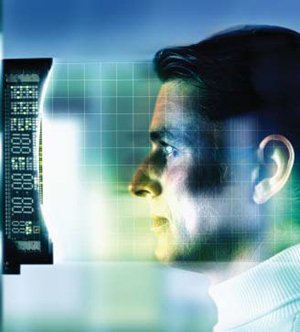 As facial biometric technology becomes increasingly ubiquitous, IT experts warn that these systems can easily be abused and therefore require stringent privacy policies and data encryption
As facial biometric technology becomes increasingly ubiquitous, IT experts warn that these systems can easily be abused and therefore require stringent privacy policies and data encryption.
In an interview with Information Security Media Group, Beth Givens, the founder and director of the Privacy Rights Clearinghouse, cautioned that organizations using biometric facial solutions should encrypt their data.
“If they back up those applications with good, solid privacy policies and practices, they’ll be in good shape,” she said.
Givens explained that a major problem with facial recognition technology is the chance that Read more…
ID breakthrough at UC
 Emdad Hossain is working on ground-breaking technology which identifies people by analysing their gait and stride. Photo: KATE LEITH
PINPOINTING a criminal by the way they walk is now within grasp, thanks to technology from University of Canberra student Emdad Hossain.
Biometrics, which uses one or more physical or behavioral trait to identify an individual, is being deployed across the world to increase safety and security at sensitive locations and to verify the identity of people tracked by surveillance technology.
Mr Hossain, a PhD candidate who came to Canberra from Bangladesh at the start of the year, has devised a system that fuses facial recognition technology and analysis of gait and stride – and it’s attracting attention around the world.
Just nine months into his studies, the 27-year-old has been Read more…
Airport security: You ain’t seen nothing yet
The Sept. 11, 2001, terrorist attacks forever changed the way Americans fly.
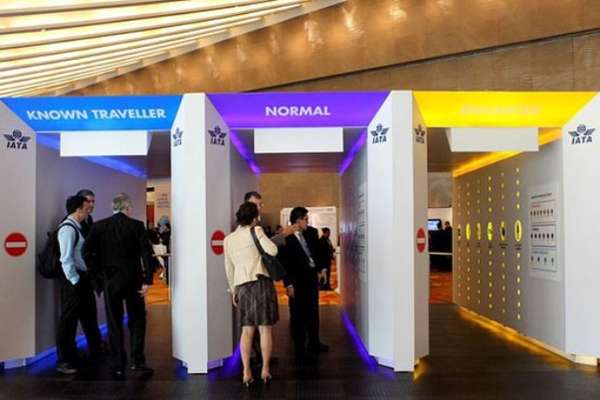
In June, the IATA unveiled a mockup of the "checkpoint of the future" that includes three sensor-lined tunnels that divide passengers into high-, medium- and low-risk threats. Ten years after the 9/11 terror attacks, security experts question whether freedom, speed and personal space -- along with continued safety -- will one day return to air travel.
Gone are the days when friends or family could kiss passengers goodbye at the gate, replaced by X-rayed shoes and confiscated shampoo bottles at security checkpoints.
Air travelers are increasingly subjected to revealing full-body scans or enhanced pat-downs — all in the name of keeping the skies safe.
As America prepares to mark the 10th anniversary of the worst terrorist attacks in the U.S., security experts question whether freedom, speed and personal space — along with continued safety — will one day return to air travel.
Some security analysts foresee a bumper crop of futuristic detection methods — from biometrics to electronic fingerprinting to behavioral analysis — and predict smoother, nimbler and less-intrusive airport walkthroughs in the coming years.
Still others envision Big Brother’s even Bigger Brother: chip-embedded passports that someday tell the federal transportation watchdogs all about your daily commutes to work, the mall — even to parties.
Gazing into the future
And then there are experts like Ed Daly who peer into the next two decades of public travel and forecast two possible scenarios Read more…
St. Joseph takes lunchtime high tech
Drake Aymond reaches out to use a palm scanner that relays information to the cafeteria computer at St. Joseph Catholic School. The new system provides a secure way to keep track of lunch balances, decreases the amount of time in lunch lines and provides security for each student’s account. / Jim Hudelson/The Times
Students at St. Joseph Catholic School are moving through the lunch line faster than ever thanks to biometric hand scanners.
The school, which houses more than 500 prekindergarten through eighth-grade students, this week began using new palm scanners in its cafeteria as a means for students to purchase lunch. The scanner creates an image of the student’s palm and relays that information to a database where the student’s account information is stored.
With the scan of a palm, the scanner is able to show medical and allergy information, as well as keep a running account balance that can notify parents when it becomes low.
Previously, the school used lunch identification numbers for students, but Principal Susan Belanger said the new technology makes lunchtime seamless.
“This technology not only expedites Read more…
Uppity Computers To Judge Social Traits From A Person’s Face
nanopatentsandinnovations.blogspot
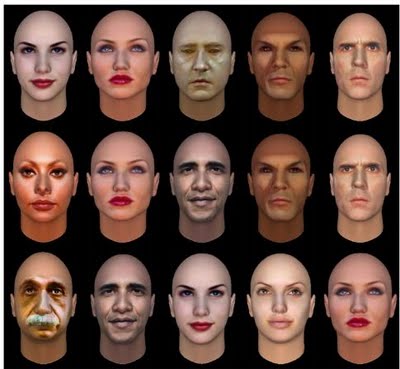
Researchers have developed new computational tools that help computers determine whether faces fall into categories like attractive or threatening, according to a recent paper published in the journal PLoS ONE.


![[Most Recent Quotes from www.kitco.com]](https://i0.wp.com/www.kitconet.com/charts/metals/gold/t24_au_en_usoz_2.gif)
![[Most Recent Quotes from www.kitco.com]](https://i0.wp.com/www.kitconet.com/charts/metals/silver/t24_ag_en_usoz_2.gif)

 crisisboom
 CRISISBOOM
You must be logged in to post a comment.