Archive
CNN talks about how Humans will MERGE with computers, NO LIE!
Canadian defence scientists probe ‘biometrics of intent’
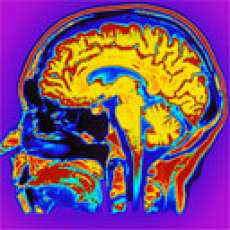
OTTAWA — Canadian defence researchers are investigating how brain signals might distinguish hostile intent from everyday emotions such as anger and fear.
Though there is still much to learn, the goal is to push biometric science beyond identification techniques to a new frontier where covert security technology would secretly scan peoples’ minds to determine whether they harbour malicious intent.
“This ability can be used by members of the military and the security forces to isolate adversaries prior to commission of actions,” according to a research paper posted on the federal government’s Defence Research and Development Canada Read more…
Untested nanoparticles showing up in thousands of consumer products
 (NaturalNews) Since 2006, the use of nanoparticles in consumer products has skyrocketed by over 600 percent. Nanotechnologies, which involve the manipulation of elements and other matter on the atomic and molecular scale, are now used in over 1,300 commercial and consumer products. And that number is expected to jump nearly three-fold by 2020. But are these nanoparticles safe for humans and the environment, particularly when used in food-related applications?
According to data provided by the Project on Emerging Nanotechnologies (PEN), a group formed in 2005 for the purpose of “creat[ing] an active public and policy dialogue” on nanotechnology, nanoparticles are now used in everything from car batteries and appliances, to aluminum foil and non-stick cookware. The “Food and Beverage” section of PEN even includes various vitamin and mineral supplements that contain nanoparticles, as well as McDonald’s Read more…
Nuclear Disaster ‘Will Have Political Impact as Great as 9/11’

A combination photo showing an explosion at the Fukushima Daiichi plant on Monday.
The nuclear accident at Japan’s Fukushima plant following Friday’s earthquake and tsunami has led to anxious questions in Germany about the safety of its own nuclear reactors and is putting the government under intense pressure to rethink its decision to extend plant lifetimes by an average of 12 years.
German media commentators across the political spectrum are saying the accident in a highly developed nation such as Japan is further evidence that nuclear power isn’t safe. One Read more…
China Taps Antisatellite Weapon for Missile Defense: Cable
 China in an early 2010 exercise attempted to intercept a mock enemy missile with the same weapon it had used to shoot down one of its orbiting satellites in a test three years earlier, suggesting the nation’s antisatellite technology was also designed to defend against strategic missiles, the Washington Times reported yesterday (see GSN, Jan. 14, 2010).
The apparent multipurpose nature of China’s SC-19 missile — described in a U.S. State Department communication obtained by the transparency organization WikiLeaks — represents a marked stride in China’s efforts to bolster its armed forces, defense officials said (see GSN, Feb. 7).
“The U.S. Intelligence Community assesses that on 11 January 2010, China launched an SC-19 missile from the Korla Missile Test Complex and successfully intercepted a near-simultaneously launched CSS-X-11 medium-range ballistic missile launched from the Shuangchengzi Space and Missile Center,” the State Department document says.
“An SC-19 was used previously as the payload booster for the January 11, 2007, direct-ascent antisatellite (DA-ASAT) intercept Read more…
Human Achievement of the Day: Nanospiders in Your Blood

In his writings, noted futurist and inventor Ray Kurzweil has said that he believes human technology will one day reach a point where the human life expectancy will be radically extended, resulting in near immortality. In a 2009 interview with Computerworld, Kurzweil put the date at which immortality could be achieved somewhere around 2040 or 2050 thanks to the ever-quickening pace of technological development and the rise of nanotechnology that will repair or even replace parts of the human body. Kurzweil may have overshot that date by a few decades, as today’s human achievement is the invention of nanospiders that can crawl along human DNA and change it.
DNA nanospiders, created by Columbia University scientists, are small Read more…
U.S. might be giving away sensitive military technology, report finds
 Sensitive military technology might be slipping into enemy hands, in part because of a dramatic decline in the number of foreign workers that the Commerce Department screens, federal auditors have found.
For national security purposes, the United States controls the export of so-called dual-use technologies — items that have both civilian and military uses, including computer security tools — to countries of concern, including Iran and North Korea.
One way to restrict the transfer of such technology is for Commerce to screen visa applications from foreign nationals who wish to work in U.S. high-tech companies.
But the Commerce Department, the agency responsible for checking visa applications to identify potential unlicensed exports, is not screening thousands of those forms, according to a Government Accountability Office report released on Monday.
Reduced visa application vetting is one of several factors that “may indicate the continuing risk that foreign nationals could gain unauthorized access to controlled technology,” the auditors wrote.
Commerce checked only 150 visa forms in fiscal 2009, a dramatic drop from Read more…
China – Security System on Steroids for Mega-City

The mega-city of Chongqing in southwest China plans to build a $2.6 billion security system that will be one of the world’s largest with 500,000 surveillance cameras, state media have said.
Chongqing police chief Wang Zhijun said the system would be the world’s largest new security network since the September 11, 2001 attacks in the United States, the Global Times reported.
The system would dwarf a network of 40,000 security cameras installed in the capital of China’s far-western Xinjiang region last year, following deadly July 2009 clashes between Muslim Uighurs and members of the majority Han group.
Chongqing’s more than 500,000 cameras, which are due to be installed by Read more…
Scientists warn of ‘dangerous over-reliance’ on GPS
(AFP)
 LONDON — Developed nations have become “dangerously over-reliant” on satellite navigation systems such as GPS, which could break down or be attacked with devastating results, British engineers said Tuesday.
The Royal Academy of Engineering said the application of the technology was now so broad — from car sat-navs to the time stamp on financial transactions — that without adequate backup, any disruption could have a major impact.
It cited a recent European Commission study showing that six Read more…
Microwave Camera Could Aid TSA Traveler Scanning
The media is in a tizzy over recent information found in Homeland Security documents suggesting the TSA might have planned to scan people outside of airports using covert mobile X-ray units (TSA denies testing of this technology, in a Forbes update). As a result, a host of hairy ethical and policy issues related to body screening and privacy are back in center stage.
Technologically speaking, however, scientists at the Missouri University of Science and Technology have at least some good news for the disheartened. They’ve developed a new portable camera that operates like the airport scanners, but which uses Read more…


![[Most Recent Quotes from www.kitco.com]](https://i0.wp.com/www.kitconet.com/charts/metals/gold/t24_au_en_usoz_2.gif)
![[Most Recent Quotes from www.kitco.com]](https://i0.wp.com/www.kitconet.com/charts/metals/silver/t24_ag_en_usoz_2.gif)

 crisisboom
 CRISISBOOM
You must be logged in to post a comment.