Archive
China’s Military Spending to Double by 2015

- Associated Press
- Chinese Air Force J-10 fighter jets take off during training in Lhasa, the capital of Tibet.
China’s defense budget will double by 2015, making it more than the rest of the Asia Pacific region’s combined, according to a report from IHS Jane’s, a global think tank specializing in security issues.
Beijing’s military spending will reach $238.2 billion in 2015, compared with $232.5 billion for rest of the region, according to the report. That would also be almost four times the expected defense budget of Japan, the next biggest in the region, in 2015, the report said.
The new report was released as China’s Vice President, Xi Jinping, arrived in Washington at the start of a four-day visit to the U.S. that is seen as a prelude to his expected promotion to Communist Party chief in a once-a-decade leadership change in the fall.
Mr Xi, who is also Vice Chairman of the Party’s Central Military Commission, is due to visit the Pentagon on Tuesday after meeting his counterpart, Joe Biden, and Presdent Obama at the White House earlier in the day.
Ahead of the visit, he and other Chinese officials had expressed concern about Link to article
Russian superlaser to be as good as H-bomb

The design of the Luch laser device is to be used for the future Russian superlaser (image from vniief.ru)
Russia has launched a $1.5 billion project to create a high-energy superlaser site which designers pledge will be the best in the world. Capable of igniting nuclear fusion, the facility will be used both for thermonuclear weapon and civil purposes.
The new laser device will be used for inertial confinement fusion (ICF) studies. The field aims to recreate in the lab the processes which happen inside a star or in a hydrogen bomb explosion. ICF is similar to what scientists are trying to do with the International Thermonuclear Experimental Reactor (ITER) project, but takes an alternative approach to how nuclear fusion is started.
The laser facility will be developed by the Research Institute of Experimental Physics (RFNC-VNIIEF), a leading Russian nuclear laboratory. In its six decades of history, it was involved in the development of both the military and civilian nuclear programs in Russia.
The site will have the size of a 360 Full article here
CU-Boulder study shows global glaciers, ice caps, shedding billions of tons of mass annually
Study also shows Greenland, Antarctica and global glaciers and ice caps lost roughly 8 times the volume of Lake Erie from 2003-2010

IMAGE: A new CU-Boulder study using the NASA/Germany GRACE satellite shows Earth is losing roughly 150 billion tons of ice annually. Credit-NASA
Earth’s glaciers and ice caps outside of the regions of Greenland and Antarctica are shedding roughly 150 billion tons of ice annually, according to a new study led by the University of Colorado Boulder.
The research effort is the first comprehensive satellite study of the contribution of the world’s melting glaciers and ice caps to global sea level rise and indicates they are adding roughly 0.4 millimeters annually, said CU-Boulder physics Professor John Wahr, who helped lead the study. The measurements are important because the melting of the world’s glaciers and ice caps, along with Greenland and Antarctica, pose the greatest threat to sea level increases in the future, Wahr said.
The researchers used satellite measurements taken with the Gravity Recovery and Climate Experiment, or GRACE, a joint effort of NASA and Germany, to calculate that the world’s glaciers and ice caps had lost about 148 billion tons, or about 39 cubic miles of ice annually from 2003 to 2010. The total does not count the mass from individual glacier and ice caps on the fringes of the Greenland and Antarctic ice sheets — roughly an additional 80 billion tons.
“This is the first time anyone has looked at all of the mass loss from all of Earth’s glaciers and Read more…
Major storms set to increase
by Kate Taylor
So-called ‘storms of the century’ like last August’s Hurricane Irene could become almost commonplace, thanks to climate change.
 A team from MIT and Princeton University says that such storms could make landfall far more frequently, causing powerful, devastating storm surges every three to 20 years.
The group simulated tens of thousands of storms under different climate conditions, and concluded that the sort of severe floods which now hit every five hundred years or so could, with climate change, start happening once every 25 to 240 years.
MIT postdoc Ning Lin says that planners should take the findings into account when designing seawalls and other protective structures.
“When you design your buildings or dams or structures on the coast, you have to know how high your seawall has to be,” Lin says. “You have to decide whether to build a seawall to prevent being flooded every 20 years.”
To simulate present and future storm activity, using New York City as a case study, the researchers combined four Read more…
Cyborg technology with implanted human brain predicted this year
By Dave Masko

It seems the future is almost here now, with Project Cyborg set to unveil an advanced specimen cyborg robot operated by an implanted human brain grown from neurons.
Famed British scientist Kevin Warwick thinks “being linked to another person’s nervous system opens up a whole world of possibilities.” For instance, he points to “thought communication instead of cell phones.” In turn, Warwick stated in in the January edition of “W” (a monthly fashion magazine at wmagazine.com) that he’s about to unveil this “cyborg” technology soon with his “most advanced specimen to date: a cyborg robot that will be operated by an implanted human brain grown from neurons.” A “cyborg” is the nickname for a “cybernetic organism” – that’s both biological and artificial, with electronic and mechanical robotic parts. Warwick, who began “Project Cyborg” in 2002 with a goal, he told W, of making discoveries that can combat Parkinson’s disease, blindness, arthritis, and schizophrenia.” Also, Professor Warwick explains how using “electronic — as opposed to chemical — medicine may well become the norm.” For instance, “W” explains how “taking Advil for a headache numbs the whole body, whereas electronic remedies could treat only the specific area.”
Professor to become a cyborg in 2012
At the same time, Professor Warwick told Read more…
2/10/2012 — MUST SEE ! 2011 earthquakes WORLDWIDE plotted and animated (with sound intensity) !
This is truly profound to see — the year of 2011 earthquakes plotted out on a orthographic (globe) map — ANIMATED WITH SOUND INTENSITY for each earthquake!!
many thanks to youtube user : oilcansam for informing me of this..
and even MORE thanks to:
http://monoroch.net/jishin2011/
original video uploaded with hattip and permission request:
No way of stopping leak of deadly new flu, says terror chief
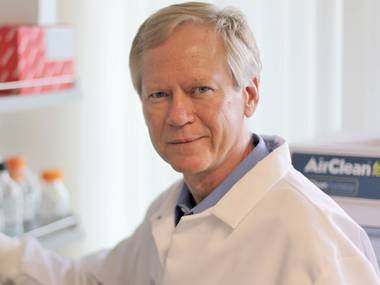 The bioterrorism expert responsible for censoring scientific research which could lead to the creation of a devastating pandemic has admitted the information “is going to get out” eventually.
Professor Paul Keim, chairman of the US National Science Advisory Board for Biosecurity, controversially recommended that researchers be stopped from publishing the precise mutations needed to transform the H5N1 strain of birdflu virus into a human-transmissible version.
In an exclusive interview with The Independent, he argued it had been necessary to limit the release of the scientific details because of fears that terrorists may use the information to create their own H5N1 virus that could be spread easily between people.
Professor Keim said that it was necessary to slow down the release of scientific information because it was clear that the world is not yet prepared for a strain of highly lethal H5N1 influenza that can be transmitted by coughs and sneezes.
“We recognised that, in the long term certainly, the information is going to get out, and maybe even in the mid term. But if we can restrict it in the short term and motivate governments to start getting busy in terms of Read more…
Unmanned drones to invade U.S. airspace in 2015
 It’s been a long time coming, but the U.S. Congress just handed two orders to the Federal Aviation Administration: to upgrade its radar system to GPS and to open up manned airspace to unmanned drones. The latter is causing some concern, but both of these things, if done right, could mean some great things for aviation.
Commercial pilots have raised safety concerns. Although pilots are required to spend time flying planes and are tested on their abilities to hold licenses, no similar rules exist for the controllers of remote aircraft. Likewise, the FAA doesn’t certify drones like passenger planes against engine failure or wings falling off.
Drones operate with far fewer Read more…
The West’s First War with China
 This month marks the 350th anniversary of the West’s first war with China. In February 1662, Generalissimo Zheng Chenggong swept the Dutch off of Taiwan, bringing the island under Chinese rule for the first time in history. The Dutch were Europe’s most dynamic colonial power, and the Taiwan colony was their largest holding in Asia, so the war is fascinating from the perspective of global history, touching on the question of the global balance of power in the pre-modern world.
But the war also has lessons for today, because among the factors that enabled the Chinese to win was a rich, effective, and, to Westerners, mysterious military tradition – a strategic culture that provided a discernable boost to Chinese warcraft. The Dutch, famous in Europe for their weapons, tactics, and logistics, found themselves hopelessly outclassed by the Chinese. Since military leaders in China today are Read more…
Island nations want climate change in world court
 The small island nations who are highly vulnerable due to climate change are seeking to take the issue before International Court of Justice. – File Photo
UNITED NATIONS: Small island nations, whose very existence is threatened by the rising sea levels brought about by global warming, are seeking to take the issue of climate change before the International Court of Justice.
Johnson Toribiong, president of Palau, said Friday his country and other island nations had formed an expert advisory committee to bring the issue before the U.N. General Assembly. That would allow the world court in the Hague to determine the legal ramifications of Read more…


![[Most Recent Quotes from www.kitco.com]](https://i0.wp.com/www.kitconet.com/charts/metals/gold/t24_au_en_usoz_2.gif)
![[Most Recent Quotes from www.kitco.com]](https://i0.wp.com/www.kitconet.com/charts/metals/silver/t24_ag_en_usoz_2.gif)

 crisisboom
 CRISISBOOM
You must be logged in to post a comment.