Archive
4.3-magnitude earthquake near Mount St. Helens is biggest in 30 years
By Stuart Tomlinson, The Oregonian

Fault line, won’t you be my Valentine?
The second largest earthquake since Mount St. Helens erupted — a magnitude 4.3 shaker — rocked a fault line six miles north of the volcano Monday morning. People felt it as far away as Astoria, Lake Oswego, Hood River and even Bremerton, Wash., near Seattle.
The last one, as it happens, was 30 years ago also on Valentine’s Day, a magnitude 5.5 temblor.
That 1981 earthquake appeared to be the result of the earth’s crust readjusting after magma oozed up through the fault and blew the mountain’s Read more…
Yellowstone supervolcano, new Ice Age could topple US government
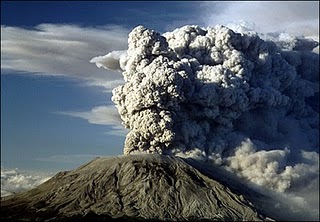 As evidence mounts that the world may fast be slipping into the next Ice Age, Washington insiders are hurrying to solidify a new power base for centralized government operations.
Fears that the US capital might be struck by another more deadly terrorist attack—or other disasters—prompted agencies a decade ago to hurriedly establish back-up operations in case catastrophe struck.
Despite the fact that many conspiracy theories are weaved around the subjects that follow—including some fairly wild-eyed, tin foil hat scenarios—most conspiracy theories have a basis in fact, although the facts are distorted or wildly exaggerated.
The actual story of the Denver airport, the nation’s “second capital,” the impending Ice Age possibility, and the threat the Yellowstone supervolcano presents to the people of the United States of America and their government follows: Read more…
Russian volcano activity causes global concern
Now the world has something else to grip about when it comes to Russia – the weather.
A string of volcanoes on Russia’s eastern seaboard of Kamchatka have been unusually active for the last six months. The dust they threw up diverted winds in the Arctic, pushing cold air over Europe and North America and causing the unusually cold winter this year, say scientists.
The volcanoes (160 in total, of which 29 are active) are still on the go and could create more problems this year, depressing harvests around the world just as global food prices soar and Read more…
Japan volcano erupts again with massive blast of gas, ash and rocks
 |
| Dome of lava is seen at a eruptive crater at Shinmoedake peak between Miyazaki and Kagoshima prefectures January 31, 2011. More than 1,000 people in southern Japan have been urged to evacuate as a volcano picked up its activities, spewing ashes and small rocks into air and disrupting airline operations, a municipal official said on Monday. (Xinhua/Reuters Photo) |
TOKYO, Feb. 1 (Xinhua) — A volcano located on a mountain range on the island of Kyushu, southwest Japan, erupted for the second time Tuesday in an explosion local officials said was five times bigger than the one last Wednesday.
The eruption sent an enormous plume of gas, ash and rocks shooting as high as 2,000 meters into the air and the blast smashed windows in hotels and offices as far away as eight kilometers, local reports said.
As yet no deaths have been reported as a result of the eruption, although one women was cut by shattered glass and felled trees caused by the blast have been hindering traffic in the region, local officials said.
Following the latest blast, the Japan Meteorological Agency raised the alert level from Read more…
Eruption Of Colima Volcano

A light colored plume, probably the result of rockfall on the dome, extends to the east (right) of the summit. The summit crater is the remnant of an explosive eruption in 1913 which knocked 100 meters (300 feet) off the top of the mountain. For a larger version of this image please go here. by Staff Writers
Washington DC (SPX) Jan 28, 2011
Colima Volcano, Mexico’s most active, has been erupting since 1998. The eruption began with several months of earthquakes beneath the volcano, followed by explosions and rockfalls at the summit lava dome as it began to grow.
Dome growth was accompanied months later by a series of lava flows which cascaded down the southwestern flank of the mountain, stretching up to 3,100 meters (10,000 feet) from the summit.
Since then dome growth has continued, with a few periods of actively flowing lava. As of March 2010, the dome was growing about 2,000 cubic meters (70,000) cubic feet a day, leading to frequent small rockfalls and occasional ash plumes. In January 2011, local newspapers reported “dust plumes” rising over Colima, likely pulverized lava stirred up by landslides at the summit dome. Read more…
Mount Kirishima volcano in Japan explodes violently
By Brett Israel
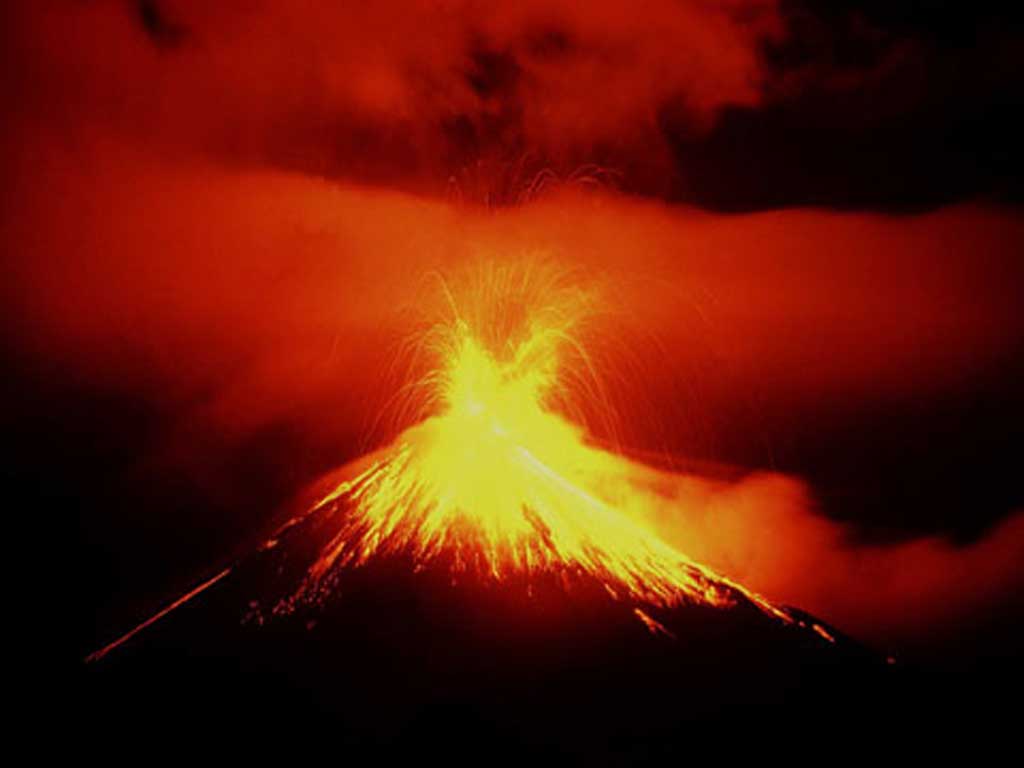
A spectacular volcanic eruption is currently under way in Japan. The mountain Kirishima is firing red-hot magma and volcanic bombs into the air.
Mount Kirishima, a volcano on the southern island of Kyushu, began erupting on Jan. 26. A giant ash cloud poured from the volcano, prompting the Tokyo VAAC to issue an ash warning for places above 25,000 feet (7.6 kilometers).
Volcanic material shot from the crater, triggering pyroclastic flows, according to the blog Big Think.
Kirishima ejected volcanic bombs — lava fragments that are rounded as they fly through the air — more than a mile (2 kilometers) high from its vent, according to news reports. Images of the eruption show plumes of glowing material shooting a few hundred feet in the air. A volcanic vent is a gap in the Earth’s crust through which lava and volcanic gases can escape.
Kirishima technically refers to a larger group of volcanic vents on the island. These vents are quite active but mostly have small explosive eruptions. The latest eruption may be the largest since 1959.

See the ongoing eruption on the Kirishima webcam. To view live volcano webcams from around the world click here.
All the volcano webcams of the world
Pacific
Kilauea – info – webcams: Pu’u O’o | Thanksgiving Eve Breakout | Halema`uma`u Crater from HVO | Halema`uma`u Crater overlook
Mariana Islands (United States)
Western/Southern Pacific
Violent Seismic Activity Tearing Africa in Two

Cynthia Ebinger, a geologist from the University of Rochester in New York, could hardly believe what the caller from the deserts of Ethiopia was saying. It was an employee at a mineralogy company — and he reported that the famous Erta Ale volcano in northeastern Ethiopia was erupting. Ebinger, who has studied the volcano for years, was taken aback. The volcano’s crater had always been filled with a bubbling soup of silver-black lava, but it had been decades since its last eruption.
The call came last November. And Ebinger immediately flew to Ethiopia with some fellow researchers. “The volcano was bubbling over; flaming-red lava was shooting up into the sky,” Ebinger told SPIEGEL ONLINE. Read more…
Yellowstone Supervolcano Bulges 10 inches as Magma Pocket Swells
Brian Handwerk

USGS records sights and sounds of Hawaii Volcano
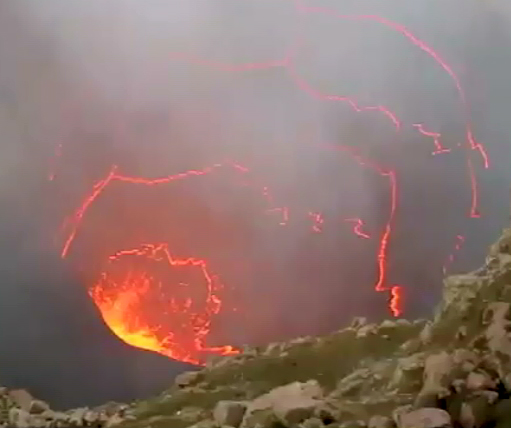
The Hawaiian Volcano Observatory has been keeping a close eye on the fascinating activity at the summit of the Kilaeua volcano.
This footage – taken last week – shows spattering of the lava lake within the Halemaumau vent. The video also captures audio from the vent, which sounds like the churning of the ocean.
In recent weeks, geologists have observed high lava stands – which is what the scientists call the rise-and-fall cycles of the lava lake – at the summit of the active volcano. For each high stand, the lava surface rose several meters over a base level of about 395 ft. below the Halema`uma`u Crater floor.
The lava lake continues to have an overall north-to-south circulation.
Since early 2010, glow has been most intense between high stands from the Jaggar Museum Overlook overnight.


![[Most Recent Quotes from www.kitco.com]](https://i0.wp.com/www.kitconet.com/charts/metals/gold/t24_au_en_usoz_2.gif)
![[Most Recent Quotes from www.kitco.com]](https://i0.wp.com/www.kitconet.com/charts/metals/silver/t24_ag_en_usoz_2.gif)

 crisisboom
 CRISISBOOM


You must be logged in to post a comment.