China Taps Antisatellite Weapon for Missile Defense: Cable
 China in an early 2010 exercise attempted to intercept a mock enemy missile with the same weapon it had used to shoot down one of its orbiting satellites in a test three years earlier, suggesting the nation’s antisatellite technology was also designed to defend against strategic missiles, the Washington Times reported yesterday (see GSN, Jan. 14, 2010).
The apparent multipurpose nature of China’s SC-19 missile — described in a U.S. State Department communication obtained by the transparency organization WikiLeaks — represents a marked stride in China’s efforts to bolster its armed forces, defense officials said (see GSN, Feb. 7).
“The U.S. Intelligence Community assesses that on 11 January 2010, China launched an SC-19 missile from the Korla Missile Test Complex and successfully intercepted a near-simultaneously launched CSS-X-11 medium-range ballistic missile launched from the Shuangchengzi Space and Missile Center,” the State Department document says.
“An SC-19 was used previously as the payload booster for the January 11, 2007, direct-ascent antisatellite (DA-ASAT) intercept Read more…
The Coming Rout QE3
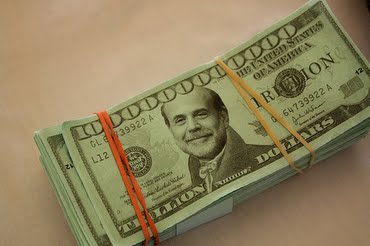 There’s a scenario that could play out between May and September in which commodities (including my beloved silver) and the stock and bond markets could all sell off between 20% and 40%. The trigger will be the cessation of QE II and a multi-month pause before QE III.
This is a reversal in my thinking from the outright inflationary ‘buy with both hands’ bent that I have held for the past two years. Even though it’s quite a speculative analysis at this early stage, it is a possibility that we must consider.
Important note: This is a short-term scenario that stems from my trading days, so if you are a long-term holder of a core position in gold and silver, as am I, nothing has changed in my extended outlook for these metals. The fiscal and monetary path we are on has a very high likelihood of failure over the coming decade, and I see nothing that shakes that view.
But over the next 3-6 months, I have a few specific concerns.
It’s time to build on the idea I planted in the Insider article entitled Blame the Victim (February 28, 2011) where I speculated on the idea that the Fed might be forced to end its Read more…
The Oil-Food Price Shock
 When future historians attempt to trace the origins of the current turmoil in the Middle East, they will find that one of the earliest of the many explosions of rage occurred in Algeria and was triggered by the rising price of food. On January 5, young protesters in Algiers, Oran and other major cities blocked roads, attacked police stations and burned stores in demonstrations against soaring food prices. Other concerns—high unemployment, pervasive corruption, lack of housing—also aroused their ire, but food costs provided the original impulse. As the epicenter of youthful protest moved elsewhere, first to Tunisia and then to Egypt and other countries, the food price issue was subordinated to more explicitly political demands, but it never disappeared. Indeed, the rising cost of food has been a major theme of anti government demonstrations in Jordan, Sudan and Yemen. With the price of most staples still climbing—spurred in part by a parallel surge in oil costs—more such protests are bound to occur.
2,500-year-old solar observatory in Peru reveals advanced culture

The wonderful archaeological discovery of recent years at Chankillo, Peru, is described by physicist Dr. Brian Cox in the BBC video linked below. As he describes and waits for the sun rising over the top of the hill, to be seen through the niches in the 2,500-year-old monument, Cox has a big grin, like this is the greatest thing he’s ever seen.
We astrotheologians and archaeoastronomy afficionados agree! That’s why we work so hard to bring attention to the world’s great astrotheological traditions that go hand in hand with these fantastic monuments, proving that ancient man was far more advanced than is commonly perceived.
We also maintain that these astronomically aligned archaeological ruins found globally, along with the myths symbolizing the knowledge encased therein, represent very important artifacts that need to be preserved.
Prof Brian Cox visits Chankillo solar calendar in Peru
Professor Brian Cox has visited a giant desert solar calendar in Peru in his quest to understand the nature of time in creating and ending the universe.
The 2,500-year-old solar calendar in Chankillo was built by a civilization of which very little is known.
Regarding Chankillo, Wikipedia states: Read more…
Human Achievement of the Day: Nanospiders in Your Blood

In his writings, noted futurist and inventor Ray Kurzweil has said that he believes human technology will one day reach a point where the human life expectancy will be radically extended, resulting in near immortality. In a 2009 interview with Computerworld, Kurzweil put the date at which immortality could be achieved somewhere around 2040 or 2050 thanks to the ever-quickening pace of technological development and the rise of nanotechnology that will repair or even replace parts of the human body. Kurzweil may have overshot that date by a few decades, as today’s human achievement is the invention of nanospiders that can crawl along human DNA and change it.
DNA nanospiders, created by Columbia University scientists, are small Read more…
Impact of space weather threat examined
 Professor Hapgood examines the linkage between the science of space weather and its impact on technological systems, potential impact of Solar weather on orbital and ground based systems including power, energy and communications – as well as atmospheric physics.
Space weather is concerned with disturbances in Earth’s upper atmosphere and in near-Earth space that can disrupt the advanced technologies on which our society now relies. A proper understanding of space weather requires us to bring together a range of scientific, engineering and economic expertise, emphasizing the role of the electromagnetic force in many of the physical processes that cause space weather.
One example is the crucial role of plasma physics within the sources of space weather on the Sun, in the transmission of energy from the Sun to the Earth via the solar wind and Earth’s magnetosphere.
Another is the role of the electric currents that naturally flow with Read more…
5 Ways DHS Violates the Constitution with Website Domain Seizures

Last week, Bryan McCarthy, the 32 year old operator of ChannelSurfing.net, was arrested on charges of criminal copyright infringement. ChannelSurfing.net was one of the streaming sports sites that had its domain seized by federal authorities shortly before the Super Bowl as part of the “In Our Sites” program, run by the Department of Homeland Security (DHS) and the U.S. Immigration and Customs Enforcement (ICE). Prior to the seizure, McCarthy reportedly made more than $90,000 from advertisements on his site.
This arrest has once again raised questions about the In Our Sites program, in which the Government has seized thousands of domains accused, but not convicted, of copyright infringement, illegal streaming of sporting events, selling black market goods and distributing child pornography. Critics ranging from bloggers to individual Read more…
Avian influenza continues to spread across Asian countries
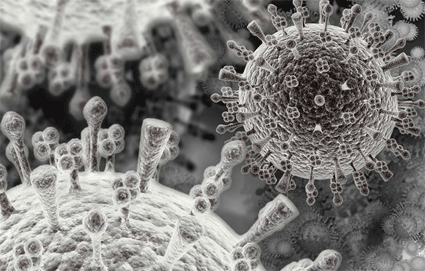 Across Japan a total of 22 cases of avian flu have been reported as the infection continues to spread. On Sunday, 33,000 more chickens were culled in the Miyazaki Prefecture, bringing the total chickens culled to around 990,000 birds since the first infection was reported on Jan 22, 2011.
In India, further cases have been confirmed on a Tripura farm where the culling process has started to take place. This is the second time bird flu has been detected in the state following an outbreak in February this year. Health and veterinary workers had then culled more than 4,000 chickens.
South Korea has also had 12,400 birds test positive for avian flu last week, marking the 49th outbreak since December 29. The latest outbreak is a poultry farm in Cheonan, 92 km south of Seoul, the National Veterinary Research and Quarantine Service (NVRQS) said. All ducks on the farm will be culled with quarantine authorities asking nearby farms to be vigilant and protect their birds.
This is the second case of the highly pathogenic avian influenza reported in the country this month although the number of AI cases has started to fall off in recent weeks. The government has culled more than 6.04 million birds in six provinces across the country.
U.S. might be giving away sensitive military technology, report finds
 Sensitive military technology might be slipping into enemy hands, in part because of a dramatic decline in the number of foreign workers that the Commerce Department screens, federal auditors have found.
For national security purposes, the United States controls the export of so-called dual-use technologies — items that have both civilian and military uses, including computer security tools — to countries of concern, including Iran and North Korea.
One way to restrict the transfer of such technology is for Commerce to screen visa applications from foreign nationals who wish to work in U.S. high-tech companies.
But the Commerce Department, the agency responsible for checking visa applications to identify potential unlicensed exports, is not screening thousands of those forms, according to a Government Accountability Office report released on Monday.
Reduced visa application vetting is one of several factors that “may indicate the continuing risk that foreign nationals could gain unauthorized access to controlled technology,” the auditors wrote.
Commerce checked only 150 visa forms in fiscal 2009, a dramatic drop from Read more…
Mathematical Model shows Volcanoes Re-awaken in Mere Months
 |
Until now, it was thought that, once a volcano’s magma chamber had cooled down, it remained dormant for centuries before it could be remobilized by fresh magma. A theoretical model developed by Alain Burgisser of the Orléans Institute of Earth Sciences (Institut des Sciences de la Terre d’Orléans – CNRS/Universités d’Orléans et de Tours) together with a U.S. researcher, was tested on two major eruptions and completely overturned this hypothesis: the reawakening of a chamber could take place in just a few months. This research should lead to a reassessment of the dangerousness of some dormant volcanoes. It is published in the journal Nature dated March, 3 2011.
A magma chamber is a large reservoir of molten rock (magma) located several kilometers beneath a volcano, which it feeds with magma. But what happens to the magma chamber when the volcano is not erupting? According to volcanologists, it cools down to an extremely viscous mush until fresh magma from deep inside the Earth ‘reawakens’ it — in other words, fluidizes it by heating it through thermal contact. The large size of magma chambers (ranging from a few tenths to a few hundred cubic kilometers) explains why, according to this theory, it takes several hundred or even thousand years for the heat to spread to the whole reservoir, awakening the volcano from its dormant state.
However, according to the mathematical model developed by Burgisser and his U.S. colleague, George Bergantz, of the Earth and Space Science Department, Seattle, reheating takes place in three stages. When fresh hot Read more…


![[Most Recent Quotes from www.kitco.com]](https://i0.wp.com/www.kitconet.com/charts/metals/gold/t24_au_en_usoz_2.gif)
![[Most Recent Quotes from www.kitco.com]](https://i0.wp.com/www.kitconet.com/charts/metals/silver/t24_ag_en_usoz_2.gif)

 crisisboom
 CRISISBOOM
You must be logged in to post a comment.