Archive
China’s inflation to accelerate as food costs rise
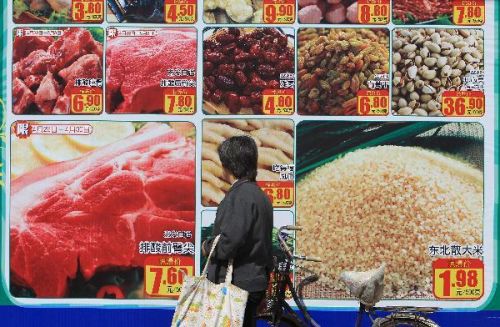 China’s top economic planning agency said inflation will accelerate this month, bolstering analysts’ forecasts for the rate to reach 6 percent, the highest level since July 2008.
“The overall level of prices remains high and inflation will remain elevated for some months although the overall situation is controllable,” the National Development and Reform Commission said on its website today.
China has raised interest rates four times since September, limited bank lending and boosted food supplies as rising prices threaten to fuel social unrest. The Shanghai Composite Index has fallen more than 13 per cent from this year’s April high on concern that tightening measures will drag down growth.
“Inflation is going to be stubbornly high in 2011 and it’s largely a food story,” said Tim Condon, head of Asia research at ING Groep NV in Singapore. Authorities may be reluctant to keep Read more…
Hike in worldwide food prices forces change in diet as more go hungry
Costs rise 37 per cent in past year; more women, girls negatively impacted
Soaring food prices over the past year have prompted 17 per cent of Canadians to change their diets due to the higher cost of food. But Canadians haven’t yet felt the full impact of raw food price increases, in part because of our strong dollar.
Photograph by: Noah Seelam, AFP, Getty Images, Postmedia News
Soaring food prices and health concerns are prompting people around the world to change what they eat, according to a new 17-nation survey done for Oxfam. And Canadians aren’t exempt from the trend.
Of the 16,421 people surveyed by GlobeScan, 53 per cent said say they’re no longer eating the same foods they did two years ago. Nearly four in 10 of those say some of the food they used to eat is now too expensive, while one-third changed their diets for health reasons.
“The rising cost of food is pushing more Read more…
Locusts Invade Russia and China, Threatening Food Supply
Millions of Locusts Invade Russia
June 9, 2011
MSNBC – Giant swarms of locusts are said to be threatening the food supply for nearly 20 million people in the region.
Locust Plague Ravages NW China
May 5, 2011
Xinhua – Large swarms of locusts have laid waste to vast tracts of Northwest China’s Xinjiang Uygur autonomous region, with authorities expecting the plague to worsen as the weather heats up.
The locust plague began in the pastureland of the Ili River Valley and Read more…
In U.S., Salmonella Is On the Rise While E. Coli Retreats
 TUESDAY, June 7 (HealthDay News) — As a deadly new strain of E. coli in Europe makes headlines, U.S. health officials announced Tuesday that salmonella, not E. coli, remains the biggest foodborne health threat to Americans.

In fact, while rates of several types of foodborne illness — including E. coli — have been falling over the past 15 years, there’s been no progress against salmonella infections, according to the U.S. Centers for Disease Control and Prevention.
While infections from Shiga toxin-producing E. coli O157 (the strain of most concern in the United States) have dropped almost in half and the rates of six other foodborne infections have been cut 23 percent, salmonella infections have risen 10 percent, the agency said.
“There are about 50 million people each year who become sick from food in the U.S. That’s about one in six Americans,” CDC director Dr. Thomas R. Frieden said during a noon press conference Tuesday.
In addition, about 128,000 people are Read more…
GMO created foods may be used as a biological weapon
Gene tically modified organisms (GMO) which are used to create new food seeds and crops, are being tied to use as a potential biological weapon in creating infertility in places around the world.
A report published on May 28th tied together that the international organization Codex, which is seeking to regulate every food, mineral, and herb in the world used for consumption, does not consider GMO created products as food, and thus they are being placed in a separate sphere of attributes that can be used for alternative functions.
Including birth control and creating infertility in a nation or population.
There has been a concerted national effort by citizens to have the US government label GMOs. Opposing it are government intent not only to keep them unlabeled in the US but efforts at the international level by the US government to remove all labeling of GMOs through Codex. The problem is that Codex applies to food, and Read more…
Antibiotics In Animal Feed Encourage Emergence Of Superbugs – FDA Sued By Health And Consumer Organizations
medicalnewstoday
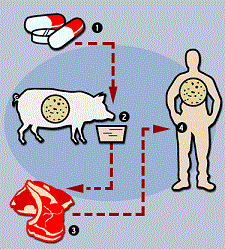 If the FDA concluded in 1977 that adding low-dose antibiotics used in human medicine to animal feed raised the risk of antibiotic-resistant bacteria, why has it still done nothing about it? A suit filed by some health and consumer organizations says the FDA has not met its legal responsibility to protect public health – the practice of routinely adding low-dose antibiotics to animal feed has to stop, and the FDA has the authority to make it so.
Peter Lehner, Natural Resources Defense Council (NRDC) executive director, said:
“More than a generation has passed since FDA first recognized the potential human health consequences of feeding large quantities of antibiotics to healthy animals.
Accumulating evidence shows that antibiotics are becoming less effective, while our grocery store meat is increasingly laden with drug-resistant bacteria. The FDA needs to put the American people first by ensuring that antibiotics continue to serve their primary purpose – saving human lives by combating disease.”
70% of all US antibiotic consumption is used up in adding low-doses to animal feed to make up for unsanitary living conditions and promote faster growth, according to NRDC. This practice has been steadily growing over the last six decades, despite the every-growing threat to humans of superbugs.
The antibiotic doses used in feed or water for turkeys, cows, pigs and chickens are too low to treat diseases – however, they are low enough for a significant number of bacteria to survive and build Read more…
The Coming Food Shocks: Background
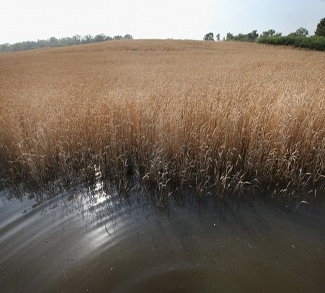 The food crisis of 2008 was never resolved; it was merely put on hold by a global financial meltdown. Now, any serious discussion on a sustained economic recovery should take for granted that food prices will once again spike, bringing about a cascade of geopolitical consequences.
The sheer number of upward pressures on food prices makes it difficult to imagine a scenario that doesn’t have them spiking rather dramatically over the next few decades. This will result in not only an increase in global poverty, devastating some of the most vulnerable populations in the world, but it will also put stress on the new social contract that has emerged in certain rising powers- particularly the development-for-autocracy consensus in Read more…
Global food inflation hits hemp seed, coconut oil and other superfoods: Here’s why it’s happening
 Food inflation is hitting the superfood industry right where it hurts — in the wallet. Thanks to several factors you’ll read about here, prices on hemp seeds, hemp oils, coconut oil and other superfoods are set to skyrocket beginning in just a few days. One of the largest superfood suppliers in the USA, Nutiva, has announced an 11% price increase coming May 27th, and that may be just the beginning of an accelerating trend in steady increases.
In anticipation of this price increase, we’ve taken on a huge inventory of Nutiva’s Certified Organic Hemp Seed and Hemp Oil at the old prices, and we have a generous supply available to NaturalNews readers who want to beat the price increase (see below).
Why hemp and coconut oil prices are heading into the stratosphere
In a letter sent to us by Nutiva, founder John Roulac explains that the price of coconut oil has doubled in the last six months. While coconut oil suppliers are able to absorb some of this cost in the short term, they cannot do so on a permanent basis. This means that the prices consumers pay for coconut oil are headed sharply higher.
Impacting hemp seeds and hemp oil, the price of crude oil (up 30% or more over the last few months) adds to the cost of transporting these foods. Remember, thanks to the completely idiotic and utterly anti-American stance of the DEA, President Obama and most of the U.S. Congress, it is illegal to grow hemp seeds in America, Read more…
Anti-locust programme in Central Asia and Caucasus

19 May 2011, Rome – FAO will assist ten countries in Central Asia and the Caucasus to save up to 25 million hectares of cultivated farmland from a locust crisis. Locusts are a serious threat for agriculture, food security and livelihoods in both regions including adjacent areas of northern Afghanistan and the southern Russian Federation.
A five-year programme to develop national capacities and launch regional cooperation is about to start thanks to assistance from the United States of America. Support from other donors is expected soon.
Ten countries at risk
In all, ten countries are at risk: Afghanistan, Armenia, Azerbaijan, Georgia, Kazakhstan, Kyrgyzstan, Russian Federation, Tajikistan, Turkmenistan and Uzbekistan. There are three locust pests in the Read more…
Alarming Number of Disasters Striking World “Food Baskets”
Millennium-Ark
May 16, 2011
Holly Deyo
Dear Friends and Readers of Millennium-Ark,
For the last 5 years, we have posted countless articles covering both natural disasters and their impact on our food supplies as well as on many other timely topics. After several decades of monitoring these events, it’s hard to convey how shocked we are by the sheer number of disasters that have occurred just in the first 4 months of 2011.
Yesterday, all day, I spent analyzing natural disasters and plotted them against our food belts. Never, ever, have I seen so many federally declared disasters this early in the year.
The DHS/FEMA maps were defined by 2 colors: blue signified no disasters (to distinguish the disaster-free areas from water, they are shown in white below) and yellow indicated declared disasters. Map after map, state after state were mostly yellow. Surely this must be an error? Thinking through the numerous news items on Earth Changes, with sinking feeling, I knew they were correct. It was only when the state information was transferred to a single national map, the implications become uncomfortably clear.
Notice how many disasters have occurred in food-producing areas. They are striking the heart of our food growing regions. Many food crops have been wiped out by drought, flood, hail and freezes. These food destroyers are occurring in greater frequency and having larger impact. America’s food belts are taking mighty hits. Some growing areas will not recover this entire year.


![[Most Recent Quotes from www.kitco.com]](https://i0.wp.com/www.kitconet.com/charts/metals/gold/t24_au_en_usoz_2.gif)
![[Most Recent Quotes from www.kitco.com]](https://i0.wp.com/www.kitconet.com/charts/metals/silver/t24_ag_en_usoz_2.gif)

 crisisboom
 CRISISBOOM
You must be logged in to post a comment.